

Waking Up Stiff and Sore? Why, and a Gentle Wake-Up
Waking up stiff and sore most mornings? Here is the simple reason your whole body feels that way, plus a slow, pain-free wake-up you can begin in bed.
In short
Waking up stiff and sore is common because the body barely moves for hours overnight and joint fluid settles, so things feel slow first thing. A few minutes of gentle movement in and just out of bed usually loosens it. Stiffness lasting well over an hour deserves a doctor's look.

Prefer to ease in gently?
See a few gentle exercises for stress and sleep to try.
Before you begin. This is gentle self-care, not medical advice. Morning stiffness that lasts well over an hour, or comes with joint swelling, redness, or warmth, can signal inflammatory arthritis and deserves a doctor's review. See a clinician for new, severe, or persistent symptoms.
If you find yourself waking up stiff and sore most mornings, you are far from alone, and the reason is usually a kind one. A whole night spent in roughly one position leaves the body slow off the mark, and leaping out of bed can turn that first achy stretch into something sharper. A gentler beginning serves you much better. This short wake-up, in the unhurried spirit of the Feldenkrais Method®, walks you awake through small, easy movements you can start before you have even sat up, giving your body the chance to come alive again from head to toe.
Why you wake up stiff and sore all over
While you sleep, you keep more or less the same posture for hours on end. Muscles left unused tighten a touch, and the joints stop receiving the steady lubrication that motion provides. People sometimes call this thick, settled feeling gelling: the lubricating fluid inside a joint sits still and pools while you lie quiet, rather than washing through as it does when you move. The first try at moving then feels heavy and reluctant. Since this is happening across every joint at once rather than in one spot, the ache reads as general, spreading through your neck, shoulders, hips, knees, and feet alike.
None of this is unusual, and for the great majority of people it fades after a few minutes of easy movement. Morning stiffness, then, rarely points to trouble. It is closer to a request: your body would rather be coaxed into the day than dragged into it. Bracing against the ache, or yanking on a big stretch to drive it off, tends to make the muscles clench down all the harder.
How a gentle wake-up eases waking up stiff and sore
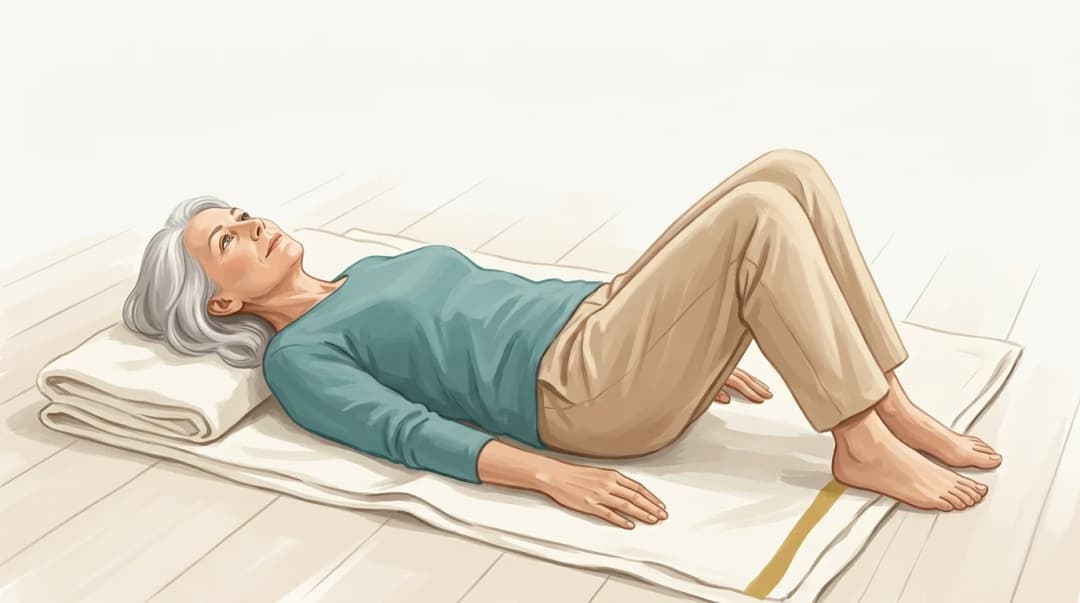
A soft, whole-body lengthening lets the system spread out and stir awake. The small knee sways draw the back and hips into gentle motion with nothing being forced, and slow circles of the ankles and wrists rouse the joints out at your edges. A few easy head turns invite the neck along, before a careful roll to sitting and a calm rise to standing round things off. None of it pushes toward an end range, and none of it should produce pain. Should any part feel ungenerous on a given morning, shrink it down or simply picture yourself doing it.
That slow, unhurried feel is really the entire idea. Easing into motion after stillness lets the body release on its own terms, which is a world apart from forcing a stiff, sore frame toward its outer limit. Hold each movement small, keep your breathing soft, and let comfort rather than any goal or timer decide how fast you go.
When waking up stiff and sore is worth a closer look
The usual sort of morning stiffness loosens once you start moving, and a body that grumbles here and there on waking is about as common as it gets. Musculoskeletal conditions affect about 1.71 billion people worldwide (WHO, 2022). One particular pattern, though, calls for more attention. When the stiffness dependably hangs on for well over an hour each morning, or arrives together with joints that are swollen, red, or warm to the touch, it can be hinting at inflammatory arthritis rather than the everyday gelling described earlier. A pattern like that earns a doctor's review, because the assessment and the care for it run along different lines. Easing into movement is still a kindness, but it does not replace that medical look, and the same holds for any soreness that is new, severe, or refuses to let up.
Carrying the easy feeling through your day
After you are upright and moving about, the same slow, listening quality can stay with you. Our Feldypedia note on waking with stiffness and pain digs into why the morning can feel this way and how to greet it kindly. For more to lean on, our somatic exercises for sleep help a restless body settle the evening before, which often softens the morning that follows, and our brief set of bedtime stretches in bed gives you another easy route into winding down.
If you would like a guided way to take this same patient, comfortable approach further, the Feldy program for stress and sleep is shaped around precisely that: brief, self-paced lessons that invite the whole body to move with far less effort.
A calmer body, easier nights
Understanding it is calming, moving with it more so. The Feldy program is meditation in movement, slow Feldenkrais® lessons that help a busy body settle so sleep can arrive on its own. Gentle, guided, and self-paced.
Start my free 7-day trialNo credit card needed.
Common Questions about waking up stiff and sore (FAQ)
Why do I keep waking up stiff and sore all over?
Across the night your body hardly shifts for hours, so the muscles tighten a little and the lubricating fluid that lets joints glide sits and pools instead of circulating. People sometimes call that settled state gelling, and it leaves the whole body feeling slow and tender first thing. In most cases a few minutes of easy movement is all it takes to clear it, which is just what a slow wake-up provides.
When is waking up stiff and sore a red flag?
When stiffness reliably hangs on for well over an hour each morning, or shows up beside joints that look swollen, red, or feel warm, it may be hinting at inflammatory arthritis rather than the everyday overnight gelling. Since that is assessed and treated along different lines, it warrants a doctor's review. Easing into movement remains worthwhile, yet it is no replacement for that medical look.
How can I ease morning stiffness and soreness?
Start moving before you are fully up. A handful of minutes of slow, small, comfortable movement while still in bed and just stepping out of it, like the wake-up here, brings the joints and muscles back online without any forcing. A little warmth helps as well, and so does resisting the urge to spring upright. Let comfort, not a target, set your pace.
Does my mattress matter if I wake up stiff and sore?
It can. A mattress or pillow that holds you in an awkward shape all night can add to the morning soreness, while a setup that backs up your natural curves often makes things easier. Even so, a degree of overnight stiffness is normal on any bed, simply because the body moves so little for so long. If a new mattress changes nothing and the stiffness persists, look instead at the timing and any other symptoms.
When should I see a professional about waking up stiff and sore?
Check in with a clinician if the stiffness is severe, keeps worsening, comes after an injury, or drags on for well over an hour each morning, and especially if it pairs with swollen, red, or warm joints, fever, or fresh numbness. A clinician or physical therapist can pin down what is behind it and steer you toward movement that is safe for your situation.
A calmer body, easier nights
See the programRelated resources
How to Prevent Lower Back Pain When Sleeping
How to prevent lower back pain when sleeping: the positions that support your spine, the pillows that help, and the gentle movement that stops your back bracing all night.
Sore Upper Back After Sleeping: Why and What Helps
Why you wake with a sore upper back after sleeping, what tends to cause it, and a gentle morning lesson plus simple setup tweaks to ease the stiffness.
Lying down is not the same as resting, and researchers have now measured the difference
Ready to start moving better?
Gentle, guided lessons for your body. Try your first one free, no credit card required.