
Feldenkrais® for Chronic Pain: Where It Helps, and Where It Does Not
How slow, attention based lessons work with the guarding that grows around persistent pain, and how they sit beside pain clinics, yoga, tai chi and water exercise.
In short
Feldenkrais for chronic pain suits people who flare after ordinary exercise and want gentle movement that stays possible on a difficult day. It is movement education that works with protective guarding, not a treatment for pain, and it belongs beside clinical care, never in its place.

See how Feldy helps a sensitive body move with less pain
Gentle guided lessons you can do at home. Start with a free 7-day trial.
Before you begin. This page describes supportive movement education. It is not a treatment for pain and not a substitute for a diagnosis or a pain management plan. New pain, pain after an injury, unexplained weight loss, fever, or numbness and weakness all need a clinician. Stop anything that increases your pain.
Feldenkrais® for chronic pain rests on one idea that changes the whole picture: pain that has lasted beyond about three months is no longer a simple report of tissue damage. Over those months the nervous system learns to guard you more and more eagerly. Researchers call this central sensitisation, which in plain words means the body's alarm has grown louder and quicker to sound. Much of what registers as stiffness around an area that has hurt for years is really guarding, muscle held tight by a system expecting trouble. The scale of all this is hard to overstate. The World Health Organization counted 619 million people living with low back pain in 2020 and names it the leading cause of disability worldwide (WHO, 2023).
That reframing matters because it points to something movement education can actually reach. Tissue that healed years ago cannot be healed a second time. A habit of guarding, though, was learned, and learned habits respond to attention.
What Feldenkrais lessons offer when pain persists
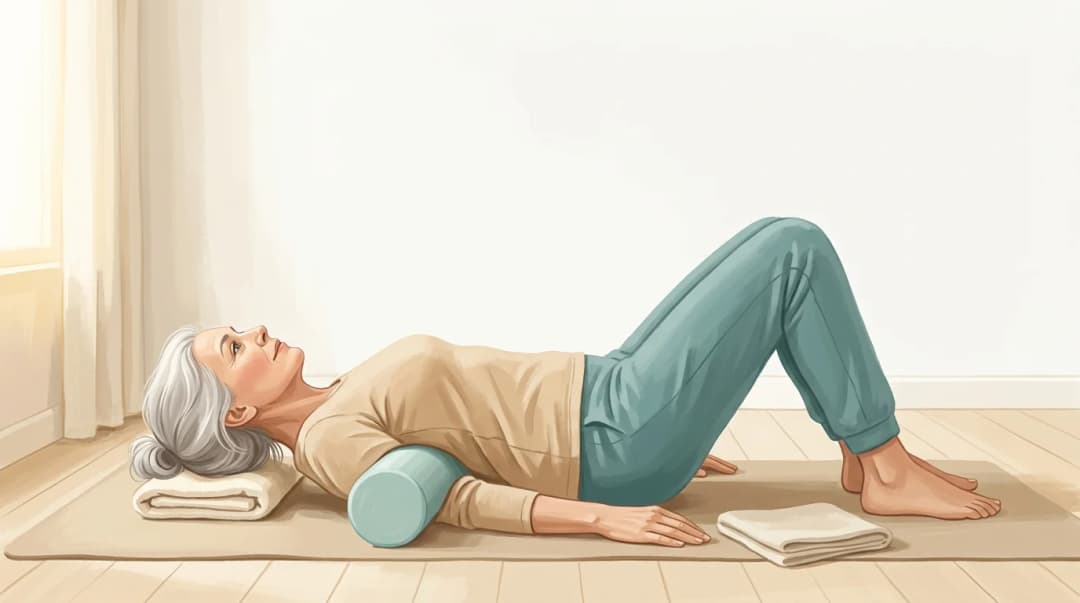
An Awareness Through Movement® lesson is a slow spoken sequence, usually done lying down. You move a small amount, well inside comfort, and you notice what happens: where effort creeps in, which parts join, where your breath pauses. There is nothing to hold and nothing to count. The task is information, not exertion. Each time a movement turns out to be easy and safe, the guarding system receives a quiet piece of evidence about what is possible.
Being candid about the research belongs here too. Studies of the Feldenkrais Method® in persistent pain are few and small, and the wider evidence is modest and general rather than strong and pain specific. This page makes no claim that lessons lower pain, and no one should make that claim to you. What the lessons offer is a way to keep moving with attention on the days when most exercise asks for more than you have.
How chronic pain support options compare
Two families of help exist here, and they do different jobs. Clinical care means the people who assess and plan: a doctor, a pain clinic, a physiotherapist offering graded exercise, which is activity that rises in small planned steps, or a psychologist offering pain psychology, talking therapy aimed at the fear and habits that grow around pain, often in the structured form called CBT. That care sits alongside everything on this page. The movement methods below are a separate family, each working through its own mechanism.
| Approach | What it does | Where it fits |
|---|---|---|
| Feldy (Feldenkrais lessons) | Short audio lessons, small slow movements with long rests, attention as the main task | People who flare after ordinary exercise and want a practice that survives a difficult day |
| Pain clinic and graded exercise from a physiotherapist | Assessment, a plan, and activity that rises in small agreed steps | Anyone whose pain shapes daily life. Movement practices sit beside this care, never in its place |
| Pain psychology and CBT | Structured talking therapy for the worry, fear and avoidance that persistent pain builds | Also clinical care, and it pairs naturally with any movement practice |
| Gentle yoga | Shapes and stretches paced with the breath, often in a class | People who enjoy structure and stretch and feel free to leave a pose early |
| Tai chi | Slow flowing sequences in standing, learned as a form | People who can stand in comfort and like learning a practice by heart |
| Aquatic exercise | Movement in warm water, where the body carries less weight | People who find exercise on land costly and have a pool within reach |
Each of those earns its place. Graded exercise carries the strongest evidence in persistent pain, and pain psychology has solid support as well. Among the movement methods, tai chi builds standing balance, gentle yoga offers length and calm, warm water takes the load off sore joints, and a paced walking program keeps ordinary activity in the week. None of them competes with a slow lying down lesson. They answer different needs. If you are leaning toward an app you can use at home, our comparison of the best movement app for chronic pain sets several of them side by side.
Where Feldenkrais for chronic pain is a poor match
It is a poor match for anyone still waiting on an explanation. Pain that is new, that follows an injury, or that arrives with fever, weight loss, numbness or weakness needs a clinician, and no movement method replaces an examination. It is also a poor choice as a sole strategy when pain governs a whole life; that situation calls for a pain clinic or a pain management plan, with gentle lessons as company rather than as the plan itself. Where this work earns its keep is narrower: people who have been told to exercise, who agree, and who find that most exercise sets off a flare, and people who want something within reach on the harder days.
If your pain is widespread and even light touch registers as too much, the picture may be closer to fibromyalgia. Our Feldypedia article on widespread sensitivity explains what a sensitised system is doing, the companion page on Feldenkrais for fibromyalgia looks at that condition in its own right, and exercises for fibromyalgia gives you something small to try today. Feldy delivers the lessons as short daily audio with a free 7 day trial, and the program for sensitive systems shows how a week of them holds together.
Find where to start
Persistent pain behaves differently in every person, so the sensible first step differs too. A few short questions can narrow the field faster than a month of trial and error.
Still weighing which gentle practice to try first? Movement Match asks four brief questions, about two minutes, and names the movement method that fits how your pain behaves.
Small, safe movement for a sensitive body
Now for movement that respects a sensitive body. The Feldy program stays well below pain, giving the nervous system room to soften through gentle Feldenkrais® lessons. Gentle, guided, and self-paced.
Start my free 7-day trialNo credit card needed.
Common Questions about Feldenkrais for chronic pain (FAQ)
Is Feldenkrais safe with chronic pain, and who should skip it?
For most people it is among the gentler options, because movements stay small and slow and you can rest at any point. Skip it for now if your pain is new, follows an injury, or arrives with fever, unexplained weight loss, numbness or weakness. Those signs need a clinician before any movement practice. If a lesson keeps increasing your pain, stop and ask for advice.
How often should I practise with chronic pain?
Little and often beats one long weekly session. Ten minutes on most days is plenty, and on a flare day two quiet minutes still count. The value sits in regular gentle attention rather than in effort, so a small steady rhythm serves you better than an occasional push.
How long until I notice anything?
Many people feel something small after a single lesson, often easier breathing or a softer neck, and that early change tends to fade fast. A steadier sense of ease usually needs several weeks of short regular practice. None of this is a promise about pain itself, and if months pass with no change, it is fair to try another approach.
How is Feldenkrais different from graded exercise or physiotherapy?
A physiotherapist builds capacity through graded exercise, meaning activity that rises in small planned steps, and that clinical work holds the stronger evidence for persistent pain. Feldenkrais lessons ask a different question: how much hidden effort and bracing you bring to moving at all. The lessons sit beside clinical care and never stand in for it.
What is the best gentle movement for chronic pain flares?
On a flare day the best movement is usually the smallest one you can give attention to: lying down, moving one part a little, resting often. A short Feldenkrais lesson is built exactly that way. Warm water also serves many people well when a pool is close by. Judge any choice by how the next day feels, not by how much you did.
What kinds of exercise should I avoid with chronic pain?
Avoid the pattern where a good week invites a big session that costs you the days that follow. Avoid pushing through sharp or climbing pain to prove a point, and avoid any plan that treats rest as failure. No single exercise is off limits for everyone, so let your response the next day decide what stays.
Small, safe movement for a sensitive body
See the programRelated resources
Can Chronic Pain Make You Tired? Why, and What Helps
Yes, and it is common. Here are the plain reasons pain and tiredness travel together, and the habits that tend to give some energy back.
Feldenkrais® for Fibromyalgia: Movement on a Low Day
For a system that punishes effort, how the Feldenkrais Method sits beside walking, warm water exercise, tai chi and gentle yoga, with the limits named.
Massage or a foam roller for fibromyalgia? A six week trial saw pain ease with both
Ready to start moving better?
Gentle, guided lessons for your body. Try your first one free, no credit card required.