
Fibromyalgia Chronic Pain Relief: What Actually Helps
Relief usually comes from several gentle things working together, not one cure. Here is what tends to help, and where slow movement fits without a flare.
In short
Fibromyalgia chronic pain relief rarely comes from one thing. Most people find it builds from several gentle habits together: pacing, slow regular movement in a comfortable range, sleep, warmth, stress care and a supportive care team. Your doctor's care is the core.

Try a few movements now
Free gentle exercises for fibromyalgia you can try at home.
Before you begin: general information, not medical advice. Stop if you feel pain, dizziness or anything unsafe. Safety note
This article is general information, not medical advice. Feldy's lessons are gentle movement education that sits alongside your medical care. On a flare day, a shorter, gentler practice is enough, and rest is part of it too. Move slowly, and stop if you feel pain, dizziness or anything unsafe. If you have a health condition or new symptoms, or you are unsure whether this suits you, talk to your doctor. If something feels like an emergency, seek emergency medical help.
More in our Terms: educational content and safe movement.
Fibromyalgia chronic pain relief rarely comes from one thing. It usually builds from several gentle habits working together: pacing your day, slow regular movement in a comfortable range, good sleep, warmth, care for stress, and the support of your doctor or specialist team. If you live with this pain every day, that can sound like a lot to hold. It helps to know that none of it has to be done perfectly.
Fibromyalgia is common. Nearly 1 in 20 people may live with it to some degree, according to the NHS (NHS, 2022). Your doctor's care is the core of managing it, and what follows sits alongside that care. It is general information, not a treatment.
Why the pain is real
Fibromyalgia pain is not imagined and it is not a sign that something in your body is breaking down. Many researchers think the nervous system turns the volume up on pain signals, so ordinary sensations from muscles and joints can feel sharp or wearing. Poor sleep, stress and tiredness can turn that volume up further. You can read more in the Feldypedia article on fibromyalgia and widespread sensitivity.
This matters for relief. If the system is sensitive, then what calms it down often works better than what pushes it harder. That is why the usual advice to power through tends to backfire.
What tends to help, together
No single item below is a cure. Many people find that a few of them, kept going for weeks, make the days feel more manageable.
- Pacing. Spread effort across the day and week, and rest before you are exhausted, not after.
- Gentle regular movement. A few minutes in a comfortable range, often, rather than one big effort.
- Sleep care. A steady routine, a dark quiet room and a wind down that does not ask much of you.
- Warmth. A warm shower, a heat pack or a warm drink can ease the body before you move.
- Stress care. Slow breathing, time outside or anything that lets your shoulders drop.
- Support. Your doctor, a specialist team, and people who understand what a hard day is like.
For a wider list of habits that apply to any long term pain, see our guide to how to reduce daily chronic pain. If your neck and shoulders carry most of it, there is a page on how to relieve fibromyalgia neck pain. And if tiredness comes with the pain, read whether chronic pain can make you tired.
Why gentle and slow beats pushing
Many people know the pattern. On a good day you do everything you have been putting off. The next two days you pay for it. Then you do very little, feel worse for being still, and the cycle starts again. This is often called boom and bust, and it is covered in our page on the boom and bust cycle.
Gentle movement can help ease that cycle, because it gives the nervous system a steady, safe signal instead of a shock. The aim is not to win more range or burn more energy. It is to do a little that you can repeat tomorrow. Guidelines for fibromyalgia often single out regular movement as one of the better supported parts of self care, and the key word in them is regular, not hard.
Where a Feldenkrais® style lesson fits
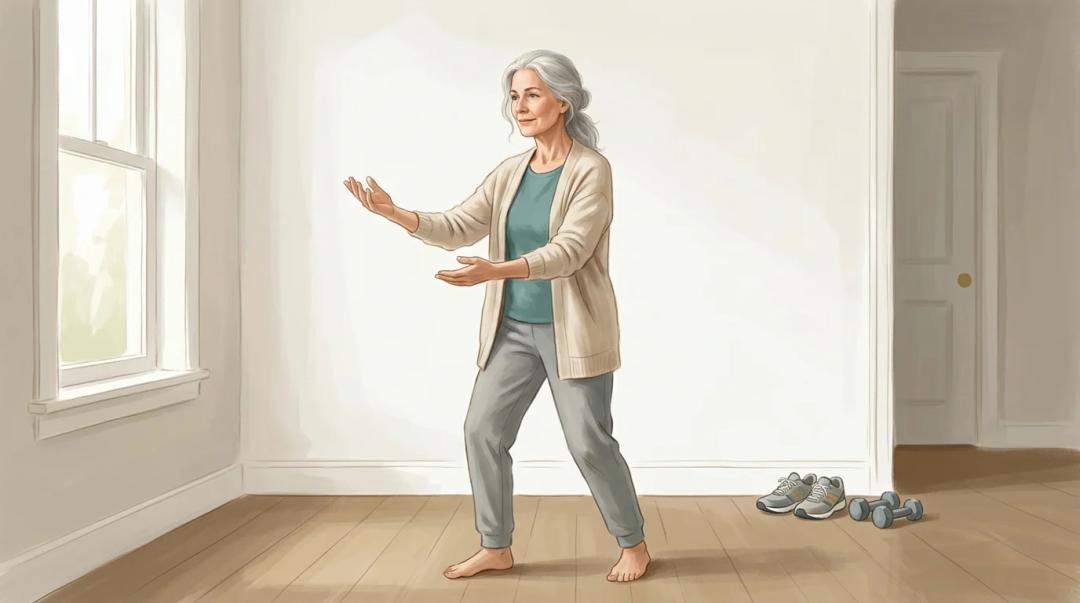
In a Feldenkrais Method® lesson, you move slowly, in a range that feels easy, and pay attention to how the movement feels. There is no pushing toward an edge and no right shape to reach. If a movement is too much, you make it smaller, or you imagine it instead. Imagining it still counts. This is the idea behind Feldy, which offers guided audio lessons you can follow lying down at home.
The lessons ask for attention rather than effort. For a sensitised system that can feel very different from exercise, because there is nothing to fail at and nothing to push through. Feldenkrais® lessons are movement education and sit alongside your medical care. They are not a treatment for fibromyalgia. If you would like to see what this looks like in practice, our page on gentle exercises for fibromyalgia is a good next step.
What to notice
Over a week or two, you might watch a few things. How does your pain feel an hour after a movement, not during it? Does a shorter session leave you feeling better than a longer one? Which times of day are kinder? Do you hold your breath, your jaw or your shoulders while you move? These notes are useful for you, and they are worth sharing with your doctor too.
The rule of thumb is simple. Start with less than you think you need, stay in a range that feels easy, and let the next day tell you what was right for you. If your pain is new, changing, or different from your usual pattern, talk to your doctor before you continue.
Find where to start
Not everyone finds the same gentle path helpful. Some people like slow movement on the floor, others prefer a warm pool, and some want a quiet seated practice.
Not sure which movement method fits you? Take the 60 second Movement Match quiz. Three quick questions about your body and your days point you to one movement method to try first.
Small, safe movement for a sensitive body
Now for movement that respects a sensitive body. The Feldy program stays well below pain, giving the nervous system room to soften through gentle Feldenkrais® lessons. Gentle, guided, and self-paced.
Start my free 7-day trialNo credit card needed.
Common Questions about fibromyalgia chronic pain relief (FAQ)
Is gentle movement safe with fibromyalgia?
For most people, slow movement in a comfortable range is a sensible part of daily life with fibromyalgia, and your doctor can tell you what suits you. Be more careful if your pain is new or changing, or if a flare is under way. Keep it easy, and if anything sharpens the pain, stop and mention it to your care team.
How often should I move to ease fibromyalgia pain?
Short and frequent beats long and rare. Two or three gentle minutes on the days your body is willing makes a good start. On a hard day, resting or simply imagining a movement is still part of your routine, not a step backwards.
How long until I feel any relief?
There is no set timeline, and nobody can promise relief. Some people feel a little easier after one gentle session. A steadier change in comfort usually builds over weeks of pacing, rest and regular gentle movement, with ups and downs along the way.
How is gentle movement different from regular exercise or yoga?
Regular exercise often asks you to push, repeat and build up. Many yoga classes ask you to hold a shape or stretch toward an edge. A Feldenkrais style lesson works the other way: slow, easy movements in a comfortable range, with your attention on how you move, so a sensitive system has little reason to protest.
What should I avoid during a flare?
Avoid pushing through pain and avoid trying to catch up on everything you missed. Skip stretching toward an edge and anything that sharpens the pain. Many people find that warmth, rest, slow breathing and very gentle movement feel kinder. Please talk to your doctor before you change any medical treatment.
When should I talk to my doctor about fibromyalgia pain?
Talk to your doctor if your pain is new, changing or different from your usual pattern, or if a new symptom appears. It is also worth raising if pain is wearing down your sleep or your mood. Your doctor or specialist team can look at the whole picture and help plan your care.
Small, safe movement for a sensitive body
See the programRelated resources
Fibromyalgia Flare: Gentle Movement and Pacing to Cope
How to cope with a fibromyalgia flare: rest first, then very gentle movement and careful pacing, with a short flare-friendly lesson and tips on how long a flare lasts.
Can Chronic Pain Make You Tired? Why, and What Helps
Yes, and it is common. Here are the plain reasons pain and tiredness travel together, and the habits that tend to give some energy back.
Women with fibromyalgia saw the biggest pain drop with slow movement
Ready to start moving better?
Gentle, guided lessons for your body. Try your first one free, no credit card required.