

10 Feldenkrais® Exercises to Try Gently at Home
Ten short Feldenkrais explorations you can do lying or seated, each one slow, small, and well below pain, with attention on sensing change rather than reaching a stretch.
In short
Feldenkrais exercises are slow, small movement explorations done with close attention, lying down or seated and always well below pain. This set of ten travels from tiny pelvic tilts and knee sways to head rolls, eye and jaw movements, breath in the ribs, hands, feet, a shoulder circle, and a standing scan. The pattern is always the same: settle, move a little, rest, and notice what changes. Pick two or three per sitting; attention, not effort, is the active ingredient.

See how Feldy helps you move with more ease and awareness
Gentle guided lessons you can do at home. Start with a free 7-day trial.
The lesson
About 10-15 minutes. Move slowly, do less than you can, and stay well below any pain. Rest whenever you need to.
Prefer to listen than read?
Feldy voices gentle lessons like this for body awareness, so you can close your eyes and follow along.
- 1
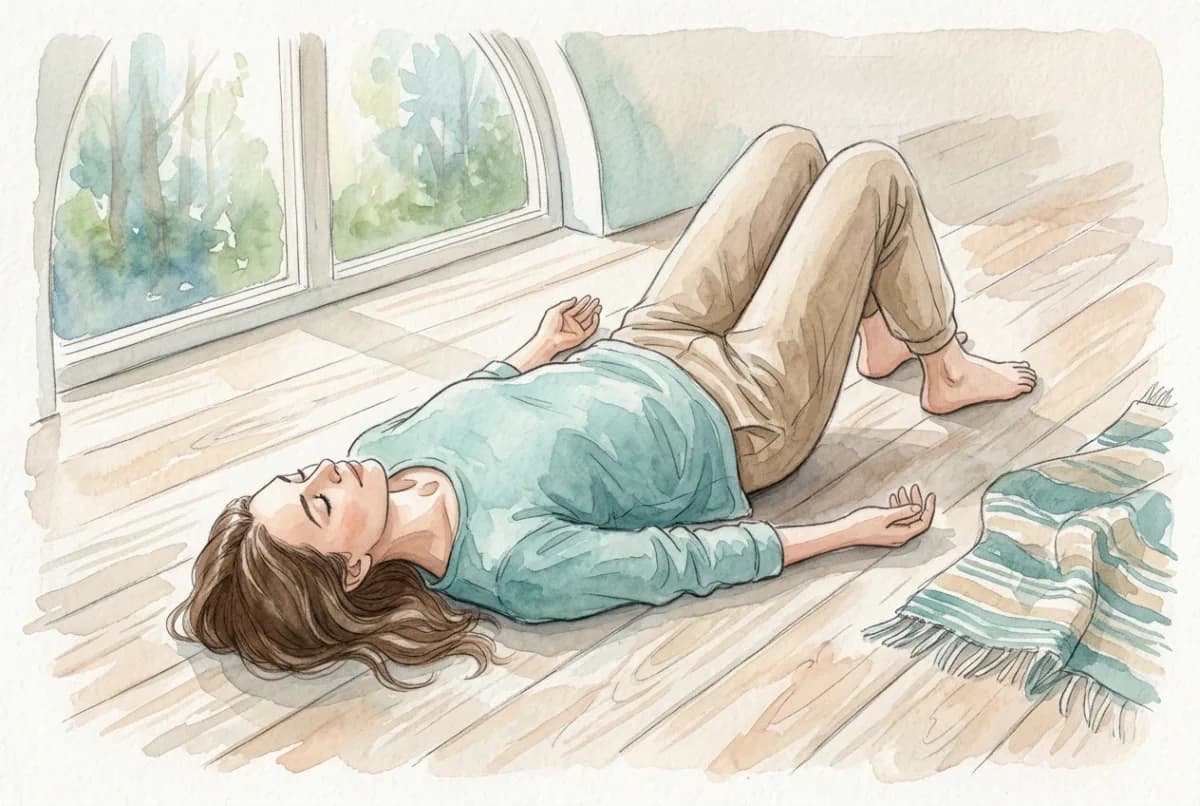
Arriving on your back. Lie on your back with your knees bent and your feet standing, on the floor or on a firm bed. Let the surface hold your weight, and make yourself as comfortable as you can.
- 2
A first scan. Notice where your body meets the floor. Which parts press down clearly, and which barely touch?
- 3
Tiny pelvic tilts. Slowly roll your pelvis a small way toward your feet, then back, so little it is almost a thought. Where does the movement echo in your spine? Then pause and rest.
- 4
A quiet rest. Let everything settle for a few breaths. Notice the air moving in and out without changing it.
- 5
Knees drifting sideways. Let both knees lean a little toward one side and return to the middle, then visit the other side. Keep it small enough that nothing pulls, and if any of it is unpleasant, make it smaller or simply imagine it.
- 6
Another pause. Come back to stillness and rest for a moment. Pauses are part of the practice, not a break from it.
- 7
Closing scan. Lengthen your legs if that feels good, and notice again how you meet the floor. What, if anything, feels different from when you began?
Let Feldy guide you, eyes closed
You just read these steps. In the Feldy program, a calm voice guides you through each gentle move, so your attention can stay in your body instead of on the screen.
Try Feldy Free for 7 daysNo credit card needed.
If you are looking for gentle Feldenkrais® exercises you can try at home, this set of ten short explorations is a kind place to begin. These feldenkrais exercises come from the Feldenkrais Method, a practice of Awareness Through Movement® that favors curiosity over effort. Each one is small, slow, and done lying down or seated, with your attention resting on what you sense rather than on any stretch you might reach. One gentle reminder before you start: stay well below pain throughout, keep every movement smaller and slower than feels necessary, and rest whenever you like. Nothing here is meant to be pushed.
The reason this approach matters is that so many of us carry low grade stiffness without ever questioning it. Musculoskeletal conditions affect roughly 1.7 billion people worldwide, making them a leading cause of discomfort and limited movement (WHO, 2022). A practice that asks almost nothing of the body, yet changes how it organizes itself, has obvious appeal when so much daily holding goes unnoticed.
How to do these feldenkrais exercises with attention
The secret to this practice is not the shape of the movement but the quality of your attention while you do it. Move slowly enough that you can actually feel each part of a motion unfold, because that detailed feedback is what lets a habit of bracing soften. If a movement starts to feel like work, you have gone too big or too fast, so shrink it until it feels almost effortless again. Rest between explorations as much as you move, since those pauses are when the nervous system quietly absorbs what just happened. There is no correct version to achieve and nothing to fix, only options to notice.
You do not have to do all ten in one sitting. Pick two or three, give them real attention, and leave the others for another day. Over time you may find favorites that ease a particular spot of tension, and that is exactly how a personal practice grows. If you like to practise first thing, our explainer on why does it feel so good to stretch in the morning describes what your body is already reaching for as it wakes. The rest of the day counts too, and our guide to sofa sitting positions looks at the evening shape that quietly undoes a lot of that ease.
Why these feldenkrais exercises feel different
In a conventional routine you ask the body to work harder so it grows stronger. These explorations do the opposite, inviting the body to do less so it can sense more. A large, effortful movement tends to switch on protective guarding, while a small, curious one invites that guarding to let go. If you have ever noticed your body reaching for a long yawn or stretch of its own accord, our guide to why do we stretch involuntarily explains that same quiet drive to reorganize and release. This is why so many people stand up afterward feeling lighter or taller, even though the effort involved was tiny. If you are wondering how well that is backed by research rather than enthusiasm, our look at is feldenkrais evidence based weighs what the studies actually show.
The ten explorations below travel through the whole self, from the pelvis to the eyes, the jaw, the ribs, and the hands, so you build a fuller picture of how you are put together. Going further is where guidance helps, because a recorded lesson can keep you slow and curious when the mind wants to rush. The Feldy body awareness program is built entirely around this experience, with each session leading you through attentive movement so the body can find more ease. If you would like a sense of what a whole session is really like, our Feldenkrais workout page walks through one, and for a focused set when the upper body is tight, the gentle Feldenkrais for neck tension lesson carries the same unhurried care.
The ten explorations
The guided lesson at the top of this page walks you through the first two in full. The rest follow the same pattern: settle, move a little, rest, and notice. Keep every one of them slow, small, and comfortable, and rest between explorations as long as you like. If you would rather be guided than read, our 7 day free trial takes you through one lesson a day. If reading is your way in, our guide to which feldenkrais book to read first points you to the one to start with.
- Tiny pelvic tilts. Lying with knees bent, roll the pelvis a small way toward your feet and back. Where does the movement echo along your spine?
- Knees drifting sideways. Let both knees lean a little toward one side and return, then visit the other side. Keep it small enough that nothing pulls.
- Slow head rolls. Still on your back, let your head roll gently left and right, as if saying a lazy no. Does it glide more easily in one direction?
- Eyes leading. With eyes closed, let your gaze drift slowly to the left and back to the middle, then to the right. Notice whether your neck quietly wants to follow.
- A softer jaw. Let your lips rest together and your teeth apart, then slide the lower jaw a tiny way to one side and back. Less than you think is plenty. If clenching is a habit of yours, our somatic jaw release lesson stays with this one movement for longer.
- Breath in the ribs. Rest a hand on your lower ribs and simply feel them widen and settle with each breath, without changing anything.
- Folding and unfolding a hand. Slowly curl the fingers of one hand toward the palm and let them lengthen again, as if the movement were brand new. Compare how the two hands feel afterward.
- Feet tipping on the heels. With your legs long, let both feet tip gently toward each other and away, rolling easily on the heels.
- A shoulder drawing circles. Lying on your side with knees bent, let the top shoulder trace a slow, small circle. Rest, then try the other way around.
- A standing scan. Stand quietly and notice how your weight travels through your feet, then walk a few easy steps. What feels different from when you began?
Common Questions about feldenkrais exercises (FAQ)
What are Feldenkrais exercises?
They are slow, small movement explorations done with close attention, usually lying or seated and always well below pain. Rather than stretching or strengthening a muscle, you move gently and notice what changes, which lets the nervous system release habits of holding. The aim is easier, more comfortable movement, not effort.
Are these Feldenkrais exercises safe for beginners?
They are among the gentler movement practices, because everything stays slow, small, and within a comfortable range, with frequent rests. Still, if you carry an injury, are healing from surgery, feel dizzy, or live with a diagnosed condition, please clear it with your doctor or physical therapist beforehand. Leave out anything that does not feel good.
How often should I do them?
Two or three short sittings across a week is a fine starting point. Many people enjoy ten or fifteen minutes after work or before bed. Brief, regular practice tends to teach the body more than one long, occasional push.
How are Feldenkrais exercises different from stretching?
Stretching tries to lengthen a muscle through force, while these explorations work through attention and small movement so a holding pattern can ease on its own. There is no pushing, no holding a position, and no reaching for a deeper stretch. The change happens in how the brain organizes movement rather than in how hard you pull.
Do I need any equipment to try them?
Not really. All it takes is a comfy spot to lie or sit, plus a folded towel beneath the head if that feels nicer. Because the explorations lean on attention rather than props, you can practice almost anywhere you can be quiet for a few minutes.
How soon might I notice a difference?
Some people feel a little lighter, taller, or more at ease by the end of a single session. A more lasting shift tends to settle in gradually as the gentle practice repeats across the weeks. Everybody moves at their own pace, and the noticing itself is part of the benefit.
Learn to listen to your body
See the programRelated resources
Feldenkrais® Workout: What a Session Is Really Like
A Feldenkrais workout looks nothing like a conventional one. Here is what a session feels like, why it is so gentle, and a short sample sequence to try at home.
Feldenkrais® for Neck Tension: Gentle Lessons That Help
Feldenkrais for neck tension uses slow, attentive movement to ease the holding patterns behind a stiff neck. Here is how it works, plus a short lesson to try.
Your balance got better, but did your sense of where your body is get better too
Ready to start moving better?
Gentle, guided lessons for your body. Try your first one free, no credit card required.