

Somatic Therapy Exercises for Everyday Tension
Gentle somatic therapy exercises for everyday tension and body awareness. Slow, guided movement you can try at home, plus when to seek professional support.
Before you begin. Gentle self-care, not a substitute for mental health care. If you live with significant anxiety, trauma, or distress, please work alongside a qualified professional, and stop any practice that feels overwhelming.
The lesson
About 5-10 minutes. Move slowly, do less than you can, and stay well below any pain. Rest whenever you need to.
Prefer to listen than read?
Feldy voices gentle lessons like this for body awareness, so you can close your eyes and follow along.
- 1
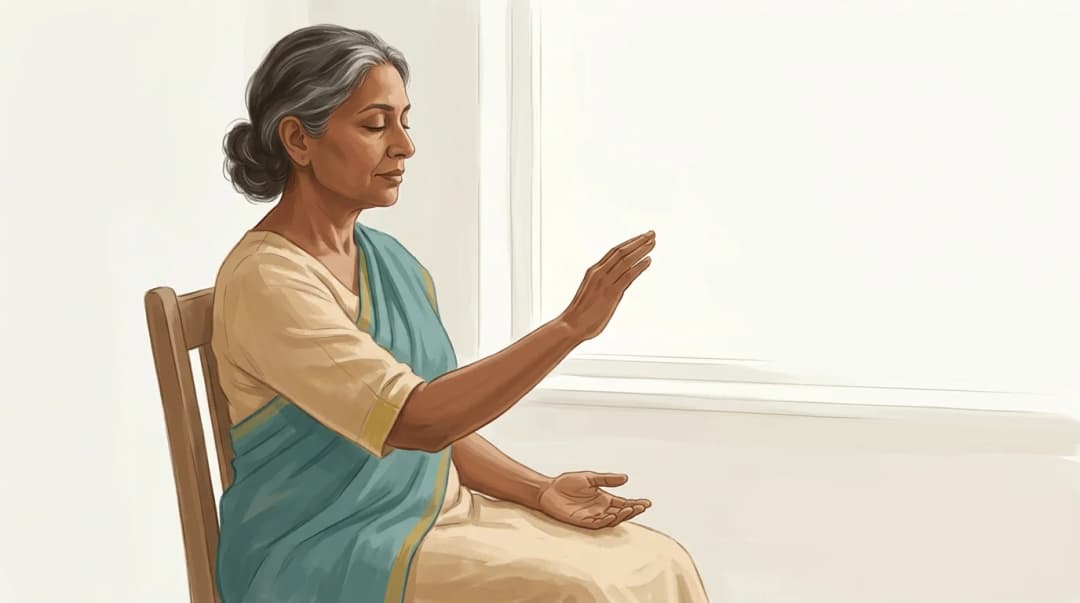
Feeling the support. Sit easily or lie down, and let your weight rest fully into whatever holds you. Where do you feel that support most clearly?
- 2
Shoulders and breath. Let both shoulders rise a small way as you breathe in, then melt down as you breathe out. After a few unhurried rounds, pause and rest.
- 3
A small nod. Let your chin dip a short way and return, slowly enough that your throat and jaw stay soft. Rest again when you have done a few.
- 4
Ear toward shoulder. Tilt one ear a little toward its shoulder and back, then the other side, only as far as feels easy. If a spot catches, make the movement smaller or simply imagine it.
- 5
Hands in the lap. Be still for several breaths with your hands resting. Let everything settle.
- 6
Noticing neck and shoulders. Bring your attention to your neck and shoulders one more time. What, if anything, feels different from when you started?
Let Feldy guide you, eyes closed
You just read these steps. In the Feldy program, a calm voice guides you through each gentle move, so your attention can stay in your body instead of on the screen.
Try Feldy Free for 7 daysNo credit card needed.
A quick note before we begin: somatic therapy exercises is a phrase that gets used two different ways, so let us be clear. This page is about gentle somatic movement for everyday tension and body awareness, the kind you can do on a chair or the floor at home. It is not body-based psychotherapy, and it is not a substitute for mental-health care. With that settled, these somatic therapy exercises offer a slow, attentive way to ease the tightness that builds up across an ordinary day. The Feldenkrais Method® is one of the most studied approaches in this gentle tradition, and it shapes how we teach here.
Everyday tension is nearly universal. The American Psychological Association's Stress in America surveys have repeatedly found that a majority of adults report physical symptoms of stress (APA, Stress in America), with tight muscles and headaches among the most common. Slow movement is one accessible way to meet that tension with kindness rather than force.
How these somatic therapy exercises ease tension
The principle is simple. When you move slowly and pay attention, your brain gets clear feedback about what your muscles are doing. With that feedback, it can release guarding patterns it has been holding without your noticing, often around the neck, shoulders, and jaw. You are not forcing a muscle to let go. You are giving your nervous system the information it needs to let go on its own.
This is why effort works against you here. Straining to relax tends to add tension. Inviting ease through small, curious movement tends to reduce it. The short lesson above is built on exactly this idea, and you can repeat it whenever you feel tightness creeping in.
Practicing somatic therapy exercises safely at home
A few simple guidelines keep the practice gentle. Make each motion even tinier and more unhurried than feels necessary. Stay well below any point of pain. Rest often, and treat resting as part of the work, not a break from it. If you would like a fuller first session, our guide to somatic exercises for beginners walks through one step by step.
When to reach for professional support
These exercises are gentle self-care, and it is worth knowing their limits. If your tension is tied to ongoing pain, an injury, trauma, or real emotional distress, please reach out to a doctor, physical therapist, or licensed mental-health professional. Movement can sit comfortably alongside that support, never in place of it. That is the responsible way to use any self-care practice.
To learn more about the method behind this approach, see our Feldypedia guide to the Feldenkrais Method, and if growing body awareness is your aim, a guided path helps you stay consistent. Feldy was made for this kind of slow, curious practice.
Common Questions about somatic therapy exercises (FAQ)
What are somatic therapy exercises?
On this page, somatic therapy exercises means gentle, slow movements that ease everyday tension and build body awareness. They use attention and small motion rather than effort, and they are a form of self-care, not a clinical treatment.
Are these the same as somatic psychotherapy?
No. Somatic therapy can also refer to body-based psychotherapy delivered by a licensed clinician for trauma or emotional issues. The movement practices here are not psychotherapy and are not a substitute for mental-health care.
Who can do these somatic therapy exercises?
Most people can, including those with stiffness or long hours at a desk, since the movements stay easy and never reach strain. Anyone living with pain, a recent injury, or a medical condition should clear it with a qualified professional first.
When should I see a professional instead?
If tension is linked to ongoing pain, an injury, trauma, or significant emotional distress, please consult a doctor, physical therapist, or licensed mental-health professional. These exercises can sit alongside that care, not replace it.
How often should I practice?
Short and frequent beats long and occasional, so a brief session on most days serves you well. Repeat the sequence above whenever tension builds, such as midway through a workday.
How soon might I feel a difference?
Many people notice a little more ease within a single session. Steadier change in how tension shows up usually develops gradually over weeks of regular, gentle practice.
Learn to listen to your body
See the programRelated resources
How to Relax Your Jaw: A Gentler Feldenkrais® Approach
The jaw rarely lets go because you told it to. Here is a slower way in, built on small movements and attention rather than stretching or force.
Feldenkrais® vs MELT Method: The Gentler Pick for Stiff Bodies
Both are kind to a 50 plus body. Feldenkrais changes the stiffness itself, MELT changes how tissue feels for a while. Here is how to choose between them.
Your balance got better, but did your sense of where your body is get better too
Ready to start moving better?
Gentle, guided lessons for your body. Try your first one free, no credit card required.