
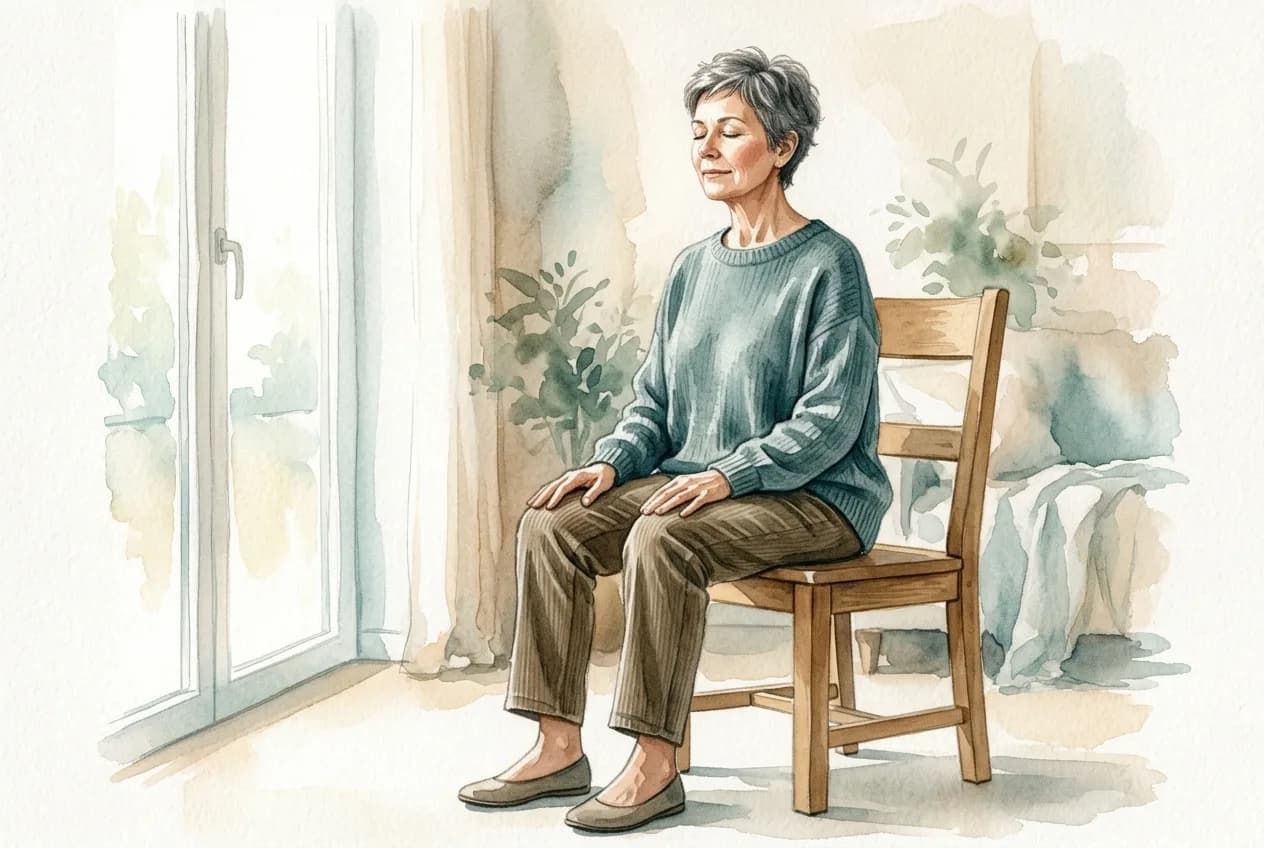
Sciatica Sitting Exercises: Gentle Moves From a Chair
Sciatica sitting exercises you can do from a chair: small, comfortable movements that ease a stiff, guarded lower back and hip without provoking the nerve. A short seated lesson in a calm, attentive style.
Before you begin. This is gentle self-care, not medical advice. Sciatica involves a nerve, so keep every movement small and stop anything that sharpens the pain, sends it further down the leg, or brings numbness or tingling. Seek prompt care for leg weakness, numbness in the groin or saddle area, or loss of bladder or bowel control.
The lesson
About 5-10 minutes. Move slowly, do less than you can, and stay well below any pain. Rest whenever you need to.
Prefer to listen than read?
Feldy voices gentle lessons like this for lower back pain, so you can close your eyes and follow along.
- 1
Onto the chair. Sit toward the front of a firm chair with both feet flat, about hip-width apart, and your hands on your thighs. Take a moment to feel the chair holding you.
- 2
A quiet reading. Without changing anything, notice where the pressure falls. Is more weight on one sitting bone than the other today?
- 3
The pelvis rocking. Roll your pelvis gently so the lower back arches a little, then rounds softly, slow and tiny. Pause if the leg says anything, and rest after a few rocks.
- 4
Weight rolling sideways. Let your weight drift onto one sitting bone, then slowly across to the other, small and smooth. Come back to the middle and rest for a breath.
- 5
Eyes leading a look back. Let your eyes, head, and upper back turn slowly to glance over one shoulder, only as far as is easy, then unwind and visit the other side. Make it smaller or imagine it if anything travels down the leg, then face forward and pause.
- 6
A longer out-breath. Sit quietly and let each out-breath grow a little longer. What, if anything, feels different in your lower back and hip compared with when you began?
Let Feldy guide you, eyes closed
You just read these steps. In the Feldy program, a calm voice guides you through each gentle move, so your attention can stay in your body instead of on the screen.
Try Feldy Free for 7 daysNo credit card needed.
These sciatica sitting exercises are a calm, seated way to keep a sore, guarded lower back and hip moving when standing or lying down is awkward. Rather than reaching for a strong stretch, which can tug on an already irritated nerve, they use small, comfortable movements you can do from any firm chair, at your desk or by the window. The idea is gentle, so gentle that the leg has no reason to flare, giving a braced back a little freedom while you stay well within comfort. This unhurried, attentive style comes straight from the Feldenkrais Method®, which teaches the body through ease rather than effort.
Sciatica is common: its lifetime incidence is estimated at 10% to 40%, peaking in the fourth decade of life (StatPearls, 2024). It sits within the wider world of low back pain, the single leading cause of disability worldwide (WHO, 2023), and for many people gentle, frequent movement is far kinder to an irritated nerve than forcing a stretch or staying completely still.
How these sciatica sitting exercises work
When the sciatic nerve is irritated, the muscles around the lower back and hip often tighten to protect you, and long, still sitting can lock that guarding in place. The seated lesson above answers that in two ways. First, it keeps you moving in small, comfortable ranges, which spreads the load and reminds a braced back that it can move without threat. Second, it stays deliberately clear of the positions that stretch or compress the nerve, so you get the benefit of movement without the flare.
Each part is meant to feel easy. The small pelvic rocks free the lower back, the side to side weight shifts share the pressure between your sitting bones instead of one tender spot, and the slow turns bring gentle rotation back to the spine. For the wider picture of what sciatica is and why it behaves this way, see our Feldypedia guide to sciatica and nerve related back pain.
Sitting well between the exercises
How you sit the rest of the time matters as much as the movements themselves. Sciatica rarely enjoys long stretches of unbroken sitting, so it helps to change position often, let your weight rock gently between your sitting bones, and stand up now and then to break the stillness. A firm seat that lets your feet reach the floor, with your pelvis free to move rather than gripped, keeps the back far happier than a soft, slumped one. Because your chair is already right there, 7 free days of Feldy audio lessons can guide those small seated rocks without leaving home.
That comfort first attention is how Feldy shapes every lesson. When you would like more to draw on, our gentle sciatica exercises offer a lying down sequence, and our guide on how to sit in a chair with sciatica goes deeper into everyday sitting. The background lives in our Feldypedia article on the Feldenkrais Method, and the fuller path runs through the Feldy program for lower back pain.
A note on care
Please treat these sciatica sitting exercises as gentle self-care, not a treatment or a cure. Because sciatica involves a nerve, listen closely to your leg. Keep every movement small, and stop anything that sharpens the pain, drives it further down the leg, or brings new numbness or tingling. Get urgent medical help if you notice weakness in the leg, numbness around the saddle or groin, or any change in your bladder or bowel control. For everyday irritation, staying slow, small, and well within comfort is a kind way to keep moving.
Common Questions about sciatica sitting exercises (FAQ)
Are sitting exercises safe for sciatica?
Gentle, small seated movements are usually safe and can be a comfortable way to keep a guarded lower back and hip moving. The rule is to stay well within comfort and to stop anything that sharpens the pain or sends it further down the leg. If you are unsure, or your symptoms are severe, check with a professional before you begin.
Which sitting movements help ease sciatica?
Small pelvic rocks, gentle side to side weight shifts, and slow turns to look behind you all keep the lower back and hips moving without straining the nerve. The aim is easy, rhythmic motion that spreads the load and eases guarding, rather than any strong stretch. The short lesson on this page puts these together in a calm sequence.
What sitting positions or movements should I avoid with sciatica?
Skip anything that pulls the nerve or sharpens the pain, such as slumping into a deep forward fold, straightening the sore leg out hard, or crossing the legs for long periods. Long stretches of unbroken sitting can also aggravate sciatica, so it helps to shift position often and stand up now and then.
How often can I do these sciatica sitting exercises?
Little and often works well. A gentle few minutes several times through the day, or whenever sitting starts to feel stiff, tends to help more than one long session. Since it all stays small and easy, you rarely need any gap between rounds. Let your symptoms decide, rather than following any fixed schedule.
How is this different from stretching for sciatica?
Strong stretching reaches for a muscle's limit and can tug on an already irritated nerve. This does the opposite. It uses small, comfortable, varied movement to ease guarding and restore easy motion, never chasing an end range. You are inviting the back and hip to relax and move, not pulling them longer.
When should I see a professional about sciatica?
Check with a doctor or physical therapist if the pain is intense, keeps coming back, or will not settle, and speak to them first if you carry a diagnosed condition or are recovering from injury. Get urgent help if a leg turns weak, the saddle or groin area goes numb, or your bladder or bowel control changes.
A gentler way through back pain
See the programRelated resources
Gentle Sciatica Exercises: A Soothing Daily Set
A simple set of gentle movements that ease sciatica-related discomfort. Slow, small, and beginner-friendly, so you can return to it any time.
How to Sit in a Chair With Sciatica, With Ease
How to sit in a chair with sciatica is less about perfect posture and more about easeful, supported, frequently-varied positions, with small movements that keep the area from locking up.
A live class or a recording? For chronic back pain, the format barely changed the outcome
Ready to start moving better?
Gentle, guided lessons for your body. Try your first one free, no credit card required.