
Gentle Sciatica Exercises: A Soothing Daily Set
A simple set of gentle movements that ease sciatica-related discomfort. Slow, small, and beginner-friendly, so you can return to it any time.
Before you begin. Gentle self-care, not a diagnosis or treatment. If you have a diagnosed condition, an injury, recent surgery, or new or worsening pain, please check with a doctor or physical therapist before starting.
The lesson
About 5-10 minutes. Move slowly, do less than you can, and stay well below any pain. Rest whenever you need to.
Prefer to listen than read?
Feldy voices gentle lessons like this for lower back pain, so you can close your eyes and follow along.
- 1
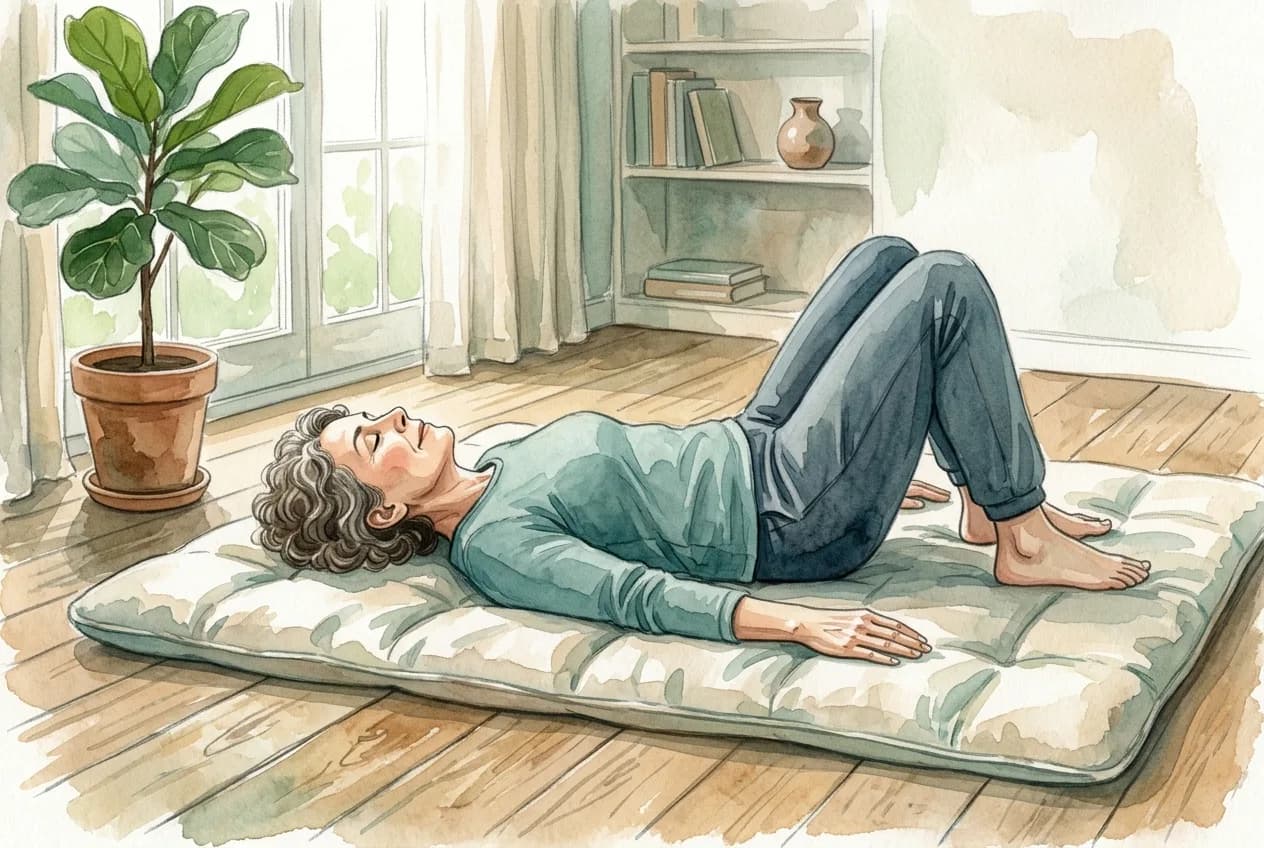
Resting on your back. Lie on your back, knees bent, feet standing on the floor. Where does your body meet the floor most clearly?
- 2
Knees drifting. Let both knees lean a little toward one side, through the middle, then the other way. Smaller if the leg complains.
- 3
A quiet rest. Be still for a few breaths with the feet standing. Let the back settle where it likes.
- 4
Drifting again. Lean the knees again, a few passes each way. Is one direction easier than the other?
- 5
Where it travels. As the knees drift, notice your pelvis rolling on the floor. Does the movement reach your ribs? Then rest.
- 6
Sensing along the leg. Lie still, legs long or feet standing. Along your back, hip, and leg, what, if anything, feels different now?
Let Feldy guide you, eyes closed
You just read these steps. In the Feldy program, a calm voice guides you through each gentle move, so your attention can stay in your body instead of on the screen.
Try Feldy Free for 7 daysNo credit card needed.
If sciatica has you wincing when you stand, sit, or roll over in bed, these gentle sciatica exercises offer a calm way to keep moving. The idea is not to push through discomfort but to invite a little more ease, with movements small and slow enough to stay well below any pain. You can return to the set whenever you like, at the bed or in a chair. This approach grows out of the Feldenkrais Method®, which uses slow, attentive movement to help the body find more comfortable options.
Sciatica is common. It often arises from the lower back, and low back pain affected an estimated 619 million people worldwide in 2020, with most acute episodes settling within about six weeks (WHO, 2023). That does not make the in-between days easy, which is exactly where a gentle daily set can help.
What makes a gentle sciatica exercises set work
The most useful movements for sciatica-related discomfort tend to be the gentlest ones. Sciatica usually involves an irritated nerve, often traced to the lower back, and an irritated nerve does not respond well to force. Slow, small movement does something different. It sends the nervous system steady signals that movement is safe, which can quiet a guarding pattern the body adopted to protect a sore area.
A short, clear set helps because it removes the guesswork. You are not trying to remember a long routine or follow along on a screen. You move through a few easy steps at your own pace and stop whenever you like. Returning to the same gentle set little and often also suits sciatica far better than a single long session. You can learn more about the underlying approach in our Feldypedia guide to the Feldenkrais Method.
The movements in the set above all share a few qualities. They keep the spine quiet rather than twisting or bending it sharply, they let the legs and pelvis do the gentle work, and they stay slow enough that you can feel each moment as it happens. That slowness is not a limitation, it is what lets the guard come down.
Rolling over in bed with a little less wincing is a modest aim worth exploring, and Feldy's free trial gives you a week of slow, guided sets.
A safety note before you start
Most sciatica eases on its own, but a few signs deserve prompt medical attention. Please see a doctor if you notice leg weakness, numbness around the groin or inner thighs, or any loss of bladder or bowel control. These are uncommon but important. This set is gentle self-care, not a diagnosis or a substitute for professional advice. If you are recovering from injury or surgery, check with your clinician first. For a fuller picture of how gentle movement supports the lower back, see our lower back pain program.
How to use this set with sciatica in mind
Find a quiet spot with a firm but comfortable surface, like a mat on the floor or a firm bed. There is no target range to reach and no count to hit. Make each movement a little smaller and slower than feels necessary, breathe easily throughout, and rest between movements. If anything sends sharp sensation down the leg or sharpens the ache, that is your cue to make the movement smaller or pause for the day.
Many people find that staying gently mobile feels better than holding still for long stretches, and the set above is built for exactly that. Pair it with short walks if walking feels comfortable. It also helps to know what not to do: our guides on what exercises to avoid with sciatica and the best resting position for sciatica round out the picture. This same principle of slow, curious movement runs through every lesson in the Feldy program, and you can explore a related set in our somatic stretching exercises. Over time, the goal is simply more ease and more confidence in how you move.
Common Questions about gentle sciatica exercises (FAQ)
Can gentle sciatica exercises cure sciatica?
No. Gentle movement can ease discomfort and help you move more comfortably, but it is not a cure. Sciatica usually involves an irritated nerve, often from the lower back, and many cases settle over weeks. Use this set as comfortable support, not a treatment.
When should I see a doctor instead?
Please see a doctor promptly if you have leg weakness, numbness in the groin or inner thighs, or any loss of bladder or bowel control. These can signal a problem that needs medical attention. Severe or worsening pain also warrants a professional opinion.
How often should I do these movements?
Once or twice a day is plenty for most people, kept short and easy. Consistency matters more than intensity. If a movement increases pain or sends sensation down the leg, ease off or skip it that day.
Is it normal to feel sensation down the leg?
Some people feel mild referral that eases as they move gently. Sharp, increasing, or spreading sensation is a signal to stop and rest. Keep every movement small enough that it stays comfortable, and check with a professional if you are unsure.
How long until sciatica discomfort eases?
Research suggests most acute sciatica improves substantially within about six weeks. Gentle daily movement can make that stretch of time more comfortable. A steadier sense of ease in how you move often develops with regular, unhurried practice.
Can I do this set during a flare-up?
Only if it feels comfortable. During a flare, make the movements even smaller, do fewer of them, and rest more. There is no need to push through. If everything hurts, simply lie comfortably and breathe until things settle.
A gentler way through back pain
See the programRelated resources
Sciatica Strength Exercises, the Gentle Feldenkrais® Way
A gentle floor lesson for sciatica that grows quiet steadiness from your center, with light foot pressure and small pelvis movements instead of weights.
Sciatica Exercises for Seniors: Gentle, Bed Friendly Movement
A short, gentle lesson for nerve related leg pain in later life. Small movements, long rests, and a bed based option if getting to the floor is the hard part.
Yoga, Pilates, tai chi or qigong for chronic back pain? 25 trials found no clear winner
Ready to start moving better?
Gentle, guided lessons for your body. Try your first one free, no credit card required.