

Thoracic Spine Stretches for a Stiff Upper Back
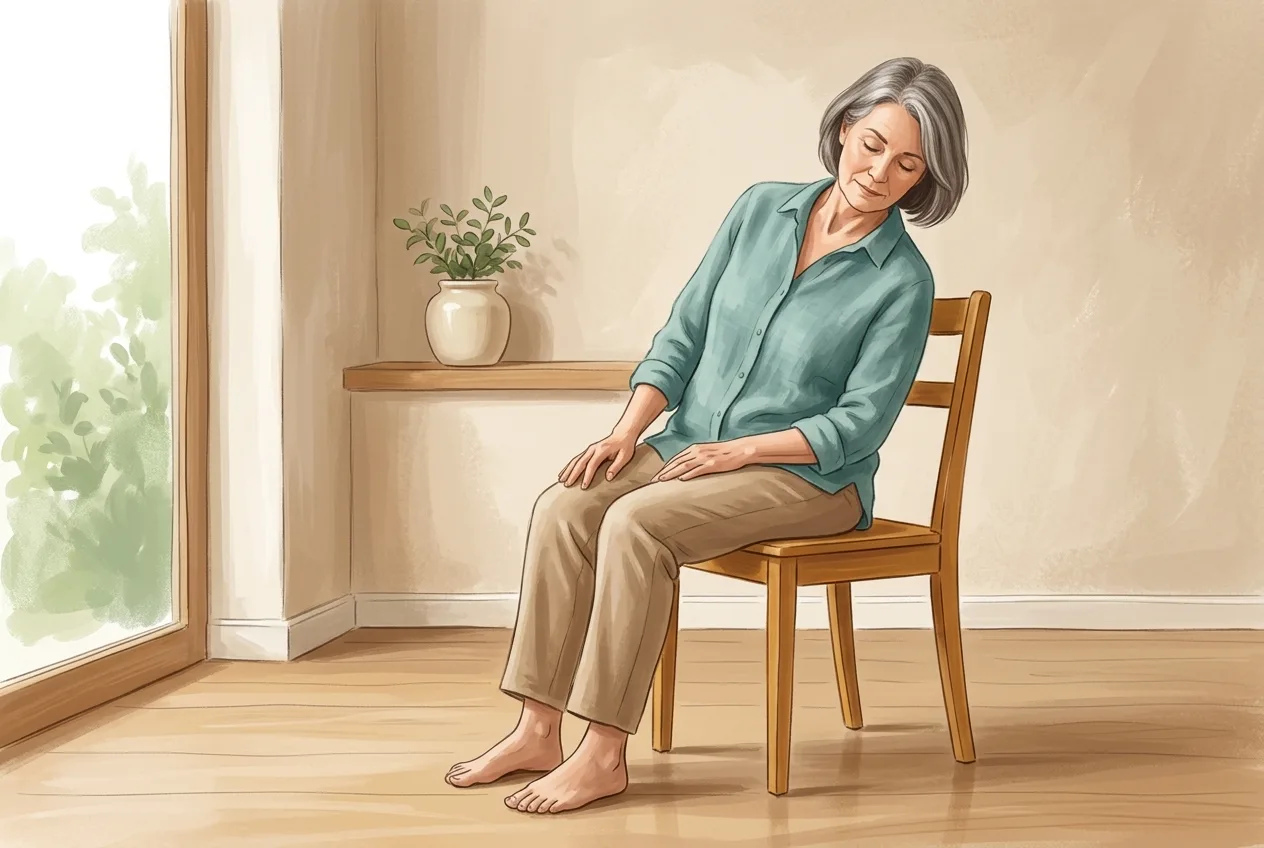
Reframe thoracic spine stretches as small, attentive movements. Gentle side-bending, easy rotation, and soft extension over the breath, all kept well below pain.
Before you begin. Gentle self care, not medical advice. Keep every movement small, slow, and well below any pain. If upper back pain is sharp, follows a fall or injury, or arrives with chest pain, breathlessness, fever, numbness, or tingling down an arm, please see a doctor before practicing.
The lesson
About 8-12 minutes. Move slowly, do less than you can, and stay well below any pain. Rest whenever you need to.
Prefer to listen than read?
Feldy voices gentle lessons like this for neck and upper back, so you can close your eyes and follow along.
- 1
Behind the heart. Sit toward the front of a firm chair with feet flat, or lie on your back with knees bent. How does the wide area of your upper back feel right now?
- 2
Ribs widening behind. On each in-breath, picture the air drifting to the ribs just below your shoulder blades so they widen a little, and let everything settle on the way out. Five or six easy rounds, then rest.
- 3
A small lean one way. Tip a small amount toward one side, so the other side of your ribs lengthens, only as far as stays pleasant. Float back to the middle and pause.
- 4
The lean returned. Let the same easy lean visit the other side. Does one side feel roomier than the other? Then come back and rest.
- 5
A breastbone floating up. Let your breastbone rise the smallest amount, the upper back lengthening a hair, then settle back down soft and round. Slowly between the two a few times, or simply imagine it, then be still.
- 6
Standing with more room. Rest for several breaths, then rise slowly and walk a few steps. What, if anything, feels freer or taller in your upper back than when you began?
Let Feldy guide you, eyes closed
You just read these steps. In the Feldy program, a calm voice guides you through each gentle move, so your attention can stay in your body instead of on the screen.
Try Feldy Free for 7 daysNo credit card needed.
If your upper back feels stiff, braced, or quietly tired after a long day, thoughtful thoracic spine stretches can help that region rediscover its own range. The trick is to stop picturing a stretch as a hard pull and start treating it as a small, attentive movement. The Feldenkrais Method® takes exactly this view: rather than forcing tissue toward its limit, it invites slow, curious motion that stays well below pain, so the muscles can let go of their guarding on their own. Your thoracic spine, the long mid and upper section of your back framed by the ribs, is built to bend gently to the side, turn, lengthen, and move with every breath. Hours of sitting tend to let it settle into one shape, and these gentle movements simply remind it of the rest.
A stiff upper back is one small chapter in a very large story. The World Health Organization estimates that musculoskeletal conditions touch around 1.71 billion lives across the globe (WHO, 2022). The upper back rarely complains alone, either, since when it goes still it tends to hand extra work to the neck and shoulders perched above it. That is why kinder movement through the middle so often eases the whole upper region at once, and why so much of this care overlaps with looking after the neck.
Why gentle thoracic spine stretches beat forcing the upper back
When a region feels jammed, the natural urge is to push into it hard and demand a satisfying stretch. With the thoracic spine that tends to backfire, because a guarded back braces harder the more pressure it meets. A gentler approach reads each movement as a question rather than a command. You lean a little to one side, float back, lengthen a whisper, then settle, always stopping well before any pull and never holding at the edge. Given this kind of room, the upper back tends to soften on its own terms, and the ease it finds is more likely to stay.
This is also why attention matters every bit as much as range. Moving slowly enough to genuinely feel what is happening lets your nervous system refresh its picture of the area, which sits at the very core of how the Feldenkrais approach works. If you carry tension where the upper back meets the neck, our Feldypedia guide to neck and shoulder tension explains how a still mid back and an aching neck so often arrive together, and what a gentler day might look like.
Side-bending and breath: the easiest thoracic spine stretches to start with
The most welcoming thoracic spine stretches barely resemble stretching at all. Begin with the breath, since the ribs that cradle this part of the spine are meant to move every time you inhale, yet shallow breathing leaves them quiet and stuck. Picture each in-breath widening the ribs at the back, just below the shoulder blades, and let each out-breath simply settle. After a few rounds, add a soft side lean: imagine an easy wave traveling up one side so the opposite ribs open and lengthen a small amount, then float back to the middle and visit the other side. Keep both leans tiny and light, and notice which side feels freer without trying to even it out by effort.
Adding a whisper of lengthening and easy rotation
Once breathing and side leans feel familiar, you can fold in two more of the spine's natural gifts: lengthening and turning. For lengthening, let your breastbone float up the smallest amount, as though a thread lifts it gently, so the upper back opens a hair, then let it settle back into a soft, rounded shape. Go nowhere near a backbend. For turning, let your ribs and head drift a short way to one side and unwind, imagining the motion beginning between the shoulder blades. Keep every movement slow, small, and pleasant, resting whenever you like. The Feldy program for neck and upper back carries this same unforced approach a great deal further, lesson by guided lesson.
Where to go next
The upper back works best when the regions around it get the same care, so it helps to widen the circle gently. If your discomfort settles in the area between the shoulder blades, our guide to pain between the shoulder blades explores what is often behind it and how to ease it kindly. And when the neck itself is carrying the load, our Feldenkrais for neck tension lesson brings the same slow, attentive style to that region. Move within easy comfort, rest often, and let curiosity rather than effort lead the way. You can also browse more in our Feldypedia library, or try a guided lesson with Feldy's free 7 day trial.
Common Questions about thoracic spine stretches (FAQ)
Are these thoracic spine stretches safe for a stiff upper back?
They are designed to stay small, slow, and well below any pain, which suits most people with a generally stiff upper back. Even so, if your pain is sharp, will not settle, follows a fall, or arrives with chest pain, breathlessness, fever, or numbness, please pause and check with a doctor first, since those can signal something that needs attention. When you are unsure, ask a clinician before starting.
How often should I do thoracic spine stretches?
Short and frequent beats long and occasional for the upper back. A few easy minutes on most days, sized to how your body feels, keeps the region awake without ever overloading it. On a packed day, even a single quiet round of breathing and a couple of gentle leans counts as a worthwhile session. Steadiness across the weeks matters far more than how hard you work in any one sitting.
How long until my upper back feels looser?
Many people notice a little more lightness or width inside one gentle session, mostly because slow attention quiets some of the habitual holding. A steadier change in how freely the upper back moves usually grows over a few weeks of comfortable, regular practice. The gradual pace is part of why it tends to last rather than fade by the afternoon.
How are these different from a foam roller or a hard stretch?
A foam roller or a forceful stretch drives the tissue toward its limit with pressure, which a guarded upper back often answers by bracing harder. These thoracic spine stretches do the reverse. They use small, slow movement and careful attention so the muscles can let go rather than fight back. Nothing here is cranked or held at the edge, and comfort is the whole point.
Can I do these if I sit at a desk or drive all day?
Yes, and they often feel especially welcome then. Long stretches of sitting tend to park the upper back in one rounded shape, so brief breaks for breathing, easy side leans, and a whisper of lengthening can refresh it. Pair them with standing up and changing position often, and the upper back will usually feel less locked by the end of the day.
When should I see a professional about upper back stiffness?
Reach out to a doctor or physical therapist if the stiffness is sharp, keeps worsening, follows an injury, or comes alongside chest pain, breathlessness, fever, numbness, or tingling down an arm. A professional can identify what is actually going on and guide you toward movement that fits your particular situation, so you can practice with confidence rather than guesswork.
A softer neck, a freer upper back
See the programRelated resources
Pain Between the Shoulder Blades: Gentle Relief
Pain between the shoulder blades is usually muscular, from hours rounded toward a screen. Here is why it lingers and a short gentle practice to ease it.
Feldenkrais® for Neck Tension: Gentle Lessons That Help
Feldenkrais for neck tension uses slow, attentive movement to ease the holding patterns behind a stiff neck. Here is how it works, plus a short lesson to try.
Why neck pain trials keep working on the mid back, and what the pain score misses
Ready to start moving better?
Gentle, guided lessons for your body. Try your first one free, no credit card required.