
POTS and Ehlers Danlos Syndrome: How They Connect
Why dizziness on standing and a racing heart show up so often in people with very bendy joints, what researchers are exploring, and how gentle movement can fit around medical care.
In short
POTS and Ehlers Danlos syndrome often appear together. POTS means your heart rate climbs a lot when you stand, with dizziness and tiredness. It is reported more often in people with hypermobile Ehlers Danlos and hypermobility spectrum disorder, and researchers are still exploring why.

Prefer to ease in gently?
See a few gentle exercises for hypermobility to try.
Before you begin. This page is general information, not a diagnosis or a treatment. POTS and Ehlers Danlos syndrome need diagnosis and care from your doctor or specialist team, such as a cardiologist, a neurologist or a clinician who knows EDS. Do not change medicines, salt or fluid intake without their advice. If you feel faint, stop and sit or lie down. Fainting during exercise or with an injury, chest pain, a racing heart that does not settle, or new breathlessness needs urgent medical care.
POTS and Ehlers Danlos syndrome are two separate conditions that many people find they live with together. As a teacher of the Feldenkrais Method®, I am not a doctor, so this page explains the link in plain words and then looks at how gentle movement can sit beside medical care. It does not diagnose or treat anything.
POTS and Ehlers Danlos syndrome: two conditions, one overlap
POTS stands for postural orthostatic tachycardia syndrome. That is a long name for a simple pattern. When you stand up, your heart rate rises a lot, and you feel unwell as it does.
Ehlers Danlos syndrome, or EDS, is a group of conditions that affect connective tissue. Connective tissue is the "glue" that holds the body together: skin, joints, ligaments and the walls of blood vessels. In the hypermobile type, joints bend further than usual and often feel unstable. Our page on EDS versus hypermobility explains how the labels differ.
The two conditions are not the same. But doctors and patients have long noticed that they turn up together.
What POTS is and how it feels
In adults, POTS is usually described as a sustained rise in heart rate of at least 30 beats a minute within 10 minutes of standing. For teenagers the rise is at least 40. Blood pressure does not fall much. Doctors also look for symptoms that have lasted for months, often at least three.
Common symptoms include:
- Dizziness or light headedness on standing
- A racing or pounding heart
- Deep tiredness
- Trouble thinking clearly, often called brain fog
- Shakiness, nausea or a feeling of heat
Symptoms often ease when you lie down. Heat, long standing, a big meal or a hot shower can make them stronger for some people. Only a doctor can tell you whether these signs mean POTS, because other causes need to be ruled out.
How common is the overlap?
Studies give a wide range. A 2026 systematic review of 30 studies found POTS in between 17.5% and 92.7% of people with EDS, depending on the group studied (Kwok et al., Autonomic Neuroscience, 2026). The authors stress that these figures depend on who was tested, so they are not one exact rate. The review also found EDS in 17.9% to 50% of people with POTS.
What can we take from that? The overlap is real and often reported, but nobody can give a single number that fits everyone.
Why might POTS and hypermobility go together?
Researchers are still exploring this question. No single answer has been settled. A few ideas come up often:
- Stretchier blood vessels. If connective tissue in the vessel walls is looser, blood may pool in the legs when you stand. The heart then speeds up to keep blood moving.
- Autonomic nervous system differences. This is the part of the nervous system that handles automatic jobs such as heart rate. It may react differently in some hypermobile people.
- Mast cell involvement. Mast cells are immune cells that release chemicals such as histamine. Some researchers see them as a third piece of the overlap, though this is less clear.
These are working ideas, not proven causes. If you want the wider picture of joints and stability, the Feldypedia article on hypermobility and joint instability is a good next read. Our guide to hypermobility symptoms also lists the other signs that can come with bendy joints.
What care from your medical team may include
Your doctor may suggest a mix of steps. Here is what people commonly hear about:
- Advice about drinking fluids and salt
- Compression garments for the legs or waist
- Medicines, chosen by your doctor for your situation
- A gradual exercise plan that often starts lying down or seated, for example on a recumbent bike, a rowing machine or in a pool
Amounts and plans differ from person to person, so these decisions belong with your clinician. This page does not tell you what to take or how much to do.
Moving gently when you have POTS and Ehlers Danlos syndrome
Standing is where many symptoms begin. So it helps to have ways of moving that do not ask your body to work against gravity all the time.
Lying and seated movement let you practise without the upright load. There is less pull of blood toward the legs, and many people find they can focus on how a movement feels instead of on how dizzy they are. Slow, small movements also suit a hypermobile body, where the aim is steady control and not more range. Our exercises for hypermobility page shows what that looks like.
A few ideas that people with these conditions often find calming, to run past your own clinician first:
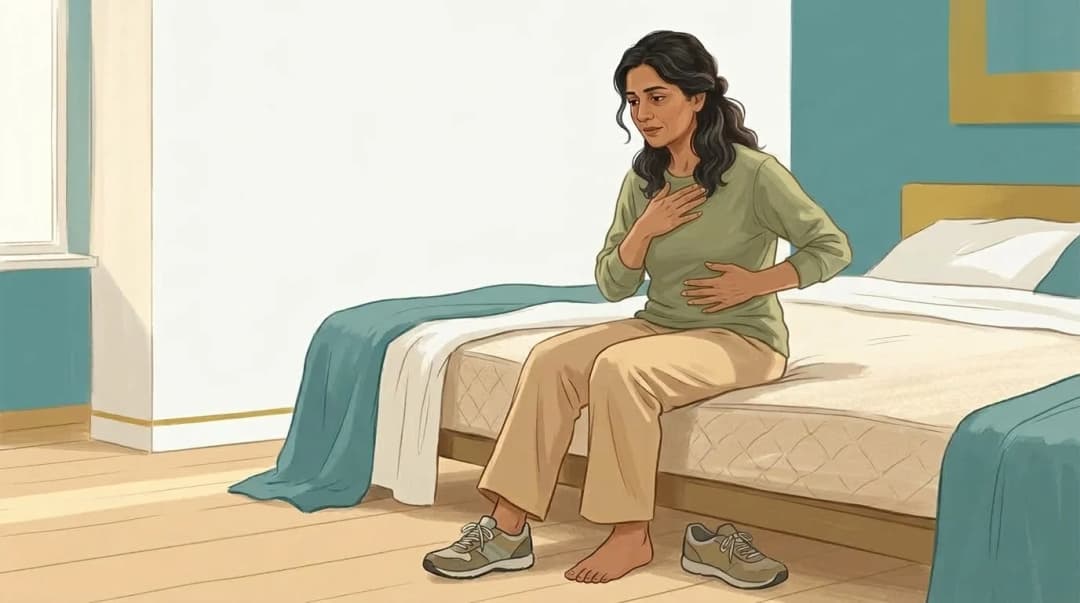
- Change position in stages. Roll to your side, rest, sit on the edge of the bed, pause, then stand.
- Give yourself time at each stage and notice your breath and your head. If you feel faint, stop and sit or lie down.
- Keep rooms cool and avoid long, still standing when you can.
- Keep movements small and well within your comfort.
The Feldenkrais® angle: sensing, not pushing
An Awareness Through Movement® lesson is slow and light. You usually lie on your back and notice how each part of you joins in. There is no goal to reach and no effort to push through. For someone with POTS, that pace can be a comfortable way to stay in touch with their body on a hard day.
Here is a small experiment. Lying on your back, let one knee fall slowly to the side and sense what your ribs and your pelvis do. Then rest. Notice your breathing. Nothing needs to be achieved, and you can stop at any time.
I want to be clear about what this is. Feldenkrais does not treat POTS or Ehlers Danlos syndrome, and no lesson replaces your medical care. What it can offer is a quiet way to build body awareness. Feldy has short audio lessons made for home, and the 7 day free trial lets you listen to a few before deciding. Our hypermobility page shows how the lessons are shaped for bendy bodies.
Alongside clinical care and other methods
Care from your doctor and specialist team comes first. They know your history, can run the right tests, and can guide medicines and a safe exercise plan. Movement learning sits alongside that care and does not compete with it.
Other methods are different options with a different mechanism. Pilates and strength work build control in chosen muscles, and yoga explores range. Some people with hypermobility enjoy these with a trained teacher who understands their needs. A Feldenkrais approach adds a slow way of sensing how you move. Many people use more than one.
Stability without gripping
Now for stability that does not rely on gripping. The Feldy program builds a clearer sense of where the body rests, so steadiness grows from awareness, through Feldenkrais® lessons. Gentle, guided, and self-paced.
Start my free 7-day trialNo credit card needed.
Common Questions about POTS and Ehlers Danlos syndrome (FAQ)
Who should be careful with movement if they have POTS and Ehlers Danlos syndrome?
Anyone with a diagnosis or suspected diagnosis should check with their doctor or specialist team before starting something new. Take extra care if you faint, feel your heart racing, or have joints that slip. Choose lying or seated movement, go slowly, and stop if you feel faint.
How often can I practise gentle movement with POTS?
Short and often tends to suit a body that tires quickly. A few quiet minutes on most days is plenty, and a smaller session on a hard day still counts. Your doctor may suggest a plan that fits your symptoms, so ask them what pace is right for you.
How long until I notice a difference?
There is no set timeline, and people differ a lot. Some notice small changes in a few weeks, such as feeling more at ease during slow changes of position. Others need longer. Symptoms can also vary from day to day, so watch for small patterns over time.
How is gentle movement different from a graded exercise plan?
A graded exercise plan from your medical team builds fitness step by step, often on a recumbent bike, a rowing machine or in a pool. Feldenkrais lessons are a different mechanism. They use slow, small movements to help you sense how you move, often lying down. The two can sit side by side.
Is POTS the same as Ehlers Danlos syndrome?
No. POTS is a condition of the autonomic nervous system, which runs automatic body jobs such as heart rate and blood vessel width. Ehlers Danlos syndrome is a group of connective tissue conditions. They are separate, but they are reported together more often than chance would suggest.
When should I see a doctor about dizziness or a racing heart?
See a doctor if you often feel dizzy or faint on standing, or if your heart races without a clear reason. Get urgent care for fainting during exercise or with an injury, chest pain, a racing heart that does not settle, or new breathlessness. Do not wait to see if it passes.
Can lying down movement help when standing is hard?
Many people find lying or seated movement a calmer way to practise, because there is less pull of blood toward the legs. It does not treat POTS or Ehlers Danlos syndrome. It offers a gentle way to keep moving and to practise slow changes of position.
Stability without gripping
See the programRelated resources
Hypermobility Symptoms: What to Notice Beyond Bendy Joints
Being bendy is common and often harmless. Here are the signs that can come with it, from tiredness to joints that slip, and what they may mean for how you move.
EDS vs Hypermobility: Trait, Spectrum, or Syndrome?
EDS vs hypermobility: joint hypermobility is a common trait, HSD adds persistent symptoms, and hypermobile Ehlers Danlos syndrome is a clinical diagnosis.
Getting out of breath may be the hypermobility symptom that quietly shrinks your day
Ready to start moving better?
Gentle, guided lessons for your body. Try your first one free, no credit card required.