
How the Spine and Pelvis Move Together, Explained Simply
The pelvis is the base your spine stands on. See how tilting, bending, walking and side bending share the work, and how to sense the link yourself.
In short
Your spine and pelvis move together as one linked chain. The pelvis is the base the spine stands on, so when the pelvis tilts, turns or lifts, the lower back arches, flattens, twists or curves in reply. Bending, walking and leaning all share the work between hips and spine.

Prefer to ease in gently?
See a few gentle exercises for lower back pain to try.
Your spine and pelvis move together because they are built as one connected structure. The pelvis is the base the spine stands on. Any change at the base travels up into the column above it. When you tilt, turn or lift one side of the pelvis, the lower back responds right away. Once you can feel this link, your back may seem less of a mystery and more like something you can sense and explore.
Back pain is very common, so this link is worth understanding. The World Health Organization's fact sheet on musculoskeletal conditions puts the number of low back pain cases around the world at roughly 570 million (WHO, 2022). Many of those backs are simply working hard without much help from the pelvis and hips.
Where the spine and pelvis meet
The pelvis is a ring of bone. It is made of two large hip bones and the sacrum. The sacrum is a flat, triangle shaped bone at the very bottom of your spine. It sits wedged between the two hip bones at the back, like a keystone in an arch.
This makes the sacrum part of both structures. It is the lowest section of the spine, and it also closes the pelvic ring. The five vertebrae of the lower back rest on top of it and stack up toward the ribs.
The joints where the sacrum meets the hip bones are called the sacroiliac joints. They allow only a tiny amount of movement. Most of the shared motion happens in two other places: at the hip joints, where the pelvis rolls over the thigh bones, and between the vertebrae of the lower back.
Think of a stack of building blocks standing on a tray. Tip the tray, and the stack must lean or curve to stay upright. Your pelvis is the tray. Your spine is the stack.
How pelvic tilt shapes the curve of your lower back
When the pelvis tilts forward, its top edge rolls toward the front and the tailbone lifts behind you. The lower back arches more in response. When the pelvis tilts back, its top edge rolls toward the rear and the tailbone tucks under. The lower back then flattens or even rounds.
Both tilts are everyday options. You use them all the time without thinking. Perching on the front edge of a chair tends to tip the pelvis forward. Sinking back into a soft sofa tends to roll it back. Neither shape is a mistake. Trouble usually starts when one shape becomes the only shape you use for hours on end.
If you have wondered whether a forward tilt explains your aching back, our explainer on whether anterior pelvic tilt can cause lower back pain looks at that question closely. And if you lie down and notice a gap under your waist, read about why your lower back is not touching the floor.
How the spine and pelvis move together when you bend
Imagine bending down to pick up a bag of shopping. Two things happen at once. The pelvis rolls forward over the thigh bones at the hip joints. At the same time, the lower spine rounds forward, one vertebra after another.
Clinicians call the shared timing between these two parts lumbopelvic rhythm. "Lumbo" refers to the lower back, and "pelvic" refers to the pelvis. In plain words, it describes how the hips and the lower back split the job of bending. On the way back up, they share the work again. The exact order and amount change from person to person, and even from morning to evening.
When the hips are stiff, the pelvis rolls less over the thigh bones. The lower back often makes up the difference and does more of the bending. The reverse happens too. If the lower back feels stiff and guarded, the hips may take over more of the work. Both are the body finding a way to get the task done. Over time, though, leaning on one area again and again can leave it feeling tired. Many people find that bending feels easier when the movement is spread more evenly.
Walking, turning and leaning to the side
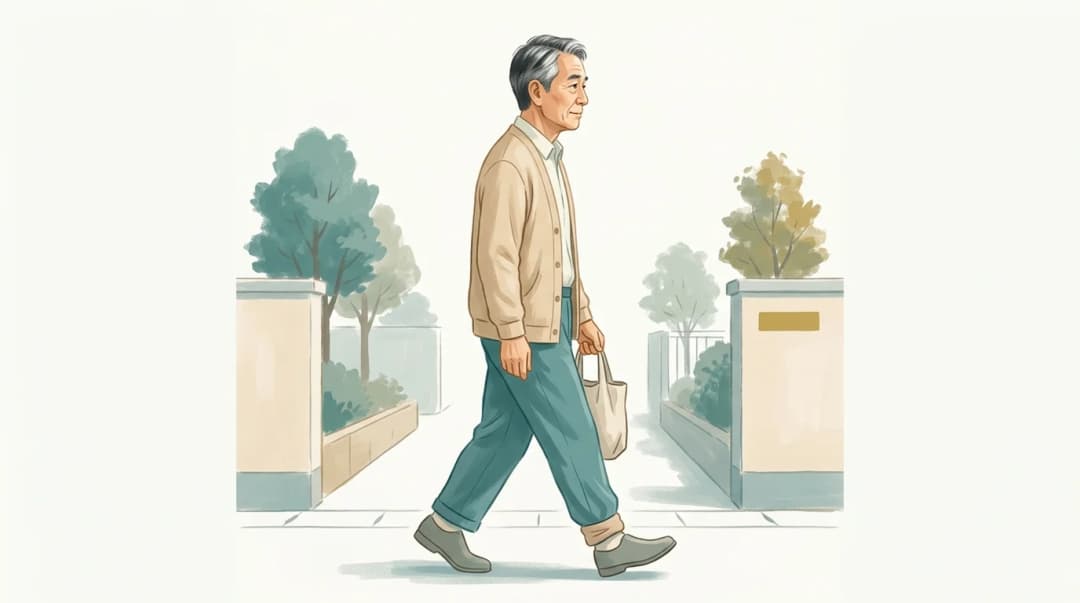
Walking is a quieter example of the same link. As your right leg swings forward, the right side of the pelvis travels forward a little with it. Your ribcage and shoulders turn slightly the other way, and your left arm swings forward. The spine in between twists gently with each step, first one way and then the other. If you walk while holding the pelvis very still, you may notice the whole walk feels stiffer.
Side bending works in a similar way. Lean to one side, or step up onto a high stair, and one side of the pelvis lifts. The spine above curves sideways in response. One side of your waist shortens and the other side lengthens. Again, the pelvis leads and the spine follows.
Sensing how your spine and pelvis move together
In the Feldenkrais® Method, the pelvis is often treated as the steering of the spine. Small changes at the pelvis can reorganize how the whole back, and even the head, moves. You do not need to take this on trust. You can feel it for yourself.
Lie on your back on a mat or carpet. Bend your knees and let your feet stand on the floor, about pelvis width apart. Rest here for a few breaths. Notice which parts of your back touch the floor and which parts lift away from it.
Now press your feet gently into the floor and let the pelvis roll a tiny amount, so the tailbone lifts slightly and your waist sinks toward the mat. Next, rock it gently in the opposite direction, so the tailbone presses down and the small of your back lifts a little. Go slowly. Keep the movement small enough that it feels easy. After several rocks, stop and rest.
When you begin again, turn your attention upward. See if the back of your head slides slightly on the floor as the pelvis rolls. Many people notice the chin coming a touch toward the throat as the lower back flattens, and lifting a touch as the lower back arches. The head is nodding because the whole spine is answering the pelvis. Rest once more, then let your legs lengthen out along the floor. Notice how your back lies now compared with the start.
For a guided version of this movement, try our supine pelvic tilt. If your back feels braced and you want somewhere calm to begin, our gentle steps for how to relax your back are a good next stop.
Alongside clinical care and other methods
Sensing how your pelvis and spine share movement sits alongside clinical care, never in place of it. A doctor or physiotherapist can assess pain, rule out specific causes and guide treatment. Gentle awareness work can run quietly beside that care.
Other movement methods approach the same region through different routes. Yoga uses held postures and breath to build flexibility and calm. Pilates trains control of the trunk through precise, repeated exercises. Strength training loads the hips and back gradually so they grow more capable over time. The Alexander Technique works with how the head, neck and back organize during daily actions. Each has its own logic, and many people enjoy more than one.
The Feldenkrais approach works mainly through attention. It uses slow, small variations of movement so your nervous system can notice new options and choose easier ones. If long hours at a desk play a part in your back discomfort, our Feldypedia guide to lower back pain from sitting explains that pattern in more depth. When you are ready to explore this with guidance, Feldy offers short daily lessons you can follow at home, and you can see the full program for lower back pain.
A gentler way through back pain
Now you understand why it braces. The Feldy program helps your back unlearn that guarding, through slow, attentive Feldenkrais® lessons you follow at home. Gentle, guided, and self-paced.
Start my free 7-day trialNo credit card needed.
Common Questions about how the spine and pelvis move together (FAQ)
What is lumbopelvic rhythm in simple terms?
Lumbopelvic rhythm is the shared timing between your hips and your lower back when you bend and come back up. The pelvis rolls forward over the thigh bones, and the lower spine rounds. Both parts take a share of the movement. The exact timing changes from person to person and from day to day.
Does the pelvis move when I walk?
Yes. As each leg swings forward, the pelvis turns a little with it. At the same time, the ribcage and shoulders turn slightly the other way, and the arms swing in reply. The spine in between twists a small amount with every step. When the pelvis is held still, walking often feels stiffer.
Why does my lower back seem to do most of the bending?
When the hips are stiff, the pelvis rolls less over the thigh bones. The lower back then often takes on more of the bend to get you to the floor. The opposite can happen too: a stiff lower back can leave the hips doing more. Slow, curious movement of the pelvis can help you sense how the work is shared.
Is it a problem if my pelvis tilts forward or back?
Tilting forward and tilting back are both normal, useful options. A forward tilt arches the lower back more, and a backward tilt flattens or rounds it. What tends to matter more is having both choices available, so you can shift between them easily instead of resting in one shape all day.
What is the best way to feel how the spine and pelvis move together?
Lying on your back with your knees bent is a kind place to start. Roll the pelvis a tiny amount, slowly, and notice the curve of your lower back change against the floor. Then see whether your head nods slightly in reply. Small, slow movement with rests lets you feel far more than big effort does.
How often should I explore the movement of my pelvis?
A few minutes on most days works well for many people. Short, regular sessions tend to teach the body more than one long session now and then. Keep the movements small and comfortable, and stop to rest whenever you notice yourself holding your breath or pushing.
When should back pain be checked by a clinician?
See a clinician soon if back pain arrives with a weak or numb leg, numbness in the groin or inner thighs, new trouble controlling your bladder or bowels, a fever, weight loss you cannot explain, or pain that started with a fall. Severe pain that keeps getting worse also needs a prompt check. Pain that lingers for several weeks is worth discussing too.
A gentler way through back pain
See the programRelated resources
Supine Pelvic Tilt: A Gentle Lying Down Lesson for Your Back
Lie on your back, knees bent, and let your pelvis rock a little. Your lower back rolls toward the floor and away again, slowly and with ease.
Can Anterior Pelvic Tilt Cause Lower Back Pain?
Can anterior pelvic tilt cause lower back pain? A nuanced look: tilt is a common, normal variation, the link is weak, and gentle movement helps more than correction.
With knee or back pain after 65, exercise may change how you walk more than how much
Ready to start moving better?
Gentle, guided lessons for your body. Try your first one free, no credit card required.