
Is Walking Good for Piriformis Syndrome?
Short, frequent, flat walks usually help. Long hilly ones on a bad day usually do not. Here is how to tell which kind of day you are having.
In short
Walking is generally good for piriformis syndrome, provided it stays short, flat and frequent. Ten to twenty minutes a few times a day tends to settle a deep buttock ache, while long walks, hills and speed usually stir it up. Pain travelling further down the leg is the signal to stop.

Prefer to ease in gently?
See a few gentle exercises for lower back pain to try.
Before you begin. This page is general education, not a diagnosis. Arrange a medical assessment if your leg or foot has become weak, if the groin or saddle area feels numb, if bladder or bowel habits have changed, if the pain followed a fall, or if it wakes you regularly at night. Nerve related pain deserves a proper examination, and none of the walking advice here replaces one.
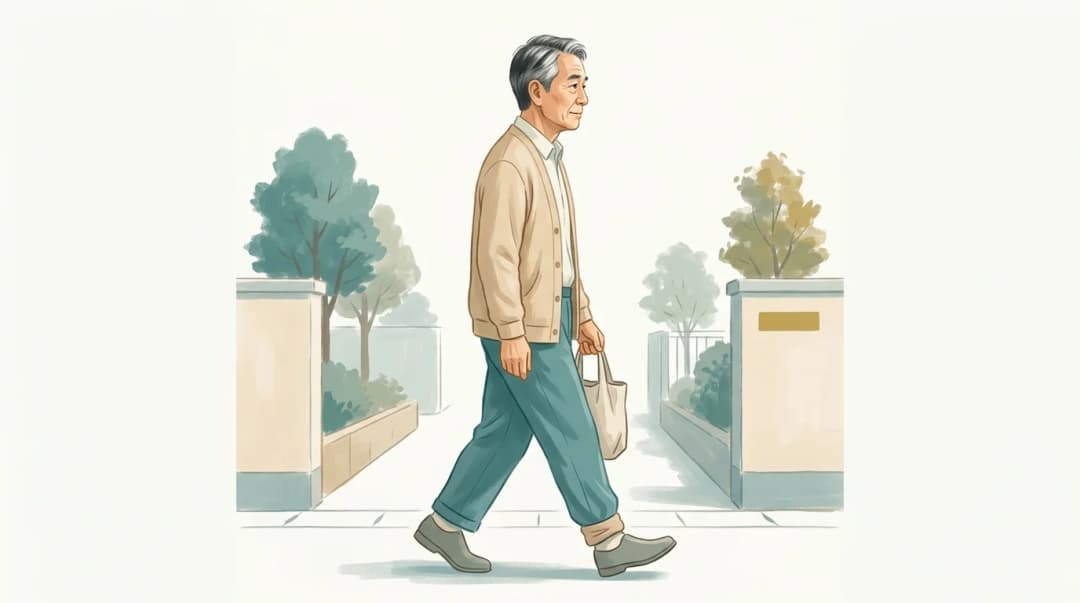
Is walking good for piriformis syndrome? For most people, yes, and it is one of the few things that reliably helps a deep buttock ache without any equipment or instruction. The qualifier matters though. Walking helps in the shape of short, flat, frequent outings. It stops helping when the walk becomes long, hilly or fast, and it can make matters worse on a day the area is already irritated.
Why walking is good for piriformis syndrome in particular
The piriformis is a small muscle deep in the buttock, under the larger gluteal muscles. It runs from the sacrum, the flat bone at the base of the spine, to the top of the thigh bone. It turns the leg outward and helps steady the pelvis with each step. Walking asks it to do that job rhythmically, thousands of times, through a comfortable middle range, with no one holding a stopwatch. That is close to an ideal dose of movement for a muscle that spends the rest of the day either squashed against a chair or braced.
There is a second effect worth naming. Much of what registers as piriformis pain is protective tone rather than tissue damage. Protective tone means the muscle stays slightly switched on to guard the area, and it responds to evidence. Twenty unremarkable minutes on flat ground is a long, calm message that the area is being used and nothing bad is happening. That message is difficult to deliver with a stretch, which by design takes you to the uncomfortable edge.
Keep the diagnosis itself in perspective. Sciatica in the broad sense is common, with a lifetime incidence estimated between 10% and 40% and a peak in the fourth decade (StatPearls, 2024). Piriformis syndrome is only a small slice of that total, and plenty of deep buttock aches have other explanations. The Feldypedia article on sciatica and nerve related back pain sets out how the possibilities separate.
The walks that help, and the walks that do not
Flat beats hilly. Climbing loads the deep rotators considerably more than level ground, and a gradient you would not normally notice can be enough to leave the buttock sore the next morning.
Short and often beats long and occasional. Three fifteen minute walks across a day usually leave the area calmer than one forty five minute effort, even though the total is identical. Frequency also breaks up the sitting, which is doing more damage than most people credit.
Steady beats brisk. Lengthening the stride and picking up the pace both ask more of the hip rotators. Save that for later.
Judge by tomorrow, not by today. The reliable test is not how the walk felt but how you feel the following morning. Soreness that has settled by then means the dose was fine. Soreness that is still there means it was too much, regardless of how good the walk seemed at the time.
What to pair walking with
Walking on its own is a decent plan and an incomplete one, because it only ever asks the hip for one pattern. Adding slow, varied movement covers what walking cannot reach. The Feldenkrais Method® is built for this: Awareness Through Movement® lessons take the hip through small, unhurried turns and rolls that never approach the painful edge, so the nervous system collects detail rather than alarm. Our piriformis muscle workout is a ten minute lesson along exactly those lines, and it makes a good companion to a daily walk.
Sitting deserves as much attention as walking. Long spells on a firm seat press directly into the sore region and hold the hip at its least comfortable angle, which is why so many people undo a good walk within the hour. The guide to sitting with piriformis syndrome covers the practical adjustments, and the broader tight piriformis guide explains what else can be going on.
If your back is part of the picture, and it often is, the gentle lesson on how to relax your back is the sensible next step. Where a physiotherapist or doctor is already treating you, all of this sits alongside that care. And if being talked through a lesson appeals more than reading one, Feldy's free 7 day trial is where to start.
A gentler way through back pain
Now you understand why it braces. The Feldy program helps your back unlearn that guarding, through slow, attentive Feldenkrais® lessons you follow at home. Gentle, guided, and self-paced.
Start my free 7-day trialNo credit card needed.
Common Questions about walking and piriformis syndrome (FAQ)
Is walking good for piriformis syndrome, or does it make it worse?
For most people it helps, as long as the dose is modest. The muscle sits deep in the buttock and responds well to gentle, repeated movement through a middle range, which is exactly what unhurried walking supplies. It turns unhelpful when walks get long, hilly or fast, or when they happen on a day the area is already flared.
How far should I walk with piriformis pain?
Start at ten to fifteen minutes on flat ground and see how the following morning feels rather than how the walk itself felt. If the morning is unchanged or better, add five minutes. If it is worse, cut back and hold there for a week. Several short walks are kinder to an irritable area than one long one.
What kind of walking should I avoid?
Avoid hills and steep gradients, since they demand more from the deep hip rotators. Avoid brisk pace and long strides for now, and avoid uneven ground where each step is a small surprise. Wearing a wallet or phone in the back pocket on the sore side is worth dropping too, because sitting on it presses straight into the area.
Why does the pain come back when I stop and sit down?
Sitting compresses the buttock against a firm surface and holds the hip at one angle, which is close to the least comfortable arrangement for this muscle. Many people find walking pleasant and the chair afterwards miserable, which is a pattern rather than a setback. Standing up every twenty minutes usually changes it more than any stretch does.
How is walking different from stretching the piriformis?
A stretch pulls at the sore area directly and asks it to yield. Walking never does that. It moves the hip repeatedly through the comfortable middle of its range while carrying you somewhere, so the nervous system gets a great deal of unthreatening information about the region. Where guarding is a large part of the problem, the second approach frequently outperforms the first.
When should I stop walking and see someone?
Stop and get assessed if pain begins travelling further down the leg than before, if the foot feels weak or drags, if numbness appears in the saddle area, or if bladder or bowel habits change. Also get seen if things are clearly worsening week on week despite sensible pacing.
A gentler way through back pain
See the programRelated resources
A Gentle Piriformis Muscle Workout for a Deep Achy Hip
A quiet ten minute lesson for the deep ache behind the hip, built on small, slow hip turns and close attention rather than hard stretching or burning repetitions.
How to Sit With Piriformis Syndrome Without Flaring It
Sitting is usually the worst part of the day. Here is what makes a chair hurt, what to change first, and how long you should stay in one position.
With knee or back pain after 65, exercise may change how you walk more than how much
Ready to start moving better?
Gentle, guided lessons for your body. Try your first one free, no credit card required.