
Can Menopause Cause Headaches? Yes, and Here Is Why
Can menopause cause headaches? Yes. Shifting hormones, broken sleep and a tight neck and jaw all play a part. What changes, what eases, and how to soften the holding.
In short
Yes, menopause can cause headaches, or change the ones you already know. Shifting estrogen in perimenopause is linked with migraine, and tension type headaches often rise with poorer sleep and a tight neck and jaw. For many people headaches ease after periods stop, though not for everyone.

Prefer to ease in gently?
See a few gentle exercises for menopause to try.
Before you begin. This page is general information, never medical advice or a diagnosis. A sudden severe headache, the worst of your life, or a headache with weakness, numbness, trouble speaking, vision changes, confusion, or fever with a stiff neck needs emergency care: call your local emergency number or go to an emergency department. A new kind of headache after 50 needs a prompt doctor visit. Talk with your doctor about your headaches and about any hormone treatment. This page sits alongside medical care.
Yes, menopause can cause headaches, and it can change the headaches you already know. Many people notice more of them in perimenopause, the years when periods become irregular before they stop. Hormone levels rise and fall with less rhythm in this time, and the head often feels it first. You are in a very large group. Headache disorders affect about 40% of people worldwide (WHO, 2025), and the menopause years are one of the times when they tend to shift.
Can menopause cause headaches, and which kind
Two kinds of headache come up most often around menopause.
The first is migraine. Migraine is a headache that often throbs on one side, can bring nausea or sensitivity to light, and may last hours or days. Estrogen, one of the main hormones of the menstrual cycle, has a close link with migraine. Many people who had migraine around their periods find it changes in perimenopause. Attacks may come more often, or at new times, because estrogen now rises and dips with less of a pattern. Some people meet migraine for the first time in these years, though a new kind of headache always deserves a doctor's look before you put it down to hormones.
The second is tension type headache. This is the dull, pressing ache that wraps around the head or sits at the base of the skull. It is usually tied to a tight neck, jaw and shoulders, and to stress and tiredness. Perimenopause tends to bring more of all of these. Night sweats break sleep. Broken sleep makes the body more sensitive to pain the next day. A busy mind closes the jaw without asking. By mid afternoon the ache has settled in.
The two can overlap, and you do not have to sort them out alone. A doctor can help you name what you have, and that naming matters, because the paths forward differ. Our Feldypedia entry on menopause and physical changes places headaches beside the other shifts of these years, from aching joints to changes in sleep.
Why menopause can cause more headaches: hormones, sleep and holding
Hormones are only one strand. Three threads usually braid together.
Hormones. Estrogen affects blood vessels and the way the brain handles pain signals. When its level drops quickly, as it does before a period, migraine is more likely in people who are prone to it. In perimenopause these drops become erratic, so the pattern you knew can scatter.
Sleep. Hot flashes and night sweats wake you, and sometimes the mind stays up afterwards. Short or broken sleep lowers the threshold for both migraine and tension type headache. Tiredness and headaches often travel together. If you are also wondering whether the tiredness lifts, our explainer on whether perimenopause fatigue goes away covers that timeline.
Holding. This is the thread movement can reach, and the one the Feldenkrais Method® works with. When we are tired, stressed or in pain, the body braces. The shoulders lift a little toward the ears. The jaw closes with more force than chewing needs. The eyes narrow at a screen. None of this is a fault. It is simply what a nervous system does under load. Over hours it becomes a steady pull on the muscles that run from the jaw to the temples and from the shoulders up the back of the neck. That pull is often linked with tension type headache. If your jaw is often tight, our explainer on whether clenching your jaw can cause headaches goes deeper into that one link.
A word on hormone treatment, because people ask. Hormone therapy can affect headaches in either direction. For some people it steadies the swings and headaches settle. For others, or with some forms of it, headaches increase. This is a conversation for you and your doctor, who knows your history. I will not give advice on it here.
Do menopause headaches go away
For many people, yes, at least in part. Migraine in particular often eases some years after the final period, once estrogen settles at a lower, steadier level. People who had migraine mainly around their periods tend to see the biggest change. This is true for many, though not for all. Some find migraine continues, and a small number find it begins after menopause. Tension type headaches follow a different clock. They tend to ease when sleep improves and when the day holds less bracing, which can happen at any point in the transition.
So the answer is a hopeful one with an open ending. Nobody can promise you a date. What you can do, while the hormones take their time, is work with the threads that respond to attention: sleep, pacing, and the holding in the neck, jaw and shoulders.
A short exploration for the neck, jaw and eyes
Here is something I offer people who arrive with a tight head and no time. It takes about four minutes. It does not treat migraine, and please skip it during a migraine attack if light and movement make things worse. It is for the ordinary holding that gathers over a day.
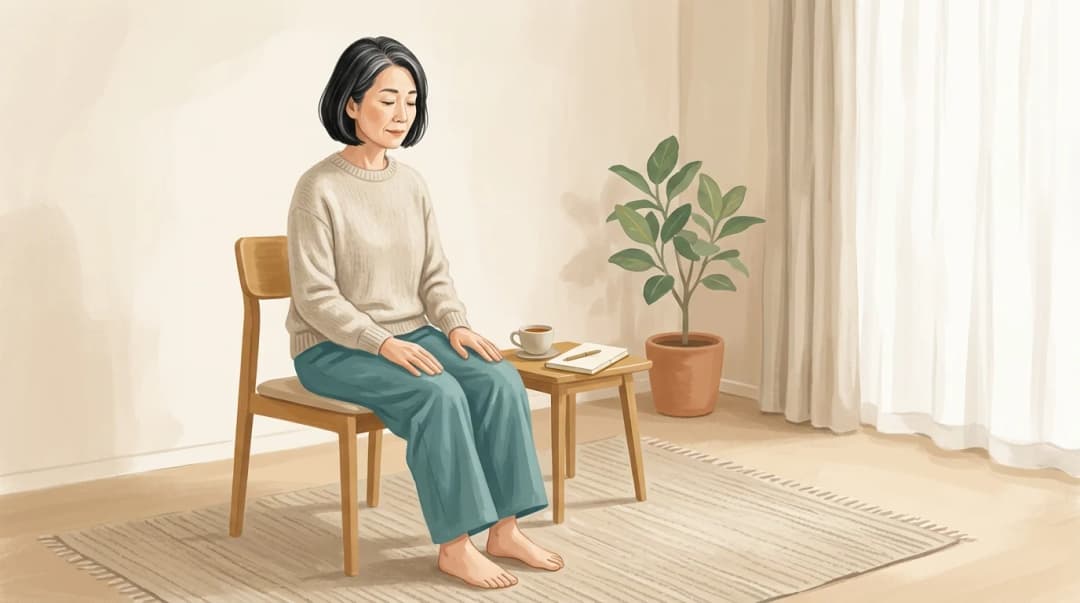
Sit or lie down somewhere comfortable. Let your hands rest. Notice your jaw. Are your teeth touching? Let the lower jaw hang a tiny bit, so the lips stay closed but the teeth part. Stay there for a few breaths.
Now notice your tongue. Where is it resting? Let it widen and soften on the floor of the mouth.
Close your eyes. Sense the weight of your eyes in their sockets. Many of us hold the eyes slightly forward, as if reaching for the screen. Let them sink back a little. Imagine they are heavy and resting in warm water.
Turn your head very slowly to the right, only as far as feels easy, and come back. Then the same to the left. Make the movement smaller than you think you need. Notice whether the jaw tightened as you turned. If it did, let it hang again, and turn once more.
Rest. Notice your breath. Does the back of your head feel different against the chair or the floor? Is there more space between your ears and your shoulders than there was? Take whatever you find as information, nothing more.
When you want a longer, guided practice, our exercises for perimenopause page carries a full lesson, slow enough for a tired evening.
Alongside clinical care and other methods
Doctors, and specialist headache clinics where you can reach one, sit alongside anything on this page. They can rule out other causes, name the type of headache you have, and talk through medication and hormone options. Nothing in gentle movement replaces that. Please book a visit if headaches are new, changing, or more frequent. Call emergency services or go to an emergency department if a headache is sudden and severe, or comes with weakness, numbness, trouble speaking, vision changes, confusion, or fever with a stiff neck.
Other movement methods take different routes to a softer neck. Stretching lengthens tight muscles directly, and many people feel quick relief from it. Yoga combines held postures with breath. Massage works from the outside in. Feldenkrais uses small, slow, attentive movements to help you sense the holding you did not know you were doing, so that it can let go on its own. Many people use more than one of these, and there is no need to choose.
If you want a steady, gentle companion for these years, the Feldy program for menopause was built with them in mind, and the first 7 days are free. The lessons are guided by voice, many of them lying down, and they ask only that you notice.
Softer movement through menopause
Now, the gentle way to work with it. The Feldy program eases the stiffness and tension of these years through slow Feldenkrais® lessons made for a changing body. Gentle, guided, and self-paced.
Start my free 7-day trialNo credit card needed.
Common Questions about menopause and headaches (FAQ)
Are headaches a menopause symptom?
Yes, they are a common one. Migraine in particular often changes in perimenopause as estrogen swings. Tension type headaches also rise when sleep breaks and the neck and jaw tighten. They are not on every list of symptoms, yet many people meet them in these years.
Do menopause headaches go away after periods stop?
For many people, migraine eases in the years after the final period, once estrogen settles at a steadier level. People whose migraine followed their cycle often see the clearest change. It does not happen for everyone. Tension type headaches depend more on sleep, stress and holding than on hormones, so they follow a different clock. Nobody can give you a date.
What is the best way to ease menopause headaches at home?
Start with sleep, since broken nights feed both migraine and tension type headache: a cool room, help with night sweats, and a quiet hour before bed. Keep a simple headache diary so you and your doctor can see patterns. For the dull, pressing kind, a few minutes of slow attention to the jaw, neck and eyes each day can soften the holding. Migraine itself needs a plan made with a doctor.
What should I avoid when I get menopause headaches?
Avoid guessing. A new or changing headache deserves a medical look before you put it down to hormones. Avoid taking pain relief on many days each week without advice, because frequent use can itself keep headaches going. During a migraine, avoid pushing movement or stretching into pain. And notice when you brace against the ache with a clenched jaw, which is easier said than done.
Is gentle movement safe if I have menopause headaches?
Slow, small movement within comfort is safe for most people, and lying down with the eyes closed is often the easiest way to do it. Skip it during a migraine attack if light or movement make things worse, and stop any movement that sharpens the pain. If a headache comes with numbness or weakness, or follows a knock to the head, get urgent medical care first. If it comes with dizziness, check with a doctor before you explore movement.
How often should I do the neck and jaw exploration?
Once a day is plenty. A minute or two at the desk when you catch the jaw tightening is worth more than a long session once a week. Many people like it before bed, because a softer jaw and quieter eyes help the body settle for sleep. Let it stay light.
How long until I notice a difference?
Some people feel a looser jaw and a lighter head within a single session, because holding is a habit and habits can pause. A change in how often tension type headaches arrive, if it comes, usually takes a few weeks of regular, gentle attention. Migraine follows its own hormonal clock, and movement does not change that timetable.
How is Feldenkrais different from stretching for a tight neck?
Stretching lengthens a muscle by pulling on it, and for many people that brings quick relief. Feldenkrais takes another route. It uses very small, slow movements and your attention to help the nervous system notice the extra effort it is making, so the muscle can let go without being pulled. Both are reasonable choices, and some people use both.
When should I see a doctor about headaches in menopause?
See a doctor if headaches are new, more frequent, or different from the ones you know, or if you are using pain relief on many days each month. Call emergency services or go to an emergency department for a sudden severe headache, the worst headache of your life, or any headache with weakness, numbness, trouble speaking, vision changes, confusion, or fever with a stiff neck. Bring your headache diary, and ask how any hormone treatment might affect your headaches.
Softer movement through menopause
See the programRelated resources
Can Clenching Your Jaw Cause Headaches? Yes, Here Is How
Can clenching jaw cause headaches? Yes. Why a clenched jaw drives tension headaches, how to tell if clenching is behind yours, and a gentle way to ease the habit.
Does Perimenopause Fatigue Go Away? A Timeline
Does perimenopause fatigue go away? For many women it eases as hormones settle after the final period, though timelines vary. A look at when.
The menopause symptoms few women mention, and what eight weeks of pelvic floor work did
Ready to start moving better?
Gentle, guided lessons for your body. Try your first one free, no credit card required.