

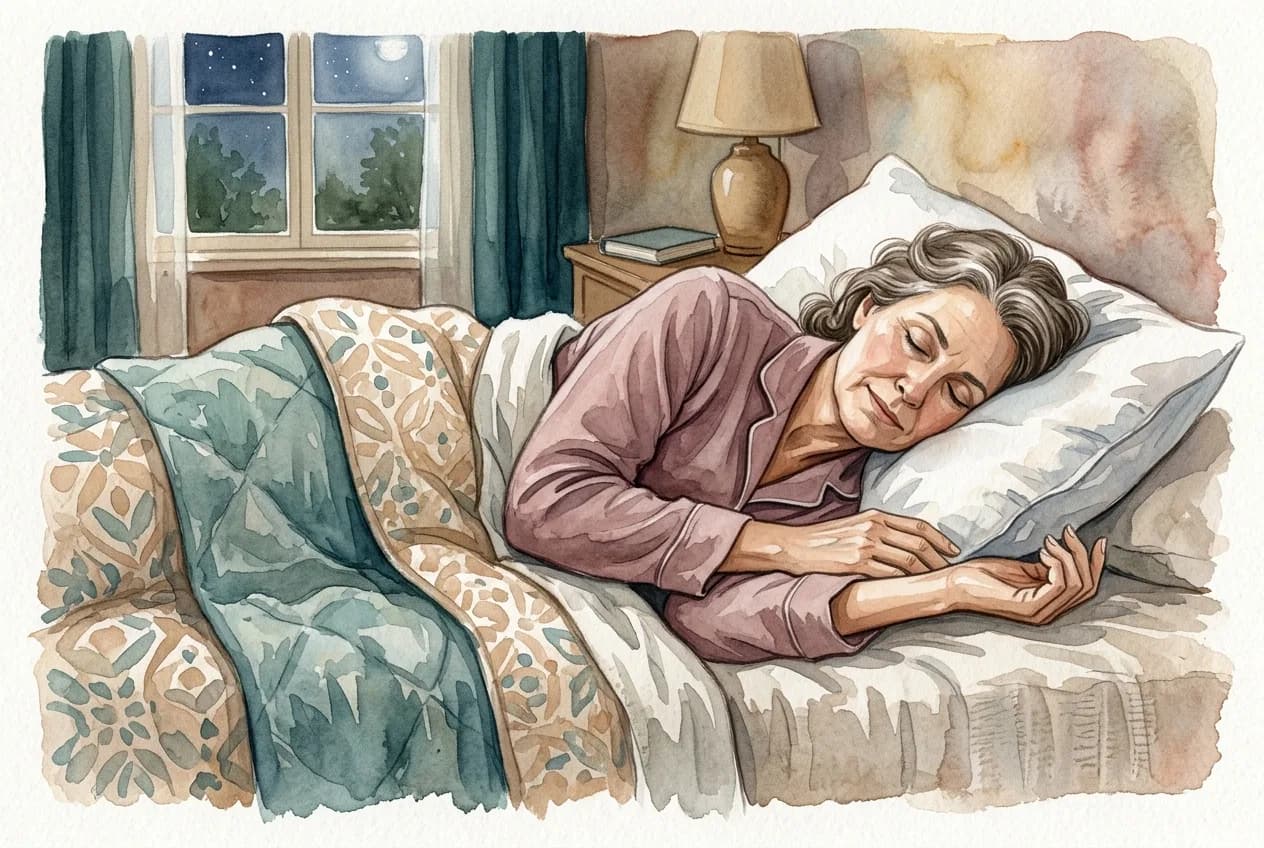
Why Do My Hands Go Numb When I Sleep?
Hands usually go numb in sleep from brief pressure on a nerve, often from how you lie. Here is what is happening, and gentle ways to ease the load.
In short
Hands most often go numb in sleep because of brief pressure on a nerve, from a bent wrist, an arm tucked under your body or head, or a sharply folded elbow. The nerve quietly protests and the hand tingles or goes numb until you move and the pressure lifts, usually clearing within minutes. Frequent or lingering numbness is worth a doctor's look.

Prefer to ease in gently?
See a few gentle exercises for stress and sleep to try.
Before you begin. General information, not medical advice. Occasional numb hands from sleep posture are common and usually harmless. Please see a doctor if numbness is frequent, lingers after you wake, settles in a clear set of fingers, or comes with weakness, clumsiness, dropping things, or neck or arm pain. These can point to nerve compression such as carpal tunnel syndrome that is worth assessing properly.
Waking with a dead, tingling hand is unsettling, so it is natural to ask: why do my hands go numb when I sleep? The answer usually comes down to brief pressure on a nerve, caused by how you happen to be lying: a wrist bent under the pillow, an arm tucked beneath your body or head, or an elbow folded tightly. The nerve quietly protests, the hand tingles or goes numb, and the feeling returns within minutes once you shift and the pressure lifts. Looking at the role of posture and gentle movement, the Feldenkrais Method® offers a calm way to ease the crowding that leads to it.
One common cause of numb hands at night has a name. Carpal tunnel syndrome, pressure on the median nerve at the wrist, affects roughly 1 to 5 percent of adults, and its symptoms famously worsen at night (StatPearls, 2023). That nighttime pattern is a clue: because we tend to sleep with our wrists bent, nerves get squeezed more in bed than during the day.
What happens when your hands go numb as you sleep
Your nerves travel a long route from the neck, through the shoulder and arm, and down into the hand, passing through several narrow spaces along the way. When a joint folds sharply or an arm bears your weight for a while, one of those spaces tightens and presses on the nerve running through it. The nerve responds by sending the pins and needles, tingling, or numbness you wake to. In most cases this is temporary and harmless: shift position, let the blood and signals flow again, and the hand comes back to life. The reason it happens so often at night is simply that we cannot watch our posture while asleep, and we settle into positions we would never hold awake.
A few patterns are especially common. A bent wrist can pinch the median nerve at the carpal tunnel, a folded elbow can compress the ulnar nerve that feeds the little finger, and lying on an arm can squash the whole pathway. You can read more about how tension and position affect rest in the Feldypedia guide to sleep disruption and physical tension, and about the role of the neck and shoulders in the article on neck and shoulder tension.
Easing the load with gentle awareness
You cannot direct your posture while you sleep, but you can arrive at sleep with arms that are less kinked and crowded, and with a clearer sense of how you tend to lie. A few minutes of slow, easy wrist, shoulder, and neck movement before bed leaves the arms feeling more open and aware. This patient, sensing way of working is what Feldy is built around, meeting a restless body with attention rather than effort. Our somatic exercises for sleep lesson is an easy place to begin if you want that wind down led by a voice.
Small adjustments that help
Alongside gentle movement, a few simple changes can lighten the load on your hands: letting the wrists lie straight rather than curled, keeping the arms out from under your body and head, and giving the shoulders room to settle. If broken sleep and a tense body are a regular theme, the program for stress and sleep offers a calm, self-paced route, and you can pair this explainer with our companions on getting comfortable in bed and forward head posture while sleeping. When numbness keeps returning or lingers, a doctor's assessment should come first.
A calmer body, easier nights
Understanding it is calming, moving with it more so. The Feldy program is meditation in movement, slow Feldenkrais® lessons that help a busy body settle so sleep can arrive on its own. Gentle, guided, and self-paced.
Start my free 7-day trialNo credit card needed.
Common Questions about numb hands when you sleep (FAQ)
Why do my hands go numb when I sleep?
Usually because a nerve is briefly squashed by your sleeping position. A wrist bent under the pillow, an arm trapped beneath your body or head, or an elbow folded tight can press on a nerve and starve it for a while. The hand tingles or goes numb in response, and the feeling returns once you shift and the pressure comes off.
Which sleeping positions make hands go numb?
Common culprits are sleeping with the wrists curled, lying on an arm, tucking a hand under the head or pillow, or folding the elbows sharply against the chest. Side sleepers often compress the lower arm, and a bent wrist can pinch the median nerve. Letting the wrists lie long and the arms stay uncrowded tends to help.
Is numbness in my hands at night something to worry about?
An occasional pins and needles that clears quickly when you move is usually harmless and posture-related. It is worth a doctor's attention when it happens often, lingers after waking, affects a clear group of fingers, or brings weakness, clumsiness, or neck and arm pain. Those patterns can signal nerve compression like carpal tunnel syndrome.
Can gentle movement help reduce numb hands at night?
It can support things, though it is not a cure. Easy wrist, shoulder, and neck movement before bed can improve comfort and awareness and reduce the kinking and crowding that press on nerves. Pairing that with a kinder sleep position often makes a real difference, while persistent numbness still deserves a proper assessment.
How does carpal tunnel relate to numb hands during sleep?
Carpal tunnel syndrome is pressure on the median nerve at the wrist, and its numbness and tingling classically worsen at night, often easing when you shake the hand. Because we tend to sleep with bent wrists, the canal is squeezed more in bed. If night numbness keeps returning in the thumb and first fingers, ask a clinician about it.
When should I see a professional about numb hands at night?
See a doctor if the numbness is frequent, lasts well after you wake, follows a clear set of fingers, or comes with weakness, dropping things, muscle wasting at the base of the thumb, or neck and arm pain. An assessment can identify nerve compression and the most helpful next steps, rather than leaving you to guess.
A calmer body, easier nights
See the programRelated resources
How to Get Comfortable in Bed: Settle and Soften
A gentle guide to how to get comfortable in bed: support for the neck and knees, a longer exhale, and small settling movements to help your body release its weight.
Correct Forward Head Posture While Sleeping: Pillows & Positions
How to correct forward head posture while sleeping with kinder pillow heights and sleeping positions, plus a gentle pre-sleep neck release to help you settle.
Lying down is not the same as resting, and researchers have now measured the difference
Ready to start moving better?
Gentle, guided lessons for your body. Try your first one free, no credit card required.