

Sitting Cross Legged on the Floor: Make It Comfortable
Why sitting cross legged on the floor feels hard, and how a cushion to tilt the pelvis plus gentle hip movement makes it comfortable over time without forcing.
In short
If sitting cross legged on the floor feels hard, it is usually about hip mobility and how you organize your pelvis, not stubborn tightness you have to fight. Sitting up on a cushion so your pelvis tilts gently forward, and building easy hip movement over time, is what makes it comfortable.

Prefer to ease in gently?
See a few gentle exercises for body awareness to try.
Before you begin. This is gentle self-care, not medical advice. If you have a knee, hip, or ankle condition or a recent injury, check with a professional, and never force a joint into a position that hurts.
If lowering yourself into a cross legged seat feels stiff, lopsided, or just plain uncomfortable, you are far from alone, and the reason is kinder than you might think. Sitting cross legged on the floor feels hard for most people not because of stubborn tightness you have to battle into submission, but because of hip mobility and how you organize your pelvis. When the hips cannot yet rotate outward with ease, the pelvis rolls backward, the lower back rounds, and the knees float up high. The good news is that all of this responds beautifully to a gentler approach drawn from the Feldenkrais Method® and other attentive, slow movement work.
Why sitting cross legged on the floor feels so hard
Picture what the shape actually asks of you. Each thigh has to turn outward at the hip and fold in, while the pelvis stays upright enough that your spine can rise comfortably above it. If the hips are guarded or simply unaccustomed to that rotation, the pelvis tips back to compensate, your tailbone tucks under, and you end up perched behind your sitting bones with a rounded back. From there the knees have nowhere to go but up, the lower back aches within a minute, and the whole thing feels like a struggle. None of that means your body is broken. It means the position is unfamiliar, and unfamiliar is something the nervous system can learn its way out of.
It helps to remember how common stiff, achy joints are in the first place. Musculoskeletal conditions affect about 1.71 billion people worldwide (WHO, 2022), so if your hips feel reluctant on the floor, you are in very ordinary company. The aim here is not to force them, but to invite them.
How a cushion and pelvis tilt make sitting cross legged comfortable
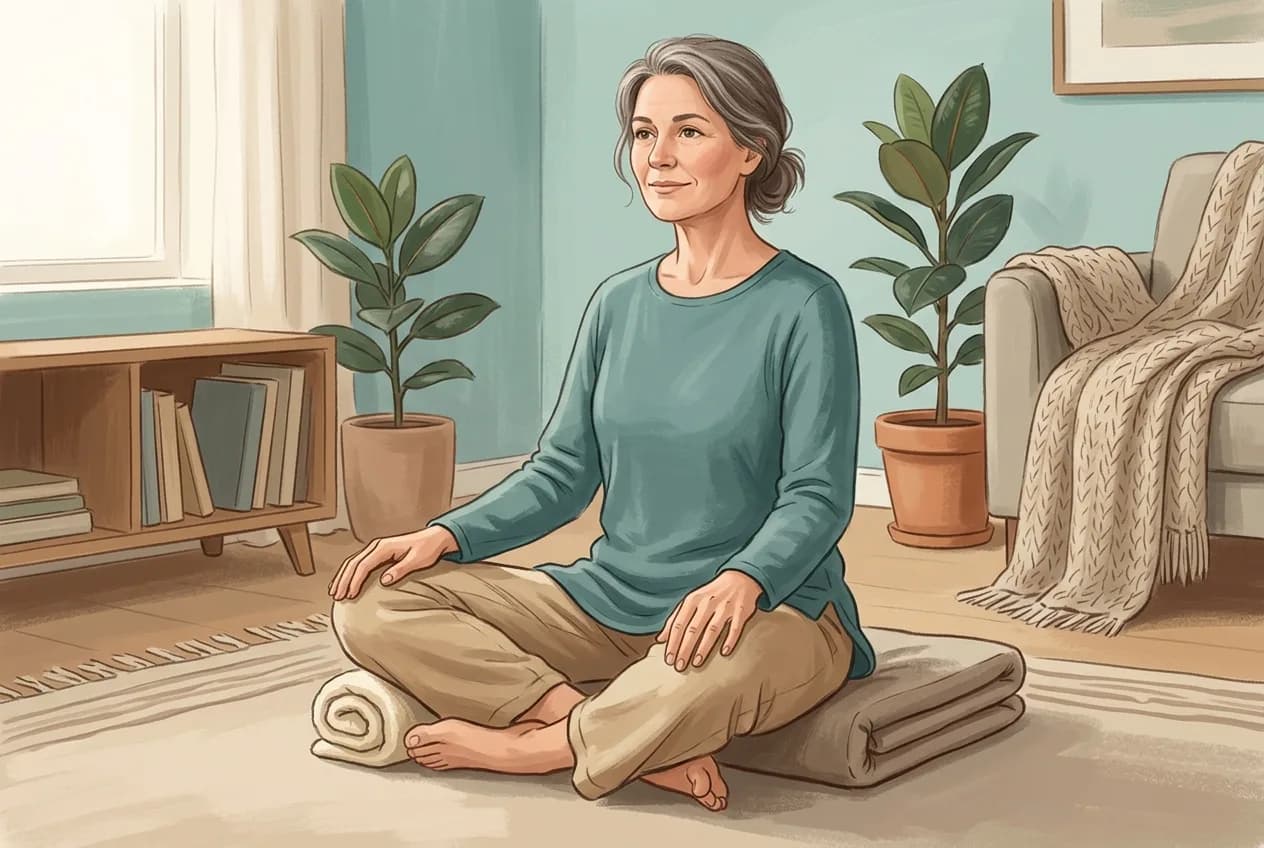
The single most useful change is to sit up on something. Fold a firm cushion or a couple of blankets and perch on the front edge so your hips sit higher than your knees. That small lift does something quietly powerful: it lets the pelvis tilt gently forward rather than rolling back, so your lower back lengthens and your spine stacks up easily above your sitting bones. Suddenly the knees can drop, the back can rest, and the whole position stops being a fight. If a knee still floats high or tugs, slide a rolled towel underneath it so it can rest down rather than hanging in the air. Supported knees let the hips soften instead of straining to hold the leg up.
This is the heart of it. Comfort in sitting cross legged on the floor comes from setup and patience, not from gritting your teeth. Pressing your knees toward the floor is the one move that tends to backfire, because forcing a joint makes the body guard more, not less.
Building gentle hip movement so sitting cross legged becomes easy
Once you are propped and comfortable, the work is not to stretch harder but to move more, and more slowly. Rock your pelvis softly forward and back over your sitting bones, then let it draw small circles, the way you might gently stir something. As you move slowly and notice how each tiny shift lands, your nervous system gathers quiet evidence that this shape is safe, and the hips begin to let go on their own. Try alternating which leg you cross in front too. Almost everyone has a habitual side, and giving the less familiar side a little time helps both hips learn. Come in and out of the position gently rather than parking in it, and get up to move whenever you feel any strain.
That patient, awareness-first approach runs all the way through the Feldy body awareness program, where unhurried lessons invite the hips toward ease instead of chasing a stretch. To go deeper on the underlying issue, see our Feldypedia guide to hip stiffness and limited mobility. And to work the same hips through gentle floor movement, you might enjoy our somatic exercises for hips or, if the front of the hip feels stuck, our guide to tight hip flexors. And if floor sitting is part of a wider wish to feel more at home in your body, our somatic exercises for beginners are a gentle first lesson.
Letting the knees lower on their own time
Here is the part that asks the most patience. The knees drift toward the floor not because you pushed them there, but because the hips gradually free up over weeks of gentle practice. If you press them down, you force the joints into a range they are not ready for, and the body braces harder in protection. So support them, move often, switch sides, and trust the slow path. A few easy minutes most days teaches your hips far more than one long, forced sit that leaves you aching. Over time, the perch that felt impossible becomes a place your body settles into without a second thought.
Learn to listen to your body
Now for the practice that trains it. The Feldy program sharpens your attention through slow, attentive Feldenkrais® lessons, so everyday movement feels lighter and more your own. Gentle, guided, and self-paced.
Start my free 7-day trialNo credit card needed.
Common Questions about sitting cross legged on the floor (FAQ)
Why is sitting cross legged on the floor so hard?
For most people it is about hip mobility and how the pelvis is organized, not muscles that are simply too tight. When the hips do not yet rotate outward easily, the pelvis rolls backward, the lower back rounds, and the knees ride high. Sitting up on a cushion and building gentle hip movement is what changes this over time.
Is sitting cross legged bad for your knees or hips?
Comfortable cross legged sitting is generally fine and can even help the hips stay mobile. Trouble comes from forcing the position, pressing the knees down, or staying in one shape so long it aches. Let the knees rest on props, change sides, and shift often. If you have a knee, hip, or ankle condition, check with a professional first.
How do I make sitting cross legged on the floor more comfortable?
Sit on the front edge of a firm cushion so your hips are higher than your knees, which tilts the pelvis gently forward and lengthens the lower back. Support any knee that floats high with a cushion, alternate which leg crosses in front, and build easy hip movement over time. Comfort comes from setup and patience, not effort.
How often should I practice sitting cross legged?
Short and frequent works better than long and forced. A few minutes most days, propped and comfortable, teaches the hips more than a single long sit that leaves you aching. Get up and move whenever you feel strain. Gentle and regular is how the position becomes natural.
Should I push my knees down toward the floor?
No. Pressing the knees down forces the hip and knee joints into a range they are not ready for and tends to make the body guard more, not less. Support the knees instead and let them lower on their own over weeks as the hips free up. Forcing is the one thing that tends to backfire.
When should I see a professional about sitting cross legged?
If you feel sharp pain, pinching, or pain that lingers after you stand up, or if you have a known knee, hip, or ankle condition or a recent injury, check with a doctor or physical therapist before practicing. Gentle self-care is for general comfort, not for working around a medical problem.
Learn to listen to your body
See the programRelated resources
Different Ways to Sit on the Floor and Why Variety Wins
Cross legged, kneeling, side sitting, long sitting, squatting: what each position asks of your hips, knees and back, and why switching between them matters most.
Tight Glutes Stretches: Gentle Release Without Forcing
Gentle tight glutes stretches that invite the seat muscles to let go through slow, small, pain-free movement. Beginner-friendly lying release you can return to any time.
Your balance got better, but did your sense of where your body is get better too
Ready to start moving better?
Gentle, guided lessons for your body. Try your first one free, no credit card required.