
How to Prevent Sciatic Nerve Pain: Honest, Gentle Habits
No habit can promise to keep sciatic nerve pain away. Here is what the evidence supports, which everyday habits are worth trying, and the warning signs to know.
In short
How to prevent sciatic nerve pain: nothing guarantees it, but staying regularly active, varying your positions, and learning how to look after your back may lower the chance of back trouble. Warning signs such as saddle numbness or weakness in both legs need emergency care.

Prefer to ease in gently?
See a few gentle exercises for lower back pain to try.
Before you begin. This page is general information and sits alongside medical care. It is not a treatment and does not diagnose. If you have leg pain, numbness or weakness, see your doctor first. Call emergency services for numbness in the groin or saddle area, new bladder or bowel trouble, or weakness in both legs. Get urgent care for a leg or foot that is getting weaker, or a foot that drags.
How to prevent sciatic nerve pain is a fair question, and the honest answer is that nobody can promise it. Sciatica most often starts when a disc or a narrowed space in the low back presses on a nerve root, and some of that is simply how bodies are built. What you can do is make your daily life kinder to your back, which may lower the chance of an episode or of one returning. This page covers what research supports, some plain habits, and the signs that need a doctor.
If you are already in pain, our guide to the causes of sciatic nerve pain explains what may be going on, and sciatic pain and a herniated disc looks at one common cause.
What research supports for prevention
Most prevention research looks at low back pain in general, not sciatica alone. That is worth knowing, because the nerve pain often grows out of a sore back. A large review of prevention studies found that exercise combined with education lowered the risk of a new episode of low back pain by about 45 percent (Steffens et al., JAMA Internal Medicine, 2016). The authors rated the evidence as moderate quality, not strong, and "education" meant learning how the back works and how to stay active with it.
The same review found no protective effect from back belts or from education given on its own. So the message is not "buy a gadget" or "read a leaflet". It is closer to "keep moving, and understand your back well enough not to fear it".
Two more honest points. First, these studies measure groups of people, so they cannot tell you what will happen to you. Second, the numbers are about low back pain, and they do not prove the same result for sciatica. For a wider picture of the condition, see the Feldypedia article on sciatica and nerve related back pain.
Everyday habits that may help
None of these is a rule. They are small things many people find easy to try.
- Break up long sitting. Stand, walk to a window or shift your weight every half hour or so. The aim is variety, not a perfect chair.
- Vary your positions. Sit, stand, lean and walk through the day. Staying in any one shape for hours tends to tire the same tissues.
- Lift close to the body. Hold a load near your middle and let your legs share the work. Heavy things held far out ask a lot of the low back.
- Stay regularly active. Walking, swimming, dancing, gardening or a class you like all count. Choose something you will keep doing.
- Protect your sleep. A tired body often feels its aches more.
- Look at the bigger picture, lightly. Smoking and extra body weight are linked with more back trouble in some studies. If you want to change either, your doctor can support you. This is information, not blame.
How to prevent sciatic nerve pain with more movement variety
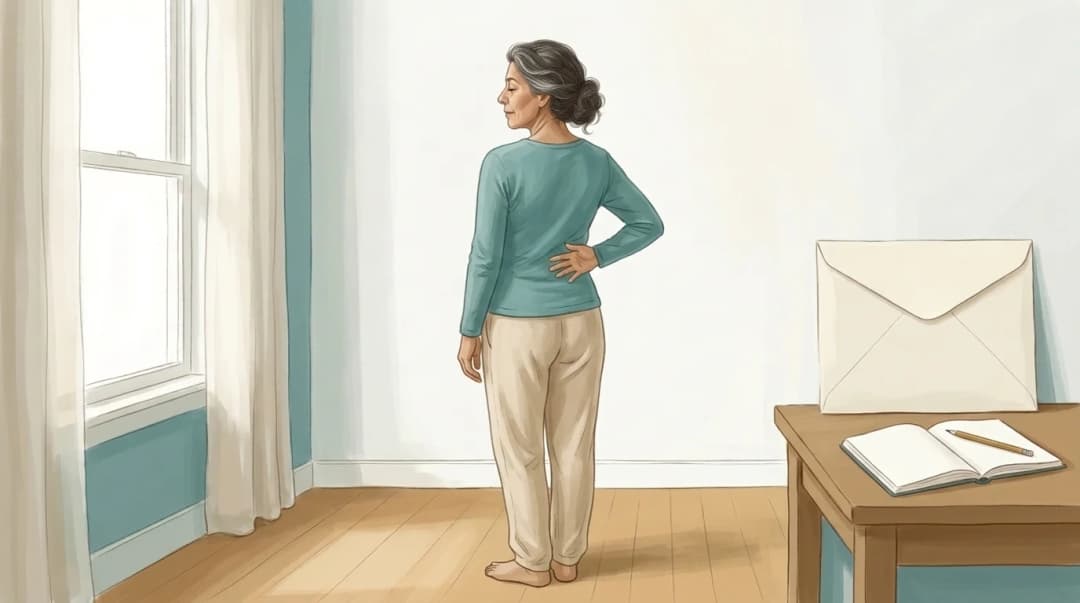
In the Feldenkrais Method®, we look at how you do an everyday action, not only whether you do it. A back that always moves in the same few ways tends to load the same few places. Many people hold their lower back firmly without knowing it, for example when they bend to a low drawer or step off a curb. That bracing is a habit, not a fault, and noticing it is the first step toward more choice.
Variety is the theme. You might bend by hinging at the hips one day and by bending the knees the next. You might let your ribs and pelvis turn together when you reach behind you. Small experiments like these give your back more ways to share a job. Nobody can say they prevent sciatica, but they build the kind of body sense that helps you spot early strain.
If you would like a slow, gentle place to begin, try how to relax your back. Feldy also offers short guided lessons in this spirit, with a free trial to see if the style suits you. For more on the full picture of back care, visit our lower back pain hub.
Warning signs: when prevention is not the question
Some symptoms are not about habits at all. They need a medical team quickly.
Call emergency services or go to the emergency department for:
- numbness around the groin, genitals or inner thighs (the saddle area)
- new trouble passing urine or stool, or not feeling that you need to go
- weakness or numbness in both legs, especially if it is spreading
Get urgent care the same day or next if:
- one leg or foot is getting steadily weaker
- your foot drags or slaps when you walk (sometimes called foot drop)
For ordinary leg pain, tingling or numbness that lasts more than a few weeks or keeps returning, book a visit with your doctor. Many cases settle over weeks to months, but it is worth having someone examine you.
One thing to notice today
Next time you bend, sit down or stand up, pause for a moment and ask: is my lower back braced, as if bracing for a push? You do not need to change anything. Just see whether it grips, and whether it softens a little when you breathe out. That small noticing is a useful habit to practise.
A gentler way through back pain
Now you understand why it braces. The Feldy program helps your back unlearn that guarding, through slow, attentive Feldenkrais® lessons you follow at home. Gentle, guided, and self-paced.
Start my free 7-day trialNo credit card needed.
Common Questions about how to prevent sciatic nerve pain (FAQ)
Can sciatic nerve pain be prevented completely?
No habit can promise that. Sciatic nerve pain often starts when a disc or a narrowed space in the low back presses on a nerve root, and bodies differ in ways we cannot change. What you can do is lower the odds and support recovery by staying active, varying your positions and looking after general health.
What is the best exercise to prevent sciatica?
No single exercise has been shown to be best. Research on low back pain points to regular activity that you enjoy and can keep up, ideally with some guidance on how to look after your back. A walk, a swim or a gentle movement class you will actually attend is a sound choice.
How often should I move to lower my chance of sciatica?
Little and often tends to suit the back. Many people find that changing position every half hour or so while sitting is easy to keep up. Add some regular activity most days, within comfort.
How long before these habits make a difference?
Prevention works slowly and is hard to measure, since you are looking for something that does not happen. Some people notice their back feels easier to live in within a few weeks. Fewer flare ups is a goal over months, and nobody can promise it.
How is preventing sciatica different from treating it?
Prevention is about daily habits that may lower the chance of a first or repeat episode. Treatment belongs with your doctor or physiotherapist and depends on what is pressing on the nerve. Other movement methods such as Pilates or strength training are different approaches again, and many people use them for general conditioning.
When should I see a doctor about leg pain from the back?
See a doctor if leg pain, tingling or numbness lasts more than a few weeks, keeps coming back, or wakes you at night. Get urgent care for a leg that is getting weaker or a foot that drags. Call emergency services for numbness in the groin or saddle area, new trouble passing urine or stool, or weakness in both legs.
Does sitting cause sciatica?
Sitting itself is not a proven cause. Long, unbroken sitting can leave the low back stiff and tired, though, and some people find their leg symptoms flare after it. Breaking up sitting with small changes of position is a low risk habit worth trying.
A gentler way through back pain
See the programRelated resources
Causes of Sciatic Nerve Pain: What Irritates the Nerve
Sciatica tells you where the pain travels, not why. Here are the usual causes of sciatic nerve pain in plain words, and what to tell your clinician.
Working Out With Sciatica: How to Keep Training Gently
You can often keep going to the gym, classes or runs with a sore leg. Learn to read your symptoms, adjust load and range, and choose kinder options on harder days.
Among 474 adults with scoliosis, pain did not follow the curve
Ready to start moving better?
Gentle, guided lessons for your body. Try your first one free, no credit card required.