


Lack of Energy in Perimenopause: Why It Happens and What Helps
A warm guide to lack of energy in perimenopause: why it happens, what it really feels like, and how gentle attentive movement can give some back.
In short
Lack of energy in perimenopause is one of the most common symptoms of the transition, driven by fluctuating estrogen, disrupted sleep, and a stressed nervous system. A 2016 cohort of 1,062 women found fatigue was the single most reported symptom, at 54%. Gentle attentive movement helps by asking less, not more.

Prefer to ease in gently?
See a few gentle exercises for menopause to try.
Before you begin. This page is education, not medical care. Persistent or severe fatigue deserves a check with a doctor, especially to rule out thyroid problems, low iron, or sleep disordered breathing. And if HRT or other symptom management might help you, a menopause informed clinician is the right person to ask.
If you are in your 40s or 50s and wondering why you feel wrung out by mid afternoon, you are asking a very common question. Lack of energy in perimenopause is one of the most frequently reported symptoms of this transition, and it is not a character flaw or a failure of willpower. It is a real, physiological tiredness with real causes. This guide walks through why it happens, what it actually feels like, and a gentler way to work with your body on the days when everything feels like too much.
Why perimenopause drains energy in a way that surprises women
Most of us expect hot flashes. Fewer of us expect the bone deep tiredness, and that is part of why it catches so many women off guard. A Shanghai cohort of 1,062 women in the menopausal transition found fatigue at the top of the list, reported by 54% of participants, above hot flashes and mood changes (Wang et al., Medicine (Baltimore), 2016). If low energy is your loudest symptom, you are in the majority, not the margins.
Several things stack up at once. Estrogen and progesterone stop moving in their old predictable rhythm and start swinging, which affects the brain systems that regulate energy and mood. Sleep gets broken, by night sweats, by 3am waking, or by both, so you run each day on a shallower reserve. And the nervous system, sensing that things are less predictable, often holds more background muscular tension: a clenched jaw, braced shoulders, a held breath. Carrying that tension all day is work, and it is work you never see on any schedule.
What lack of energy in perimenopause actually feels like
Women describe it in strikingly similar ways. It is not the pleasant tiredness after a long walk. It is waking unrefreshed after eight hours in bed. It is the afternoon wall that arrives earlier and hits harder than it used to. It is looking at a task you have done easily for twenty years, a work deadline, a family dinner, and feeling that the fuel simply is not there.
Because it can look from the outside like nothing is wrong, many women quietly blame themselves. I want to say this plainly: this tiredness is physiological, it is documented, and it is common. Naming it accurately, as a symptom of a hormonal transition rather than a personal shortcoming, is the first genuinely useful step. The second is learning to spend the energy you do have more wisely, which is where movement comes in, though probably not the kind you are picturing.
How gentle movement adds energy rather than spending it
The usual advice, exercise more, can feel like a cruel joke when getting off the sofa is the challenge. And pushing hard on an empty tank often backfires: a bootcamp class on a depleted day can cost you two more days of exhaustion.
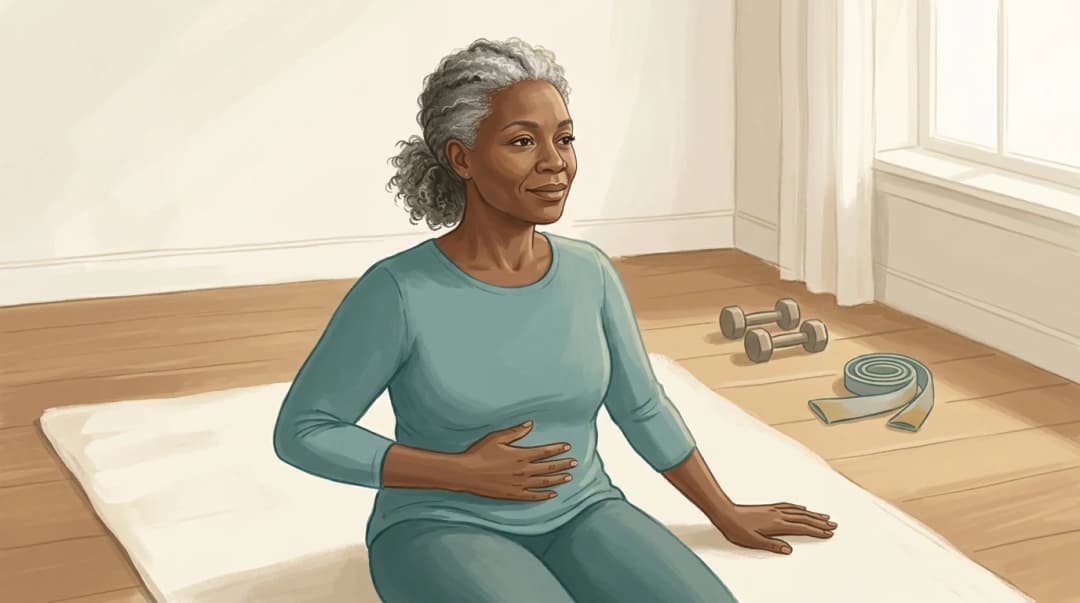
There is another way in. The Feldenkrais Method® works with small, slow, attentive movements, usually done lying on the floor, that ask your nervous system to notice rather than to strain. Instead of demanding more output, a Feldenkrais® lesson invites you to find where you are working harder than you need to, in your neck, your ribs, your breath, and to let some of that hidden effort go. Many people finish a lesson feeling as if something has been given back rather than used up, because in a sense it has: the energy that went into unnecessary tension is released for living. Feldenkrais® lessons are also unusually forgiving of bad days, since lying down and moving gently is available even when a workout is unthinkable. If trying it appeals more than reading about it, our exercises for perimenopause are short and done lying down. You can read more about how the method works in our Feldypedia guide to the Feldenkrais Method.
Other movement practices reach energy through their own mechanisms: yoga combines postures with breath work, and walking builds cardiovascular fitness and gets you daylight, which supports sleep rhythms. Awareness based lessons work differently, by reducing the cost of moving rather than building capacity, and many women find the approaches complement each other across better and worse days.
Where movement fits next to everything else
Gentle movement is one piece of the picture, not the whole of it. Medical care sits alongside anything you do on the floor: if fatigue is severe or persistent, a doctor should rule out thyroid problems, low iron, and sleep disordered breathing, and a menopause informed clinician can discuss whether HRT or other symptom management makes sense for you. None of that competes with a movement practice; they simply answer different questions.
At Feldy we teach short, guided Feldenkrais Method® lessons online, built for exactly these years, and our program for menopause and midlife is paced for real energy levels, not idealized ones. If your tiredness comes with achiness, our guide to perimenopause aches and pains is a natural companion, and if you are wondering about the road ahead, we have a look at how long perimenopause lasts.
Softer movement through menopause
Now, the gentle way to work with it. The Feldy program eases the stiffness and tension of these years through slow Feldenkrais® lessons made for a changing body. Gentle, guided, and self-paced.
Start my free 7-day trialNo credit card needed.
Common Questions about lack of energy in perimenopause (FAQ)
How is perimenopause fatigue different from regular tiredness?
Regular tiredness has a cause you can point to, a late night or a hard week, and it lifts after rest. Lack of energy in perimenopause often arrives without an obvious reason, lingers even after a full night in bed, and fluctuates with your cycle and your sleep. Many women also notice it travels with other changes, like night sweats, brain fog, or irregular periods. That cluster is the clue that hormones are involved.
Is it safe to exercise when I feel exhausted?
Gentle movement is usually fine and often welcome, as long as it stays truly gentle. The problem is intense exercise on an empty tank, which can leave you more depleted for days. Slow, small movements done lying down, with plenty of rests, ask very little of you and tend to leave you calmer rather than drained. Let comfort set the limit, and stop while you still have something left. If even gentle movement reliably wipes you out, that is worth mentioning to your doctor.
When should I see a professional about low energy?
See your doctor if fatigue is severe, getting worse, or simply not lifting, or if it comes with breathlessness, a racing heart, very heavy bleeding, low mood, or unexplained weight change. Thyroid problems, low iron, and sleep disordered breathing can all masquerade as perimenopause and deserve to be ruled out. And if your symptoms are disrupting your life, a menopause informed clinician can talk you through options like HRT. Gentle movement sits alongside that care, never in place of it.
How long does perimenopause fatigue last?
Perimenopause itself commonly lasts around four to eight years, though it varies widely from woman to woman. Energy tends to fluctuate through that window rather than staying uniformly low, with better and worse stretches that often track sleep and cycle changes. For many women things steady somewhat after periods stop and hormones settle. You do not have to simply wait it out, though: sleep support, medical care where needed, and kind pacing can all make the years in between more livable.
How often should I practice gentle movement for energy?
Little and often beats occasional and heroic. Ten to twenty minutes most days, or even five minutes on the hardest days, does more for a tired system than one long session a week. Consistency matters because the nervous system learns from repetition, and each short practice is another quiet message that it is safe to let go of unnecessary effort. On very low days, simply lying on the floor and following your breath still counts.
Softer movement through menopause
See the programRelated resources
How to Combat Fatigue During Perimenopause, Gently
A plan for combating fatigue during perimenopause: gentle movement in small doses, kinder pacing, steadier sleep habits, and knowing when to ask your doctor to look deeper.
Perimenopause Fatigue: Gentle Movement and Energy Pacing
A calm guide to perimenopause fatigue, using gentle, well-paced movement to support steadier energy on tired days, plus notes on sleep, hormones, and when to see a doctor.
Why the movement practice you keep through menopause is usually the one you enjoy
Ready to start moving better?
Gentle, guided lessons for your body. Try your first one free, no credit card required.