
Right Side of Neck Feels Tight: Why One Side, and What Helps
One sided neck tightness is the rule rather than the exception. The reason is usually asymmetry in how you live, not damage on the side that complains.
In short
If the right side of your neck feels tight, the usual cause is asymmetry in daily habit: a screen set off centre, a bag on one shoulder, a favoured sleeping side, or a phone held to one ear. One sided tightness without injury, fever or arm symptoms is rarely a sign of damage.

Prefer to ease in gently?
See a few gentle exercises for neck and upper back to try.
Before you begin. This page covers ordinary one sided neck tightness and is not a diagnosis. Seek urgent care for a stiff neck with fever, severe headache, rash or sensitivity to light, and for neck pain following a fall or collision. Arrange a prompt appointment for weakness, numbness or pins and needles in the arm or hand, for a swelling or lump in the neck, for pain that wakes you at night or is present at rest, or for tightness that has been worsening steadily over weeks.
When the right side of your neck feels tight and the left side does not, the asymmetry itself feels significant, as though something has gone wrong on one side only. Almost always the explanation is duller and more encouraging than that. Human days are not symmetrical, and a neck that has been asked to do slightly more work on one side for a few thousand hours will say so.
Why the right side of your neck feels tight: the ordinary sources
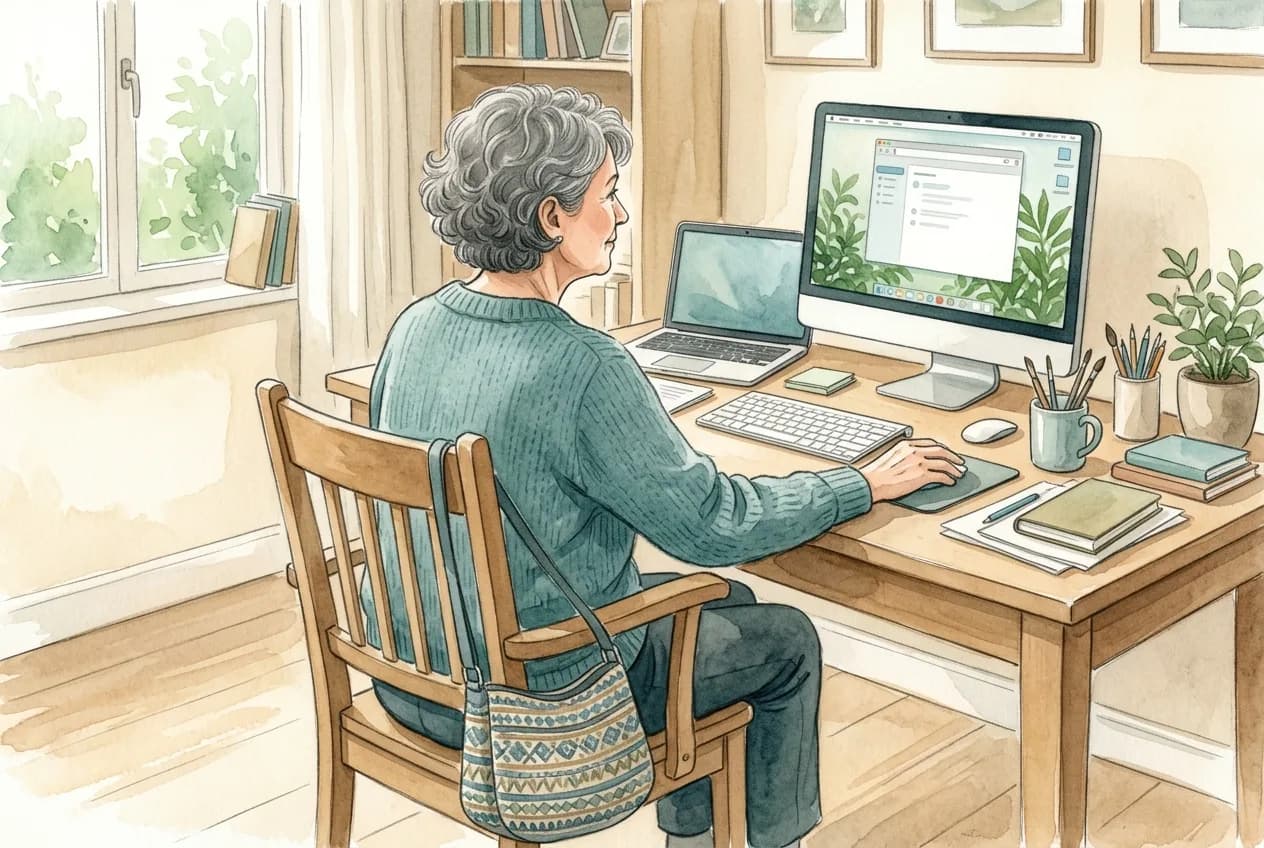
Screen position tops the list. A monitor set a few degrees off centre, a laptop beside a document, a second screen used mostly for reference: any of these keeps the head fractionally turned or tilted for hours a day. The muscles on one side stay lightly on. Light and constant produces tightness far more reliably than heavy and brief.
Then there is what you carry. A shoulder bag, a laptop case, a child on the hip, always on the same side. The neck muscles on that side work to keep the head upright against the load, and they keep working long after the bag is down.
Sleep contributes too. Most people have a strong side preference and a pillow height that suits one position better than the other. Tightness that is at its worst on waking and eases within an hour usually points here.
Phones, driving, a dominant hand, an ear that hears better, a habit of resting the chin on one fist: the list is long and personal. The Feldypedia article on neck and shoulder tension covers how these small asymmetries accumulate. Stress can add its own layer, and our explainer on what emotions are stored in the neck and shoulders looks at why tension under pressure settles in this band.
Why the tight side is often the working side
There is a persistent assumption that a tight muscle is a short muscle. In the neck it is frequently the opposite. Muscles that are lengthened and holding, hour after hour, produce a strong sensation of tightness while being under tension rather than under length.
That matters because it changes what to do. Pulling firmly on a muscle that is already labouring tends to leave it more irritable, which is why the classic hard stretch of the tight side gives ten minutes of relief and then a worse afternoon.
It is worth adding that the language around this area outruns the evidence. Myofascial pain, the label often applied to one sided muscular tightness and tender spots, is estimated to affect somewhere between 30% and 93% of people seeking care for musculoskeletal pain (StatPearls, 2025). A range that wide tells you the definition is blurry and there is no confirmatory test, which is a good reason to be sceptical of anyone offering a precise mechanical explanation for your particular neck.
Working with the difference rather than against it
Use both sides. This is the piece most people skip. Turning the head slowly to the comfortable side, noticing how easy it is, then offering the same movement to the tight side, gives your nervous system a direct comparison. Comparison is what it learns from. Attacking only the tight side removes the reference point.
Keep it small and slow. A head turn that takes five seconds tells you far more than one that takes one second, and it stays well inside the range where nothing braces.
Include the ribs and the shoulder blade. The neck sits on top of the upper ribs and the shoulder girdle, and a rib cage that only moves one way will keep asking the neck to compensate. Our guide to tight shoulders and neck covers that link, and the anatomy is laid out in neck and shoulder muscles. If your tightness sits on the other side, the page on neck and shoulder pain on the left side covers that mirror image.
Fix the setup, not just the neck. Centre the monitor, swap the bag shoulder every few days, try the other sleeping side occasionally. Movement sessions work far better when the thing producing the asymmetry has also been adjusted.
Learning to sense one side against the other is precisely what the Feldenkrais Method® trains. Awareness Through Movement® lessons are built on small movements done on both sides with attention to the difference, which is why they suit one sided tightness particularly well. The lesson on Feldenkrais for neck tension is the natural place to begin, and Feldy's free 7 day trial gives you the same lessons spoken aloud. Where a physiotherapist or doctor is already treating your neck, this sits comfortably alongside that treatment.
A softer neck, a freer upper back
Now for the part that changes it. The Feldy program meets a held neck with slow, listening Feldenkrais® movement rather than force, at home on your own time. Gentle, guided, and self-paced.
Start my free 7-day trialNo credit card needed.
Common Questions about tightness on one side of the neck (FAQ)
Why does only the right side of my neck feel tight?
Because very little of what you do is symmetrical. A monitor placed slightly to one side, a bag always on the same shoulder, a phone held to one ear, driving with one arm resting, sleeping mostly on one side: each of these asks a little more of one set of neck muscles, every day, for years. The side that complains is usually the side doing the extra work rather than the side with something wrong in it.
Is one sided neck tightness a sign of something serious?
Usually not. Ordinary one sided tightness comes and goes with sleep, stress and desk time, changes with position, and eases with movement. What deserves attention is tightness alongside fever or severe headache, tightness after an injury, weakness or numbness travelling into the arm, a lump in the neck, or steady worsening across several weeks. Those warrant a medical opinion rather than self care.
How do I ease tightness on one side of my neck?
Counter intuitively, work with the comfortable side as much as the tight one. Slow, small head turns in both directions, done well within comfort, tend to help more than stretching only the tight side, because the two sides share the same control. Warmth first makes everything easier, and changing position often through the day matters more than any single session.
Should I stretch the tight side of my neck?
Gently, and not as the main strategy. A muscle that feels tight on one side is frequently working hard rather than sitting short, and pulling on a working muscle adds to its load. Small movements through the comfortable middle range give better results than a firm stretch held to the point where it bites.
Can stress cause tightness on one side of the neck?
Yes, and it often lands unevenly. Under pressure most people lift and grip the shoulders, and the dominant side usually grips more. Add a shortened, higher breathing pattern and the muscles that run between the ribs, collarbone and neck stay busy all day on that side. This is a real muscular sensation with a non muscular trigger.
How long should one sided neck tightness take to settle?
Tightness after a poor night or a long day at a desk generally eases within a day or two of gentle movement and a bit of warmth. Tightness built over months of the same one sided setup takes longer, commonly three to six weeks of short daily movement plus a change to whatever is asymmetrical in the setup itself. If nothing has shifted after six weeks, get it looked at.
A softer neck, a freer upper back
See the programRelated resources
Tight Shoulders and Neck: Gentle Tension Relief
Tight shoulders and neck are usually a holding habit driven by stress and posture. Here is how gentle awareness eases the load, plus a short lesson to try at home.
Neck and shoulder pain on the left side: why one side?
One sided neck and shoulder ache usually reflects how you carry, lean, and sleep rather than anything structural. Here is what it means and what quietly helps.
With neck pain, the shoulder blade shift you make yourself may outlast one done for you
Ready to start moving better?
Gentle, guided lessons for your body. Try your first one free, no credit card required.