
How to Stop Shallow Breathing While Sleeping
How to stop shallow breathing while sleeping by changing the daytime habit and tension that follow you to bed, plus the signs that mean you should see a doctor.
In short
You cannot consciously steer your breath once you are asleep, so the way to stop shallow breathing while sleeping is to change the daytime habit and tension that carry into the night. Ease chest and rib tension, practise slow, low breathing while awake, and wind down before bed so you arrive less braced. If you snore, gasp, or wake unrefreshed, see a doctor to rule out sleep apnea.

Prefer to ease in gently?
See a few gentle exercises for stress and sleep to try.
Before you begin. This is general self-care, not medical advice. Shallow or interrupted breathing during sleep can be a sign of sleep apnea or another medical condition. Please see a doctor if you snore loudly, gasp or choke in your sleep, are told you stop breathing, wake unrefreshed or with headaches, feel very sleepy by day, or feel breathless lying flat. Those need proper assessment, not breathing tips alone.
If you have noticed your breath running fast and high at night, the first thing to know about how to stop shallow breathing while sleeping is that you cannot steer your breath once you are asleep. Breathing then runs on autopilot. What you can change is the habit and tension you carry to bed, because a body that falls asleep braced, with a tight chest and a racing mind, tends to keep breathing shallow through the night. Freeing that daytime pattern is exactly the kind of quiet, attentive work the Feldenkrais Method® is built for.
Gentle movement approaches like this have promising though still early support: a systematic review of 20 randomized trials found encouraging evidence for Feldenkrais improving functions such as balance and coordination, with no adverse events reported (Hillier and Worley, 2015). It is emerging evidence, not a cure, and a fair reason to treat gentle, breath friendly movement as a supportive habit.
Why you breathe shallowly while sleeping
Shallow nighttime breathing usually has ordinary roots. Daytime stress keeps the breath quick and high in the chest, and that pattern rides along once you drop off. Years of upper chest or mouth breathing become a groove the body follows automatically. A blocked nose pushes you toward shallow mouth breathing, and some sleeping positions crowd the ribs. If you sleep on your side, a top leg that drops forward tips the pelvis and shortens the front of the body, so a firm knee pillow can give the ribs more room, and our guide to how to fix anterior pelvic tilt while sleeping walks through that setup. Our Feldypedia guide to chronic shallow breathing looks at how that habit takes hold in waking life first.
There is one important exception. Breathing that repeatedly stops and starts, or that comes with loud snoring and gasping, can be a sign of sleep apnea, which is a medical matter rather than a habit. More on that below.
How to stop shallow breathing while sleeping starts in the day
Since sleep does the breathing for you, the leverage is in your waking hours. Spend a little time each day letting the breath drop lower and slow down: feel the belly and lower ribs move as you breathe, and let the out breath lengthen softly without forcing. Favour breathing through the nose, which tends to be slower and gentler than mouth breathing. Then build a calmer runway into sleep, dimming screens and winding down, so you arrive in bed less wound up and less likely to breathe high all night. Our Feldypedia note on sleep disruption and physical tension explains why the state you fall asleep in shapes the whole night.
Gentle movement to free the breath
A great deal of shallow breathing traces back to a chest and upper back that have grown tight and still, giving the lungs little room to fill. Slow, easy movement that lets the ribs and spine move again tends to give the breath more space, without you ever having to breathe hard. Small rolls of the shoulders, a gentle turn of the upper body from side to side while seated, or easy movement of the ribs as you breathe can all invite a fuller, lower breath. Practised gently in the day, this softens the holding you would otherwise carry to bed. Our deep breathing movements for relaxation offer a place to start. And if you are choosing an app for this daytime practice, our comparison of the best app for stress and tension relief looks at which ones work with a tight chest and raised shoulders.
A short wind down to try before bed
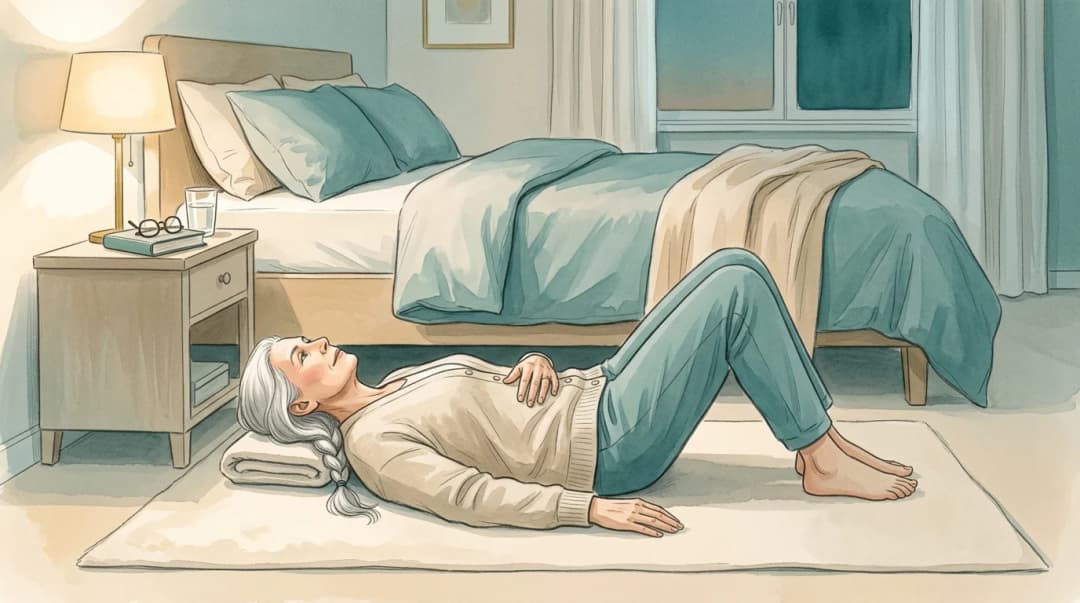
In the last stretch of your evening, give yourself a few unhurried minutes. Sitting or lying comfortably, notice where your breath is moving, high in the chest or lower in the belly and ribs, with no need to change it at first. Then let a handful of out breaths trail a little longer, so the next breath in arrives on its own, lower and softer. Let your shoulders and jaw ease. You are not trying to fix your sleeping breath tonight, only to teach your daytime body that low, slow breathing is available, so it has somewhere gentler to settle when you drift off. If you would rather have those minutes guided than improvised, our somatic exercises for sleep lesson takes the same slow approach through the whole body.
When shallow breathing at night needs a doctor
Hold all of this as supportive self-care rather than a treatment. Easing tension and practising slower breathing genuinely help many people breathe more comfortably, and they are not a substitute for medical care. Please see a doctor if you snore loudly, gasp or choke in your sleep, are told you stop breathing, wake unrefreshed or with headaches, feel very sleepy by day, or feel breathless lying flat. Those can point to sleep apnea or another condition that needs proper assessment. The Feldy program can sit alongside that care, offering a gentler, freer relationship with your own breath and movement day to day.
A calmer body, easier nights
Understanding it is calming, moving with it more so. The Feldy program is meditation in movement, slow Feldenkrais® lessons that help a busy body settle so sleep can arrive on its own. Gentle, guided, and self-paced.
Start my free 7-day trialNo credit card needed.
Common Questions about how to stop shallow breathing while sleeping (FAQ)
Can I control my breathing while I am asleep?
Not directly, since breathing during sleep runs on its own without conscious input. What you can change is the state you fall asleep in. A body that goes to bed tense, with a gripped chest and a busy mind, tends to keep breathing high and shallow through the night. Softening that tension and slowing your breath while awake gives sleep a calmer starting point to settle from.
Why do I breathe so shallowly at night?
Common reasons include daytime stress and chest tension carried into bed, a long habit of upper chest or mouth breathing, a congested nose, or your sleeping position. Anxiety keeps the breath quick and high, and that pattern often continues once you drop off. Shallow or stop start breathing can also signal sleep apnea, which is why persistent cases deserve a medical check.
Does nose breathing help with shallow breathing in sleep?
For many people it does. Breathing through the nose tends to be slower and lower in the body than mouth breathing, and practising it while awake can nudge the nighttime habit in the same direction. If your nose is often blocked, that is worth raising with a doctor, since congestion pushes you toward shallow mouth breathing at night.
Can gentle movement improve how I breathe while sleeping?
Indirectly, yes. Much shallow breathing comes from a chest and ribcage that have grown tight and still, so easy movement that lets the ribs and upper back move more freely can give the breath more room. Done in the day, this softens the holding pattern you would otherwise take to bed. It changes your breathing baseline rather than your breathing while asleep.
How long until my breathing pattern changes?
Breathing habits are long practised, so they shift gradually. Many people notice their daytime breath feeling lower and slower within a couple of weeks of regular, gentle attention, and calmer nights tend to follow. If nothing changes, or you have signs of disturbed breathing in sleep, see a doctor rather than waiting it out.
When should I see a doctor about breathing during sleep?
See a doctor if you snore loudly, gasp or choke at night, are told you stop breathing, wake unrefreshed or with a headache, feel very sleepy during the day, or feel breathless when lying flat. These can point to sleep apnea or another condition that needs assessment and treatment. Gentle breathing and movement support good sleep, but they do not replace that care.
A calmer body, easier nights
See the programRelated resources
How to Fall Back Asleep After Waking in the Night
How to fall back asleep after a 3am waking: stay still, skip the clock, lengthen the exhale, and let a held body soften so drowsiness can return on its own.
Deep Breathing Exercises for Relaxation: A Gentle Set
Deep breathing exercises for relaxation, built around a slow, easy belly breath and a longer exhale. A short 5 to 10 minute lesson to try at home, with nothing to force.
After 60, some of what movement does for your memory may happen while you sleep
Ready to start moving better?
Gentle, guided lessons for your body. Try your first one free, no credit card required.