

Yoga Stretches for Bedtime: A Gentle Feldenkrais® Wind Down
Yoga stretches for bedtime that soften a wired body instead of asking it to work harder, with a short in bed lesson to help the day close.
Before you begin. General self-care, not medical advice. Persistent sleep problems deserve a proper look with a doctor, and are not solved by a bedtime routine alone. Please check with a clinician before starting new movement work if you carry a diagnosed back, neck, or pregnancy related condition, and keep every movement well inside comfort.
The lesson
About 5 to 10 minutes. Move slowly, do less than you can, and stay well below any pain. Rest whenever you need to.
Prefer to listen than read?
Feldy voices gentle lessons like this for stress and sleep, so you can close your eyes and follow along.
- 1
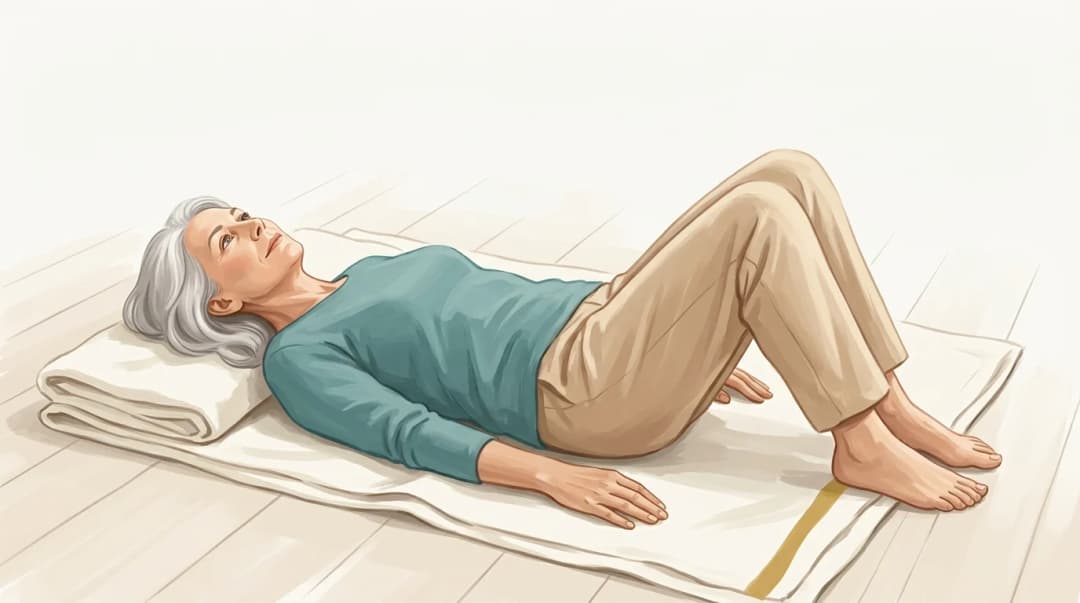
Lying quietly in bed. Lie on your back with the knees bent and feet resting on the mattress, or straight if that is kinder. Feel the whole length of your body being held, and take one slow breath in and a slower one out.
- 2
A wide scan. Let attention travel from the top of the head down through the neck, shoulders, back, hips, legs, and feet. Where is the body still busy from the day, and where has it already begun to settle?
- 3
Small knees to one side. With both knees bent and feet standing, let the knees drift softly a small way to one side, only as far as feels easy. Rest here for two slow breaths, then let them come back through the middle.
- 4
Knees to the other side. Let the knees drift the same small way to the other side, and rest again. Does one side welcome the movement more tonight than the other?
- 5
A gentle knees to chest. Bring one knee gently toward your chest, hands behind the thigh if you like, only as far as friendly, then let it come back. Try the other side, and then rest with both feet standing again.
- 6
Long slow exhales into stillness. Let both legs rest, and let the out breath grow a touch longer than the in. What, if anything, feels quieter now than when you began?
Let Feldy guide you, eyes closed
You just read these steps. In the Feldy program, a calm voice guides you through each gentle move, so your attention can stay in your body instead of on the screen.
Try Feldy Free for 7 daysNo credit card needed.
If your body carries the day into bed and stays busy long after the lights go out, these yoga stretches for bedtime are not about a full evening class. They are a very short, very kind wind down: a few small, slow movements in bed, paired with a longer out breath, so the nervous system has a gentle way to close the day. The Feldenkrais Method® shares the same intention as a gentle bedtime yoga: the smaller the movement and the softer the effort, the more clearly the body reads it as a signal to settle.
Why bedtime asks for less, not more
Sleep starts long before the eyes close. The wind down is a chemical and neural handover from the alerting side of the nervous system to the recovery side, and it needs quieter inputs to happen: softer light, slower thoughts, gentler movement, longer exhales. A busy stretching session or a strong yoga flow at bedtime can lift the heart rate and reawaken the body just when it is trying to switch modes. This is why bedtime stretches serve you best when they stay small and slow and stop short of anything that feels like work.
The scale of tired evenings is quietly huge. Musculoskeletal conditions affect around 1.71 billion people worldwide (WHO, 2022), and for many of those people a hip that has been sitting all day or a back that gripped through a stressful hour keeps talking at bedtime. A short, gentle wind down gives that talking somewhere to go before you try to sleep.
How these yoga stretches for bedtime actually work
The routine above lives in bed on purpose. Getting up to unroll a mat pulls you back into doing; staying horizontal keeps the whole thing quiet. Small knee sways, a gentle knee toward the chest, and a longer exhale are not stretches in the usual sense. They are small conversations with a nervous system that has been on duty all day, letting it try out slower, easier motion in a place that already means rest. Our Feldypedia entry on sleep disruption and physical tension walks through why tension held from the day so easily follows you into bed, and our breathing exercises to fall asleep lesson takes the same soft evening line further.
Little rituals that pair well
Alongside a short practice like this, keep the light low in the last hour, put the phone somewhere else, and give yourself a familiar, boring routine your body can recognise as sleep is coming. None of this is a treatment for insomnia, and none of it needs to be perfect. It is a small friendly signal, repeated. The Feldy program for stress and sleep has more short lessons to keep this kind of evening company.
Find where to start
Bedtime looks different for different bodies, and the sensible first lesson is the one that meets yours where it is tonight.
Not sure how to begin? Take the two minute Movement Match quiz, four quick questions that name the movement method for you.
An evening that ends a little softer than it started is already a good evening.
Common Questions about yoga stretches for bedtime (FAQ)
Are these yoga stretches for bedtime safe to do in bed?
Small, slow movements done inside a comfortable range are generally considered safe for most people. Beds are softer than a floor, so keep the movements smaller, avoid deep or dramatic poses, and stop if anything hurts, brings on dizziness, or feels unsteady. Please check with a clinician if you carry a diagnosed back or pregnancy related condition.
How long should a bedtime yoga routine be?
Five to ten minutes tends to be plenty. Longer sessions can turn the wind down into another task, which pulls in the opposite direction. What matters more than length is that the routine feels quiet, kind, and easy to want. Short and repeatable serves sleep better than ambitious and rare.
How is a bedtime routine different from a morning practice?
A morning practice tends to wake the body up and set attention for the day, so it may be a little livelier. A bedtime routine works in the other direction, letting a busy nervous system slow down. Smaller movements, longer exhales, softer light, and lying down are the ingredients that tell the body it is time to settle.
How long until yoga stretches for bedtime help sleep?
Many people notice the body falls asleep a touch more quickly on the nights they wind down slowly. Sturdier changes in sleep quality usually build over weeks of doing something small most evenings, alongside regular sleep and wake times and a screen light window before bed. Sleep responds to patterns more than to single sessions.
How is this different from a full yoga class?
A full class often builds strength and flexibility with active poses and can wake the body up. A bedtime routine works the other way: small, quiet movements and longer exhales, meant to lower the volume. Many people benefit from both, at different times of day.
What are the best yoga stretches for bedtime?
The best yoga stretches for bedtime are the smallest, kindest ones you will actually do most nights. Slow knee sways, gentle knees to chest, a soft supported forward fold, and legs resting up against a headboard all tend to help, done slowly, briefly, and inside easy range. What matters is quiet consistency, not the depth of any pose.
What should I avoid stretching right before bed?
It is generally wise to avoid deep, effortful, or heating poses, aggressive twists, long inversions, and anything that leaves the heart rate lifted rather than lowered. Bright screens and stimulating music around the practice also work against the point of it. The steadier direction is small, slow, quiet, and short.
When should I see a professional about sleep problems?
Please see a doctor if sleep has been persistently poor for weeks, if snoring or breathing pauses are a concern, if daytime tiredness is affecting safety or mood, or if a mental health condition is contributing. A bedtime routine can support sleep; it is not a treatment for insomnia or a sleep disorder on its own.
A calmer body, easier nights
See the programRelated resources
Restless Leg Exercises for the Evening Urge to Move
A slow evening lesson done in bed for restless legs: small foot and knee movements that give the urge to move somewhere quiet to go, and what to ask your doctor.
Body Scan for Sleep: A Feldenkrais® Lesson to Do in Bed
A body scan for sleep from the Feldenkrais tradition: tiny movements give busy attention somewhere to land, done lying in bed with the lights off.
Lying down is not the same as resting, and researchers have now measured the difference
Ready to start moving better?
Gentle, guided lessons for your body. Try your first one free, no credit card required.