

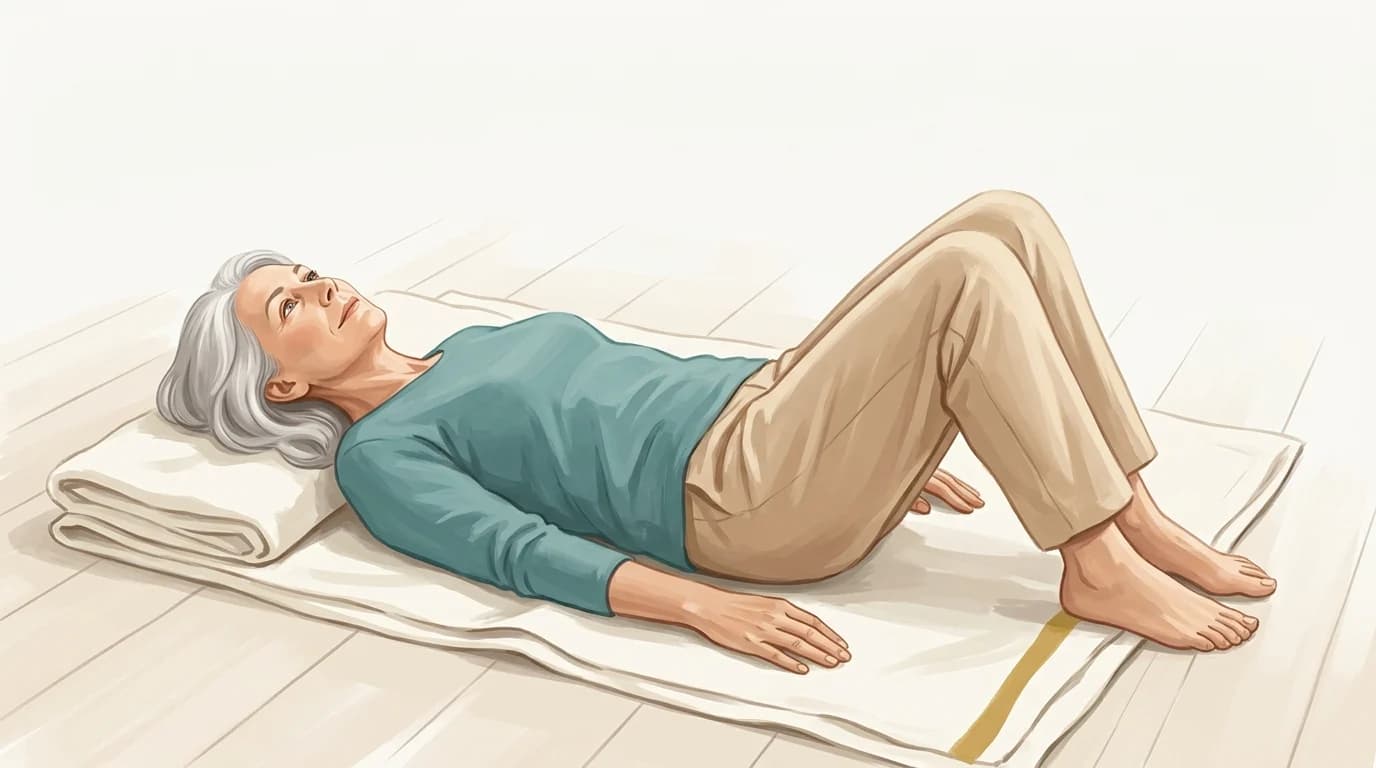
Lying down is not the same as resting, and researchers have now measured the difference
A panel of 27 people and 162 adults living with fatigue helped build a scale for rest. One of its six parts is called lack of skill.
Rest is the thing everybody prescribes and almost nobody specifies. Lie down. Pace yourself. Take it easy. A research team in the UK spent three phases trying to pin down what that advice actually means to the people receiving it, and what came back is that rest is not one thing. It is at least six.
The work was published on 2 September in PLoS One (PLoS One, 2026). Rest, the authors write, remains understudied and underspecified. There was no agreed way to ask a person whether the rest they had been taking was any good.
So they asked. Phase one put 41 candidate statements in front of a panel of 27 people: 23 adults living with a chronically fatiguing condition (Long COVID, ME/CFS, arthritis, multiple sclerosis) and four clinicians, two occupational therapists, a physiotherapist and a health psychologist. Two rounds of anonymous voting, with a 70 percent agreement bar for a statement to survive. Twenty five made it through. One detail is worth holding on to: sleep only reached consensus in the second round. The panel did not immediately agree that sleeping counted as resting.
Phase two took those statements to 162 adults living with persistent fatigue, recruited through UK patient organisations including the Long Covid Support Group, Fibromyalgia Support UK, Multiple Sclerosis UK and Versus Arthritis. Average age just under fifty. Four in five were women. They had been living with fatigue for around five and a half years, which is long enough that nobody in that sample was new to being told to rest.
When the analysis sorted their answers, six separate dimensions came apart from each other: resting activity, meaning the actual lowering of physical and mental load; restorative rest, meaning whether it gives anything back; planning and prioritising rest; the physical and psychological barriers that get in the way; the emotional response to resting; and a sixth that the authors named the risk of not resting enough, which they also, in their own words, called lack of skill.
Lack of skill. In a validated questionnaire, as a measurable property of a person.
The two statements that carried that sixth dimension most strongly were the plainest in the whole set, one of them simply "I find it difficult to rest during the day." That dimension also moved in step with a separate measure of overdoing it: broadly, the people who found resting hardest were the same people most likely to push past what they had. And tucked inside the emotional dimension sits a statement I would have bet on before I ever saw the data. "I feel guilty when I stop to rest."
What I see when a lesson asks people to stop
An Awareness Through Movement® lesson is built around pauses. You make a small movement a handful of times, slowly, and then you stop, lie still, and notice what changed. The pauses are not intervals between the real parts of the lesson. They are part of the lesson, and in some lessons they take up more of the hour than the moving does.
They are also, reliably, the hardest thing to ask for.
What I see again and again is that the moment the instruction becomes rest, something in the room speeds up. People check whether they're doing it right. They start planning the afternoon. They fidget, they adjust the blanket, they decide this is an excellent moment to reposition a cushion. Again and again someone tells me afterwards that the movements were fine but the resting was strange, or boring, or that they spent it waiting for the next instruction. The word that comes up most often, in my classes, is wasting.
Nobody arrives having been taught otherwise. We are taught how to work and roughly how to sleep, and then left to assume that whatever happens in between will take care of itself, which is precisely the assumption this scale's sixth dimension quietly declines to make, because a skill that has never once been taught is not a skill anybody should be expected to already have.
Feldenkrais® lessons treat that in between time as active rather than empty. The pause is where the method expects a new pattern to settle, which is why a lesson will often ask you to do less and then to stop entirely. Yoga, Pilates, Tai Chi and qigong each hold their own relationship to stillness, by a different mechanism and with different aims. What is specific here is that the noticing is the content, and the movement is mostly there to give you something to notice.
Questions this scale hands you
You do not need the questionnaire to borrow its structure. Did the rest give anything back, or did it only pass the time? Did you plan it, or did it happen because you ran out? What did you feel while you were doing it, honestly, including the guilt if the guilt was there? And the sixth one, the awkward one: do you actually know how to do this, or have you only ever been told to?
None of this replaces clinical care. If you're working with a physiotherapist or an occupational therapist on pacing, it sits alongside what they gave you, and the scale itself was built with occupational therapists in the room. What it may add is a vocabulary for a conversation that usually gets one word. On why tiredness can persist through a whole weekend of lying down, our entry on fatigue that movement can address covers the muscular effort side, and chronic stress and muscle tension covers the holding that outlasts the stressor.
If you want something concrete to try tonight, a Feldenkrais body scan done lying in bed gives busy attention something small and physical to land on, which is usually easier than being told to clear your mind.
Every lying down lesson in the Feldy online movement program ends the same way, with a few minutes of nothing, which people find odd for about a fortnight and then start asking for.
A questionnaire can now tell a clinic that somebody rests badly. Who teaches them to rest well is a different question, and this paper does not pretend to answer it. Meanwhile there is a floor, a folded blanket, and a ceiling that most people have never actually looked at for five uninterrupted minutes.
Let Feldy guide you, eyes closed
A calm voice walks you through gentle moves so your attention stays in your body, not on the screen.
Try Feldy Free for 7 daysNo credit card needed.
Sources
Movement Pulse is informational, not medical advice. See our editorial policy.
Move better with Feldy
See the programMovement Pulse Weekly
The week's best research, in your inbox Tuesday.
Movement science, gentle-practice ideas, and a practitioner's read on what's new. Free.
More from Movement Pulse
Why clenching a muscle helps you let it go, and what a new sleep review could not settle
A pooled analysis of fourteen randomized trials found that tensing and releasing muscles improved how adults rated their sleep. Doing more did not do more.
Aug 27, 2026
Slow movement and stress: what trials keep finding
A new controlled trial joins years of research linking slow, attentive movement with a calmer nervous system, and showing where doing more stops helping.
Jul 13, 2026
What a slower exhale does to a stressed nervous system
A small June 2026 study found that lengthening the exhale eased tension and quieted a marker of brain arousal in 40 minutes. A practitioner's read on why.
Jun 30, 2026Ready to start moving better?
Gentle, guided lessons for your body. Try your first one free, no credit card required.