
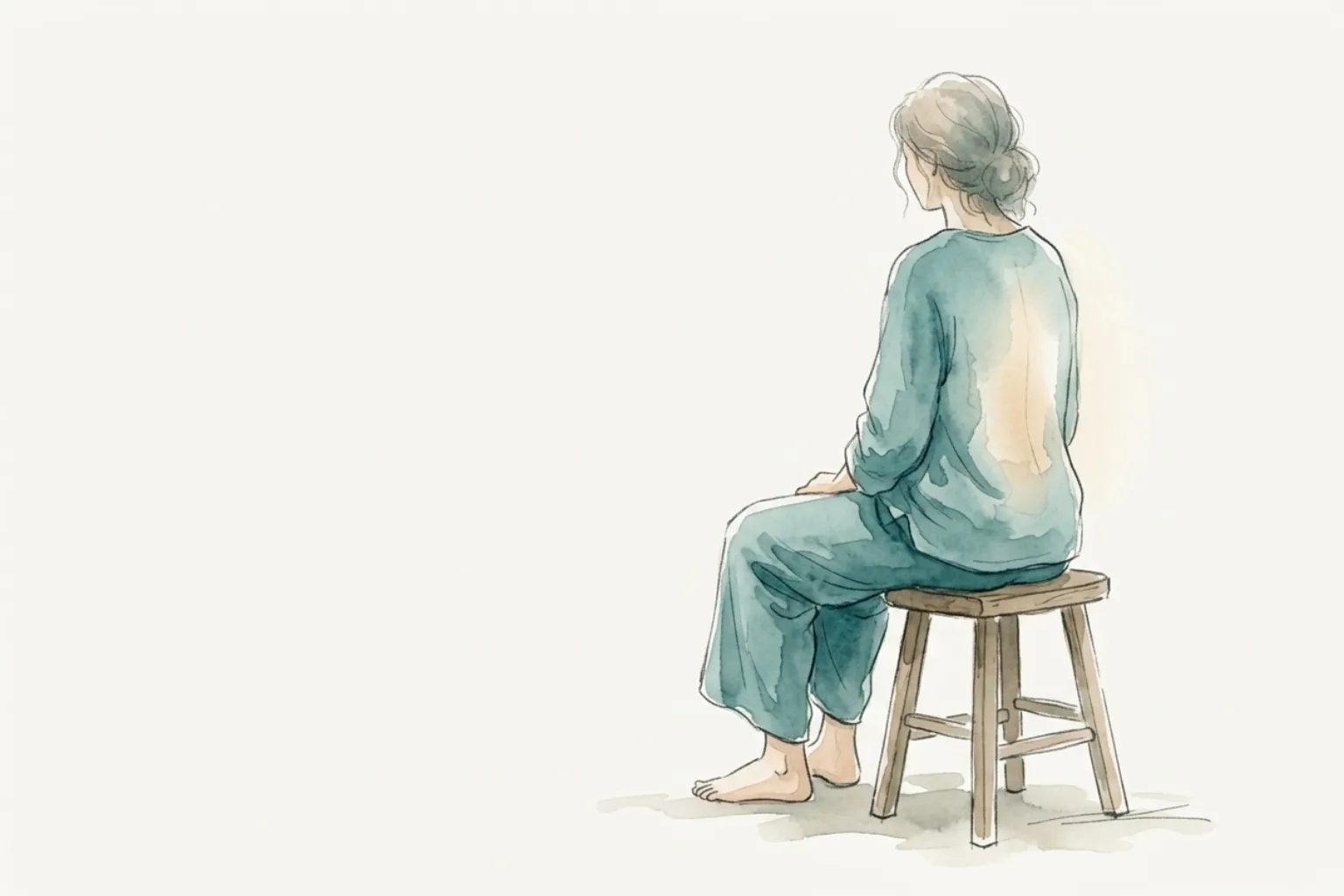
Somatic Movement: Where Feldenkrais Fits
Is Feldenkrais somatic movement? What the word somatic points to, and where the Feldenkrais Method sits among the many somatic practices.
 Chava SoraniGuild Certified Feldenkrais Practitioner (GCFP)
An interlude in the At Home in Yourself series.
These days, the word somatic seems to be everywhere. We hear about somatic yoga, somatic exercises, somatic walking and somatic breathing.
I'm often asked whether the Feldenkrais Method® is also somatic, and how it fits in with these other practices.
It's a good question. Perhaps the easiest way to answer it is to start with the word itself.
Soma is a Greek word for the body. The philosopher Thomas Hanna, who trained with Moshe Feldenkrais, gave it a more particular meaning: the body as we sense it from within, the body as we experience it ourselves.
Most of the time, we know our body from the outside. We see it in a mirror or a photograph. We notice how we look as we walk past a shop window, or hear what someone says about our posture.
Somatic means turning our attention inwards. Instead of asking how a movement looks, we notice what it feels like to be the one moving. If you'd like a fuller picture of the word, there is a plain explainer on what somatic movement is.
Where Feldenkrais fits
Moshe Feldenkrais began developing his work long before the word somatic became widely used. For this reason, the Feldenkrais Method is often described as one of the earliest somatic approaches, and many practices that came later grew from similar ideas.
Today there are many ways to explore this kind of attention. Hanna Somatics, somatic yoga and other gentle practices each have their own approach and their own strengths.
They are different methods, rather than steps on a ladder.
Many people discover which one suits them by trying a few. If you're weighing them up, this page on Feldenkrais and other somatic exercises may help.
One thing that is particular to an Awareness Through Movement® lesson is the way it uses variation.
We don't usually repeat a movement in exactly the same way. Instead, we explore it slowly and then make a small change. We might move the eyes in a different direction, change the position of a hand, or begin on the other side.
Each variation may give the nervous system something new to notice and compare. Through that comparison, easier ways of moving can often emerge on their own.
The movement becomes less like an exercise and more like a question.
Trying it from the inside
You can try a simple exploration while sitting on a chair.
Sit towards the front of the seat, with both feet resting on the floor. Slowly shift a little of your weight towards your right sitting bone, then return to the middle. Repeat this a few times, without rushing.
Notice what else happens as you move. Perhaps the ribs on one side come a little closer together. Perhaps your head tilts, or your left foot presses more firmly into the floor.
Now try the same movement again, this time keeping your head upright. Then repeat it once more, allowing your head to tilt freely. Notice how each version feels.
Rest for a moment, and simply sense how you are sitting now.
There's no particular result to achieve. You are only noticing, from the inside, how one small movement travels through you.
Beyond the lesson
Somatic is not really a type of exercise. It is a way of paying attention, and it can become part of almost anything we do. We can bring it to standing at the sink, climbing the stairs or getting out of the car.
Perhaps this is one reason the word has become so popular. Many of us spend much of our time seeing ourselves from the outside. There can be something quietly comforting about learning to feel ourselves from within.
The Feldenkrais Method offers one way to learn this, slowly and gently, one lesson at a time. If you'd like a place to start, you can explore these Feldenkrais exercises to try at home.
Seen from the outside, the body is something we have.
Sensed from within, it is somewhere we live.
Feel It From the Inside
Somatic movement is easier to feel than to explain. In Feldy's short audio lessons, Chava guides you through slow, gentle movements, lying down at home, so you can sense how you move from within. Your first 7 days are free, no credit card needed.
Begin your free trialFAQ about Feldenkrais and somatic movement
Is Feldenkrais a somatic practice?
Yes. The Feldenkrais Method is often described as one of the earliest somatic approaches, because it asks us to learn from how a movement feels from the inside rather than how it looks from the outside.
Is Feldenkrais better than other somatic methods?
Not better, different. Hanna Somatics, somatic yoga and other practices each have their own way of working and their own strengths. Feldenkrais lessons explore many small variations of a movement with close attention, and people often find the approach that suits them by trying a few.
← Previous:
Effort: Why Less Often Does More
At Home in Yourself is a series on what actually changes in a Feldenkrais lesson, one idea at a time. More are on the way.
Start your free 7-day trial
Start free trialMore Articles

Sensing: The Difference Between Doing and Feeling
What changes when you learn to feel how you move, rather than simply getting the movement done?
Sep 20, 2026
Effort: Why Less Often Does More
Why using less effort can help a movement go further, and what we may discover when we stop pushing.
Nov 6, 2026
Fibromyalgia and slow lessons: what eased, and what did not
Symptom load and the dread around pain improved. In 128 people, mostly women, daily life only trended better, and there was no comparison group.
Nov 18, 2026Ready to Start Moving Better?
Try your first lesson for free. No credit card required.