
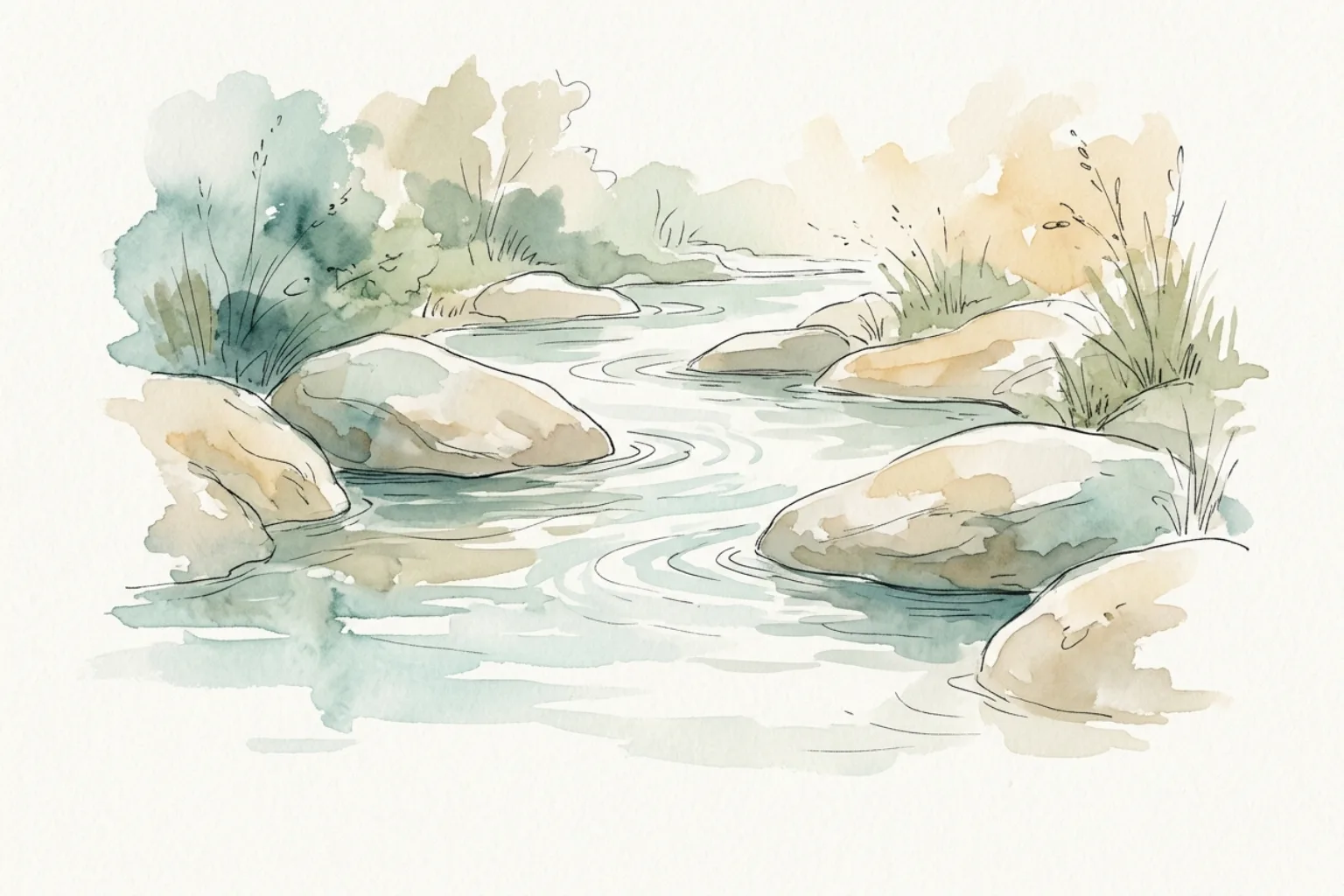
Effort: Why Less Often Does More
Why using less effort can help a movement go further, and what we may discover when we stop pushing.
 Chava SoraniGuild Certified Feldenkrais Practitioner (GCFP)
Part 9 of the At Home in Yourself series.
Imagine bending down to tie your shoelace, and finding that the floor feels a little further away than it used to.
Many of us respond by trying harder. We push, hold our breath, pull with our arms, and try to get there anyway. Perhaps we reach a little further, but it takes considerable effort. And the next time we try, it may feel just as difficult.
Most of us have learned that more effort brings better results. Try harder. Push a little more. No pain, no gain.
For some things, this makes sense. A heavy box does require more force than a light one.
But when we're learning to move in a new way, more effort can actually get in the way.
When we push, we often repeat what we already know, only with greater intensity. The same muscles work harder, while other parts of ourselves may remain uninvolved. We leave little room to discover another possibility.
And we learn what we practise. When we repeatedly push, perhaps what we're really learning is how to push.
This is why, in the Feldenkrais Method®, we often do less than we think we need to. We make movements smaller, slower and lighter. We pause to rest. We stay within a comfortable range, without trying to go further.
At first, it may seem as though very little is happening.
But when we reduce our effort, we give ourselves more room to notice and explore. The head may begin to move more freely. The pelvis may start to participate. The breath can continue without interruption. Other parts of the body can join in, and gradually, the movement may find an easier, more coordinated way to happen.
And sometimes, without trying to go further, we find that we can.
A little experiment
You can explore this while sitting on a chair.
Sit near the front of the seat, with your feet resting on the floor. Slowly slide your hands down your legs toward your feet, only as far as feels comfortable. Notice how far your hands travel and what the movement feels like. Then come back up.
Now repeat the movement, but go only halfway. Move slowly and lightly, a few times. Let your head move easily. Allow your breathing to continue. Notice what happens in your pelvis and whether other parts of you begin to participate.
Pause and rest for a moment.
Then slide your hands down once more, as you did at the beginning. Notice where they arrive this time, and how the movement feels.
You may find that your hands travel a little further, or that the movement feels easier. You may notice very little change. There's no particular result to achieve. The point is to notice what happens when you change the way you move.
Beyond the lesson
In an Awareness Through Movement® lesson, much of the learning happens this way. Not by pushing toward a goal, but by doing just enough to feel what we're doing, making room for other possibilities to emerge.
Something similar happens outside the lesson, too.
We try hard to remember a name, but it won't come. Later, while making tea or doing something else, it suddenly appears. We try hard to fall asleep, and somehow sleep moves further away.
Sometimes, the harder we try, the less available the result becomes.
Doing less is not giving up. It is not about avoiding effort altogether. It's about recognising when effort is no longer helping, and allowing ourselves to try something different.
We don't need to remember this every time we bend down to tie a shoelace. But perhaps, halfway there, we notice that we're holding our breath, tightening our shoulders or pushing unnecessarily.
And perhaps we let a little of that effort go.
Pushing repeats what we already know.
Doing less leaves room to discover something new.
Feel It for Yourself
The difference between pushing and doing less is easier to feel than to explain. In Feldy's short audio lessons, Chava guides you through small, slow movements, lying down at home, so you can notice how much effort you really need and what happens when you use a little less. Your first 7 days are free, no credit card needed.
Begin your free trialFAQ about effort in Feldenkrais
Does less effort mean I should stop exercising hard?
No. Working hard has its place, and a Feldenkrais lesson is not meant to replace exercise or strength training. Using less effort is a way of learning: it gives the nervous system room to find a new way of moving, which you can then take into everything else you do.
What if bending forward is uncomfortable for me?
Then make the movement much smaller, or simply imagine it. You only go where it feels easy and comfortable, and you can rest at any time. If pain persists, please see a professional.
← Previous:
Softness: Strength Without Strain
At Home in Yourself is a series on what actually changes in a Feldenkrais lesson, one idea at a time. More are on the way.
Start your free 7-day trial
Start free trialMore Articles

Softness: Strength Without Strain
Why a soft movement can be just as strong, and what may change when we stop bracing for everything we do.
Oct 30, 2026
Curiosity: Gentler Than Correction
What changes when the question in your mind shifts from "Am I doing it right?" to "What do I notice?"
Oct 16, 2026
Steadier balance after 60 begins with the kind that feels shaky
No gadget beat plain exercise, and the leader changed with the task. Practice may also do most before frailty sets in.
Nov 4, 2026Ready to Start Moving Better?
Try your first lesson for free. No credit card required.