
Fibromyalgia and slow lessons: what eased, and what did not
Symptom load and the dread around pain improved. In 128 people, mostly women, daily life only trended better, and there was no comparison group.
 Chava SoraniGuild Certified Feldenkrais Practitioner (GCFP)
If you live with fibromyalgia, you may know this pattern well. You try something new, it feels fine at the time, and then you pay for it for days. Then someone tells you to just move more. They may mean well, but they don't feel what you feel. So before you spend energy you may not have, it makes sense to ask: is there any real research on Feldenkrais for fibromyalgia, and is it worth the risk of a flare?
There is some, and it is early. One study of 128 people looked at the Feldenkrais Method® in fibromyalgia. After four months of gentle lessons, a combined score of their fibromyalgia symptoms improved, and they expected the worst from pain less. How much fibromyalgia got in the way of daily life only trended better. There was no comparison group, so this is a promising first look, not proof.
If you try lessons, you set the pace, and you might notice whether pain starts to feel a little less like a threat. Nothing here promises even that.
The symptom score and dread eased
When I last wrote about fibromyalgia, I gathered research on the changes a pain score can miss. None of it tested the Feldenkrais Method®. This study did.
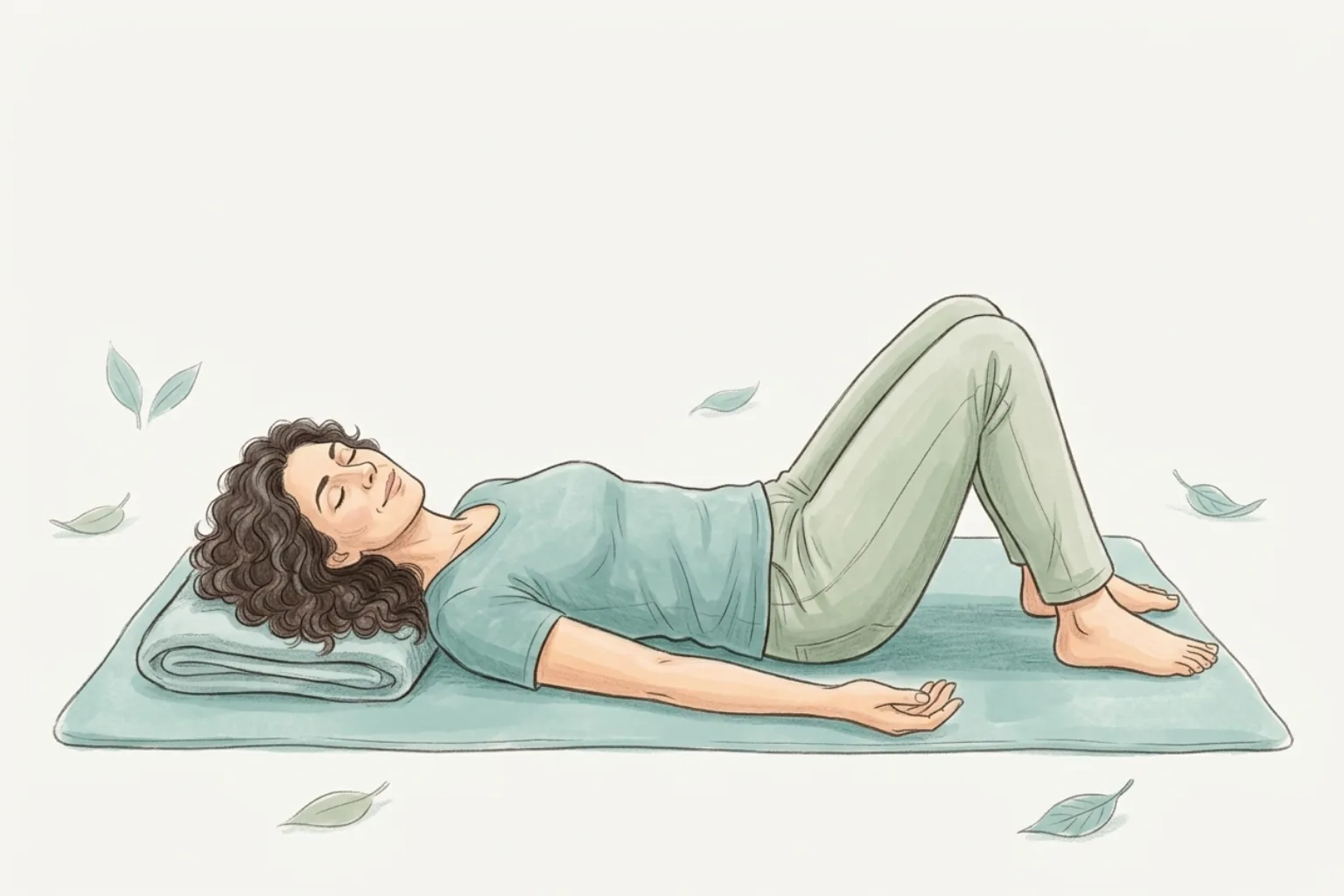
It followed these people, almost all of them women, through four months of Awareness Through Movement® lessons. Awareness Through Movement lessons are usually slow and gentle, guided by voice, done lying down or sitting, and you pay attention to how you move. People filled in questionnaires about themselves at the start and again at the end.
Two things improved by enough that chance alone is an unlikely explanation. The first was a score built for fibromyalgia. It adds up how widespread the pain is and how heavy the other symptoms are: fatigue, poor sleep, trouble thinking. That reach across the body is part of the widespread sensitivity of fibromyalgia. The second was pain catastrophizing, which means expecting the worst from pain, dwelling on it and feeling helpless in front of it. If you have felt that, it is a very human response after years of pain. It says nothing about whether your pain is real.
The researchers concluded that these lessons could improve both (Giorgi and colleagues, 2023). If that holds, gentle, attentive movement may ease the overall load of symptoms and how threatening pain feels. That second part matters to me. In my lessons I often see how dread shapes movement. People brace before they even begin.
But there was no comparison group, no similar group of people who went without the lessons. So the study cannot show that Feldenkrais caused the change. Time, hope, the ordinary ups and downs of fibromyalgia, or other care people were getting could all have played a part. Everyone also knew they were having lessons when they answered. The authors called it a proof of concept: a first test of whether an idea is worth a stronger study.
Daily life only trended better
The study also used a wider questionnaire about how much fibromyalgia gets in the way of daily life, from chores to mood. Here the scores moved in a good direction, but not by enough to rule out chance. So daily life may have improved a little. Or it may not have.
It is tempting to read this as a sign that the change sat in how symptoms are felt and feared, more than in daily life. The study can't show that. One result passing the bar and another missing it does not prove that one changed more. What it does suggest is keeping your expectations gentle.
There are more limits you may want to know. The study summary gives no separate result for pain intensity, so it cannot tell you whether pain itself fell. Nobody checked back after the four months, so we don't know whether any change lasted. The summary doesn't say how big the changes were. And with so few men in the group, it says little about men with fibromyalgia. We also don't know yet who gains most; the authors ask for further studies to find out.
Other gentle methods, more trials
If you have read about tai chi or qigong for fibromyalgia, there is a reason. A review of 27 studies looked at mind body therapies, which bring attention to movement, breath or relaxation, such as tai chi, qigong and yoga (Steen and colleagues, 2024). Feldenkrais was not part of it.
All but one of the approaches had at least one study in which pain eased by the end of the program. The exception was a mindfulness course. Tai chi and qigong had several studies in which fatigue eased and everyday function improved. The reviewers called these therapies potentially beneficial for adults with fibromyalgia.
So mind body approaches, including gentle movement like tai chi and qigong, are a serious line of research in fibromyalgia, with far more trials behind them than Feldenkrais has so far. Tai chi, qigong and yoga are a different way of working with the body, and each has its own strengths.
The review could not say whether the benefits last once a program ends, and the authors say more research is needed on exactly that. Only about a third of the studies reported on side effects, which is worth knowing if you are wary of flares. None of it speaks to Feldenkrais directly. Its own evidence in fibromyalgia is earlier and thinner. For the wider picture, I have gathered what the research says about whether Feldenkrais works.
What this means for you
If exercise has cost you days of pain, you have good reason to be careful. This research cannot promise you anything, and it does not show that Feldenkrais caused the changes. If you try, you might notice whether pain starts to feel a little less like a threat, and even that is not certain. You can go slowly, stop early, and rest whenever you like.
Why slow movement may fit
What follows is my view from practice, not a research finding.
Many people I work with who live with fibromyalgia arrive already braced. Their bodies have learned the hard way, sometimes while being told it was all in their head, that moving can cost them days of pain afterwards. In my experience, a nervous system that has been on alert for a long time may read speed and effort as a warning. Slow, comfortable movement, with rests in between, gives it less to guard against. Then there is room to notice.
That is how the Feldenkrais Method® works. You move a few degrees, you pause, you sense what changed. You only go where it feels easy, pleasant and comfortable. On a hard day, you can simply imagine the movement. If you'd like a practical look at how lessons fit around flares, here is a guide to Feldenkrais for fibromyalgia.
A word on care. Feldy is a learning practice, not medical care, and the care you get from your doctor sits alongside it. If you are unsure whether to start, or if a flare feels different from usual, talk with your doctor.
Doing less, on purpose
Most exercise asks you for more. A Feldenkrais lesson keeps asking for less.
You might lie on your back and slowly roll your head a little to one side, then come back and rest. The next time, you go half as far. Then half as far again, with half the effort. In my experience, somewhere in there people often notice that the jaw has softened or the breath has dropped lower, without being asked.
Nothing has to be achieved. The movement becomes a way of listening.
When you next turn your head, how little effort could you use and still feel it turn?
Move at Your Own Pace
A free 7-day trial of the Feldy online movement program. Voiced by Chava. No credit card needed.
See if Feldy fits youFAQ about Feldenkrais for fibromyalgia
Is there any research on Feldenkrais for fibromyalgia?
Yes, though it is early. One study followed 128 people with fibromyalgia, mostly women, through four months of Awareness Through Movement lessons. A combined score of how widespread the pain is and how heavy the other symptoms are improved, and so did pain catastrophizing, while the overall impact on daily life only trended better. There was no comparison group, so the study cannot show that Feldenkrais caused the change.
Can Feldenkrais reduce fibromyalgia pain?
The study summary gives no separate result for pain intensity, so it cannot answer that directly. What improved was a combined score of how widespread the pain is and how heavy the other symptoms are, along with the tendency to expect the worst from pain. Without a comparison group, the study cannot say the lessons caused those changes, and Feldenkrais is a learning practice, not medical care.
Is Feldenkrais gentle enough if exercise gives me flares?
Nobody can promise that a flare will never come. Lessons are slow and gentle, usually done lying down or sitting, and you only go where it feels easy, pleasant and comfortable, so you can do much less on a hard day. If you are unsure, or if a flare feels different from usual, talk with your doctor.
What is pain catastrophizing in fibromyalgia?
It is the tendency to expect the worst from pain, to dwell on it and to feel helpless in front of it. It is a very human response to pain that has gone on for years, and it says nothing about whether the pain is real. In the Feldenkrais study, it was one of the two measures that improved.
How is Feldenkrais different from tai chi or yoga for fibromyalgia?
Tai chi, qigong and yoga are a different way of working with the body, and approaches like these have many more trials in fibromyalgia. A review of 27 studies of mind body therapies called them potentially beneficial; Feldenkrais was not part of that review. Feldenkrais works through slow, attentive movement and noticing how you move, with no poses to hold.
How soon might I notice a change with Feldenkrais?
The study only measured at the start and after four months, so it cannot say when changes began. In my experience, the first things people describe are often quiet ones, like lying on the floor with less effort. It may help you to stay curious about those quieter changes rather than waiting for one big shift.
Start your free 7-day trial
Start free trialMore Articles

With fibromyalgia, pain is not the only number that moves
Daily life and overall wellbeing can improve while the pain score barely shifts. Four pieces of research point that way, though the evidence is early.
Oct 28, 2026
Does Feldenkrais Actually Work? What the Evidence Shows
A 2022 meta-analysis of 16 randomized trials found Feldenkrais eased pain and improved balance and mobility in older adults. Here is what the evidence shows.
Jun 28, 2026
Somatic Movement: Where Feldenkrais Fits
Is Feldenkrais somatic movement? What the word somatic points to, and where the Feldenkrais Method sits among the many somatic practices.
Nov 20, 2026Ready to Start Moving Better?
Try your first lesson for free. No credit card required.