
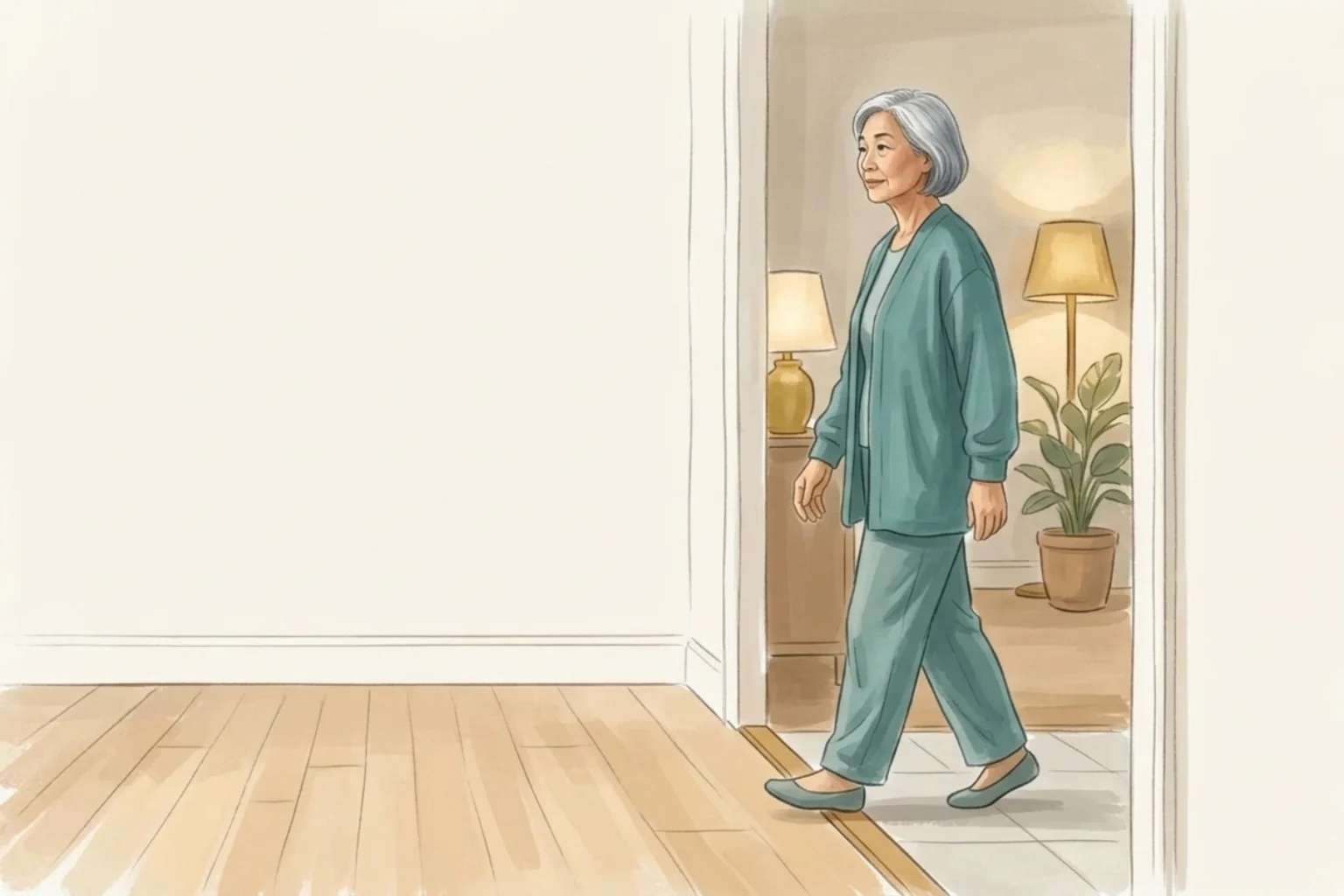
Steadier balance after 60 begins with the kind that feels shaky
No gadget beat plain exercise, and the leader changed with the task. Practice may also do most before frailty sets in.
 Chava SoraniGuild Certified Feldenkrais Practitioner (GCFP)
You want the one exercise that will keep you steady. The research doesn't point to a single winner.
In studies of older adults, no practice clearly beat the others, and the leader changed with the kind of balance. So the better questions are which kind of steadiness you need, and when to start.
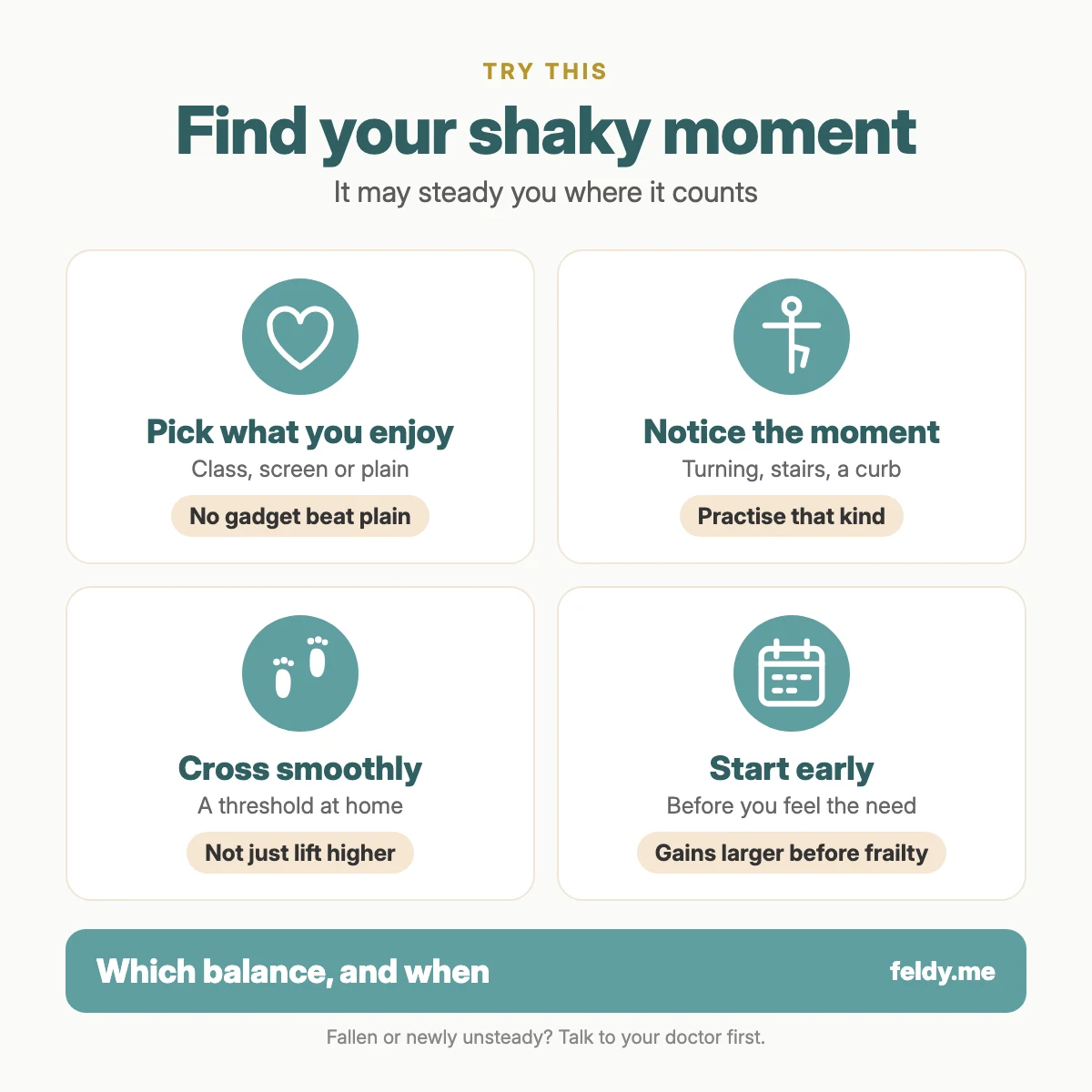
No gadget beat plain exercise
One review pooled 60 trials in older adults. Board games, camera games and screen coaching all beat doing nothing. So did plain exercise. But no game, sensor or remote session beat it.
If that holds, you don't need a screen.
Most comparisons rested on weak evidence, and none counted falls.
Balance is several jobs, not one
Does the method matter? A far larger review of 423 trials linked almost every kind of practice to better balance. Flexibility work on its own was the exception.
But the leader changed with the kind of balance: standing still, moving, or getting ready for an obstacle you can see. For catching a trip, the evidence was weak. The authors say this doesn't show one approach is better. So the best exercise for balance depended on which balance. If it holds, standing on one leg may not help much on the stairs.
The gains were small to moderate, on balance tests. One kind, where a trained person deliberately unbalances you, did better supervised and in people at higher fall risk. If you have fallen, this is not a solo project.
Stepping over things: speed, not height
One study walked 200 older adults over obstacles. At the low ones, the higher risk group lifted their feet no lower than the others. What differed was how quickly and smoothly they crossed.
This doesn't mean hurrying. I read speed here as how much of the step still runs by itself. If that holds, "pick your feet up" may miss the part that matters.
A single snapshot can't show what came first, and it measured a risk score, not falls.
Larger gains before frailty
A review of slow practice, mostly Tai Chi, looked at frail and prefrail older adults. Prefrail is the stage before frailty, when walking has slowed a little.
Balance improved in both groups, and the gain was larger before frailty: roughly three and a half times the gain in frail groups. If it holds, practice may do most before you feel frail.
That gap comes from comparing different trials, and the prefrail results varied a lot. People knew they were doing Tai Chi, so their expectations may have played a part. The other groups did no regular movement, so these trials can't say which method is best.
What this means for you
Many kinds of balance practice seem to help, so pick one you enjoy enough to keep. It may help more to notice which moments feel unsteady: standing, turning, stepping over something. It may be worth starting before you feel you need it. If you have fallen or feel newly unsteady, talk with your doctor or physiotherapist first.
The better question
None of these studies tested the Feldenkrais Method®. The research turned "which is best" into better questions, and a Feldenkrais® lesson looks at it another way. Not how long you stand on one leg, but how your weight travels from foot to foot. Not how high the foot lifts, but what the rest of you does as it crosses. You go only where it feels easy, pleasant and comfortable.
At home, one floor meets another at a strip of wood. What is your head doing as you step across?
Feel It for Yourself
A free 7-day trial of the Feldy online movement program. Voiced by Chava. No credit card needed.
See if Feldy fits youThese studies are shared for general interest. Gentle movement sits alongside, never in place of, advice from your doctor, especially after a fall or if unsteadiness is new.
Start your free 7-day trial
Start free trialMore Articles
With fibromyalgia, pain is not the only number that moves
Daily life and overall wellbeing can improve while the pain score barely shifts. Four pieces of research point that way, though the evidence is early.
Oct 28, 2026
Thinking after 60 and the kind of movement that holds attention
Slow practice, balance work and unusual walks went with clearer thinking. Adding puzzles to a walk made no measurable difference.
Oct 23, 2026
What a Feldenkrais Lesson Actually Is, for Physiotherapists
What happens in a Feldenkrais lesson, who teaches it, what it does not do, and how it can sit next to the plan of care you set.
Nov 2, 2026Ready to Start Moving Better?
Try your first lesson for free. No credit card required.