

Sore After Physical Therapy? What to Do the Next Day
Soreness after physical therapy is often a normal part of the work. What to watch for, and how gentle movement can sit alongside your program.
Between Sessions, No. 1: the Feldenkrais Method® alongside physiotherapy.
A member wrote to us about a morning lesson. Her shoulders were sore from physical therapy the day before, and she nearly skipped practice. She did the lesson slowly anyway. It got her moving, and when she stood up she noticed how she was standing.
If you are sore after physical therapy, you probably have her questions. Is this normal? Should I move today? When should I contact my therapist?
Is it normal to be sore after physical therapy?
Often, yes. Soreness can follow a new exercise, a little more load, or a movement you have not done much lately. On its own, though, it does not tell you whether a session helped or whether to do more.
The most familiar kind is delayed onset muscle soreness:
- A dull ache in the muscles you worked
- It builds over the day after the session
- It eases as you warm up
- It settles over a few days, and gets milder as your body adapts
Not every sore feeling fits that pattern. Your physical therapist can help you work out whether what you feel is expected for your program.
When to call your physical therapist
Contact your therapist if the pain is sharp, severe, getting worse, or comes back after every session, or if you notice new numbness, tingling or weakness. Mention swelling, heat or night pain when it is new or worsening quickly. If you have just had surgery, your therapist will have told you what to expect.
One rare but serious sign: severe muscle pain or weakness with dark urine, the color of tea, needs prompt medical attention.
Reporting this is part of good care. It lets your therapist adjust the dose or the exercise. For ways to ease the ache itself, see our guide on how to relieve pain after physical therapy.
Should you move when you are sore?
Start by asking your therapist how your plan handles sore days. For ordinary muscle soreness, the research leans toward moving gently rather than not at all. A review of muscle soreness found that exercise eased the ache better than the other options it compared, though the relief was temporary, and suggested easing off for a day or two rather than stopping (Cheung, Hume and Maxwell, Sports Medicine, 2003).
That review studied athletes with exercise soreness, not people in rehab, and it did not look at Feldenkrais. So it cannot tell you what suits your situation; your therapist can.
Physical therapy and Feldenkrais: what each brings
Your physical therapist brings what no home lesson can: an assessment, a plan built for your body, exercises chosen for a reason, and a professional who adjusts all of it as you change. That plan is the core of your recovery.
A Feldenkrais lesson brings something smaller and different, for the days between visits:
- A gentle option between visits. When it fits your therapist's plan, small, slow movements, usually lying down and guided by a voice, offer another way to keep moving. You choose how far to go and rest as often as you like.
- Attention to how you move. You notice how different parts of you join in, and how the movement changes as you go. That is how our member caught the way she was standing.
- Something easy to come back to. No equipment, and the voice guidance lets you keep your attention on the movement rather than on a screen.
The two sit side by side. Your therapist's plan comes first, and a Feldenkrais lesson can be an extra option when it fits that plan; it does not replace your program or change it. For a fuller comparison, see Feldenkrais vs physical therapy.
What a few quiet minutes can look like
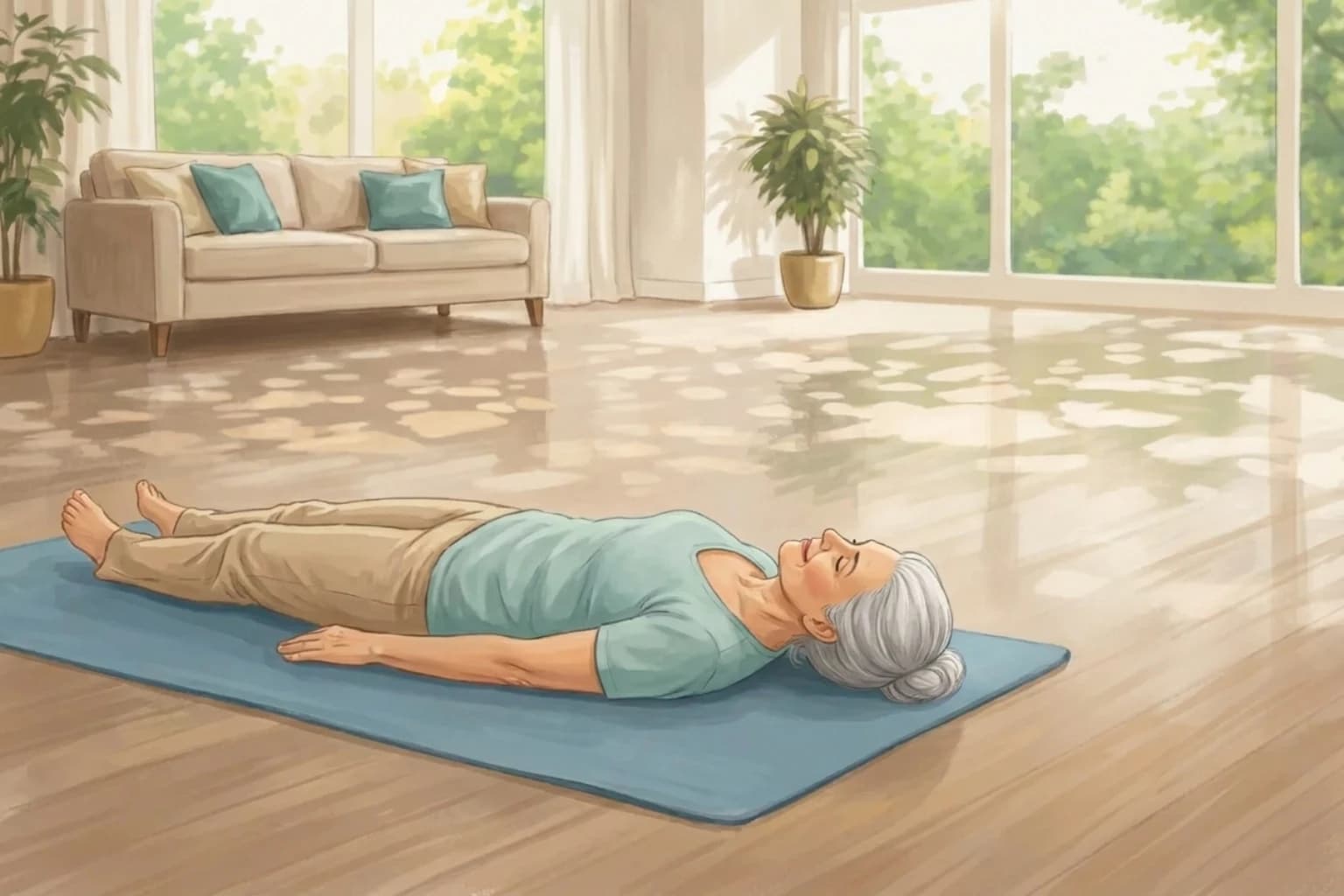
As an illustration, if your therapist is happy for you to move gently: lie on your back with your knees bent, or sit comfortably.
- Notice where your back and shoulders meet the surface under you.
- Slide one hand a little way along your thigh and back, smaller than feels useful. Rest, then try the other hand.
- Rest, and notice whether anything feels different.
Keep the movement small and comfortable, and stop if it becomes painful or effortful.
Questions for your next session
- How much soreness do you expect after our sessions, and for how long?
- On a sore day, should I do my home exercises as usual, do fewer, or rest?
- Is there anything to avoid while I am sore?
- Is it all right to add a short, gentle movement lesson on the days in between?
Most therapists welcome these questions. They help fit the plan to your life between visits.
A Gentle Lesson for the Days Between Sessions
A free 7-day trial of the Feldy online movement program, voiced by Chava. Guided lessons, from 10 minute morning sessions to longer ones, most done lying down, alongside the program your therapist set. No credit card needed.
See if Feldy fits youFAQ about soreness after physical therapy
Is it normal to be sore after physical therapy?
Often, yes, especially after a new exercise or more load. Ordinary muscle soreness is a dull ache in the muscles you worked that settles over a few days. If you are not sure what you are feeling is expected, ask your physical therapist.
Should I exercise if I am sore after physical therapy?
Ask your therapist how your plan handles sore days. For ordinary muscle soreness, light movement is usually more comfortable than lying still, and research on exercise soreness suggests easing off for a day or two rather than stopping.
When should I contact my physical therapist?
If the pain is sharp, severe, getting worse, or returns after every session, or if you notice new numbness, tingling or weakness. Severe muscle pain with dark urine, the color of tea, needs prompt medical attention.
Can Feldenkrais replace my physical therapy?
No. Your physical therapist assesses you, builds your plan and adjusts it as you change. A Feldenkrais lesson is a gentle extra for the days in between, alongside that plan.
What happens in a Feldenkrais lesson?
A voice guides you through small, slow movements, usually lying down. You choose the range, rest often, and notice how you move rather than how far you go.
Start your free 7-day trial
Start free trialMore Articles
Does Feldenkrais Actually Work? What the Evidence Shows
A 2022 meta-analysis of 16 randomized trials found Feldenkrais eased pain and improved balance and mobility in older adults. Here is what the evidence shows.
Jun 28, 2026
The Feldenkrais Method® Isn't Just Therapy. It's a Philosophy of Human Potential
The science and thinking behind a system built for learning, not treatment: what motion-capture labs and humanist philosophy reveal about how we move.
Jun 18, 2026
Breath: The Movement You Never Stop Making
What does a breath you did not know you were holding have to do with how freely you move?
Sep 22, 2026Ready to Start Moving Better?
Try your first lesson for free. No credit card required.