
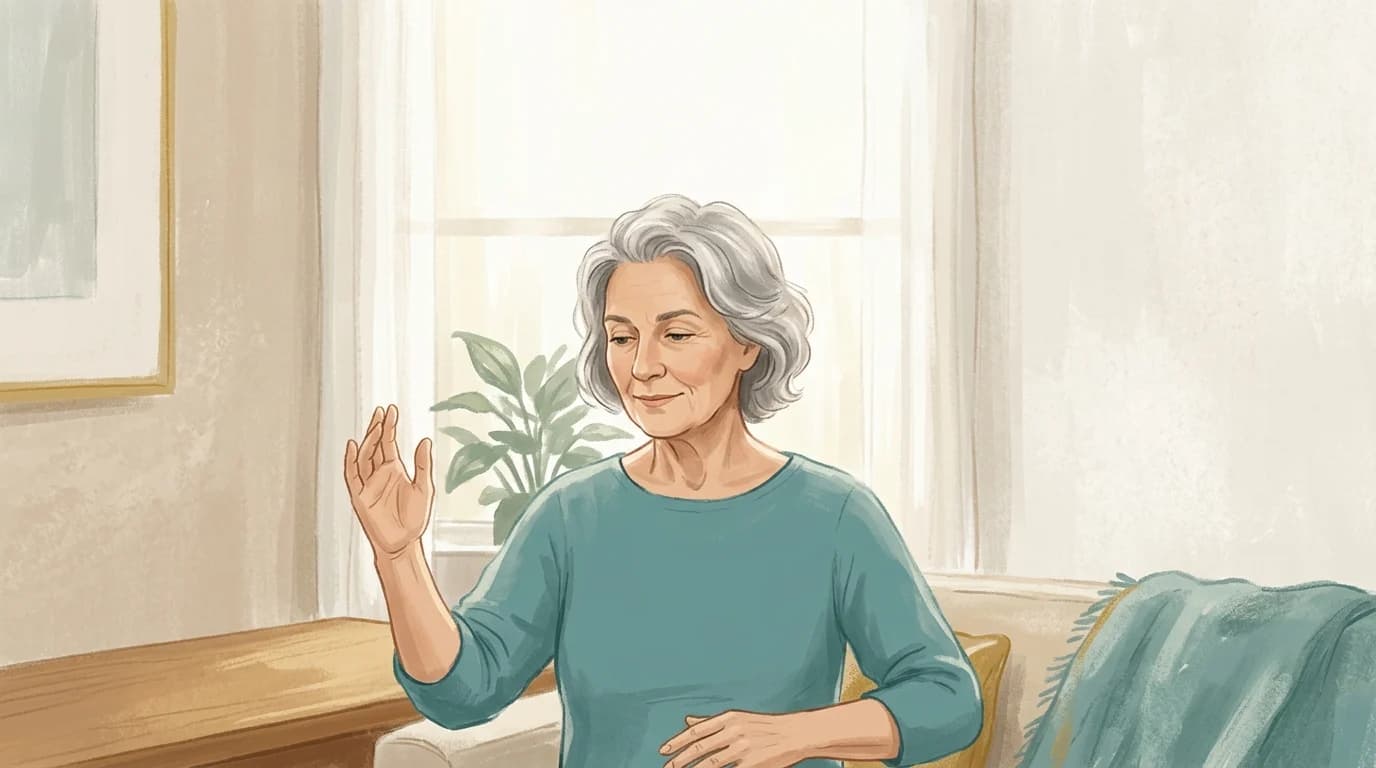
Which kinds of movement keep you independent?
A large UK study followed older adults for eight years and asked which kinds of exercise, and how often, best protect the tasks of daily life.
Most movement advice for older adults stops at a single word: move. A large new study from the UK asked the more useful question sitting underneath it. Which kind of movement, and how often, actually keeps daily life doable?
The study appeared in July in BMC Medicine and drew on Understanding Society, the largest household panel study in the UK. Researchers followed adults aged 65 and older across four surveys between 2015 and 2023, some 28,419 person by wave observations in all, and tracked two everyday measures. One was basic self care, washing and dressing. The other was the wider business of running a life, shopping, cooking, and managing money (BMC Medicine, 2026). Rather than lump all exercise together, they sorted it into three families, aerobic work, strength work, and mind body or balance practice, and looked at how often each was done.
The first result is the plainest and the largest. Older adults who did a moderate amount of any exercise had roughly 59 percent lower rates of difficulty with both kinds of daily task than those who did none (BMC Medicine, 2026). The gap that mattered most was not between one method and another. It was between doing something regular and doing nothing at all.
Across the three families, aerobic movement and the mind body and balance practices both tracked with the most favourable path over the years, holding daily function steadier as people aged. Strength work carried a quieter surprise. A moderate amount was associated with about 62 percent lower rates of daily living difficulty, yet the group doing it most often looked, on this measure, much like the people doing none. More was not buying more. Two cautions belong right beside those numbers. This is an observational study, so it can show associations, not prove that the movement caused the steadier path. And people who already move more easily tend to exercise more, which flatters any exercise. The authors are careful on both counts. What survives the cautions is a pattern worth sitting with.
What the comparison is really saying
It is tempting to read a study like this as a contest and crown a winner. I would gently suggest the ranking was never the most useful part. Look instead at what the strong performers share. Aerobic movement and the mind body and balance practices are very different activities, working through different mechanisms, each with its own strengths. A brisk daily walk leans on rhythm and steady, gentle load. Yoga, tai chi, Pilates, and the slow attentive movement I teach lean on breath, sensing, and coordination. Yet across a broad older population, the family that includes gentle, attention based movement held its own for the outcome that arguably matters most, staying able to do your own day.
I teach the Feldenkrais Method®, which lives squarely in that mind body and balance neighbourhood, and it is only honest to say the study did not test it by name. Its category was broad. What I can say is that the mechanism this research rewards, gentle and repeatable movement done with attention, is exactly what an Awareness Through Movement® lesson is built around. And the strength finding points the same way so much of this field keeps pointing. The dose that keeps a body working is often smaller and gentler than a culture of more assumes. Doing less, done more sustainably, was not the compromise here. On this measure it was closer to the point.
What to take into your week
If you translate the study into a Monday morning, the takeaway is nearer to permission than prescription. You do not need to find the one correct exercise. You need a kind of movement you will still be doing in a year, at a moderate frequency you can keep, and it is fine to pair a walk with something slower and more attentive. If daily tasks have started to feel harder, that is rarely a signal to push harder. More often it is a signal to move more gently and more regularly, only ever going where it feels easy, pleasant, and comfortable. Keep any of this alongside your clinical care rather than instead of it. A study describes populations, not your particular knee or your particular history, and a good physiotherapist or physician can help you shape it to yours.
What research like this quietly hands back is the daily stuff, washing, cooking, carrying the shopping home, the small independences that decide whether later life feels like your own. The evidence does not point to one perfect workout for holding onto them. It points to a habit of moving, gently and often, in a way you can sustain. The Feldy online movement program is built for exactly that corner of the picture, short attentive lessons you can keep coming back to. Find the kind of movement that fits your days, keep it moderate, and let the rest go.
Let Feldy guide you, eyes closed
A calm voice walks you through gentle moves so your attention stays in your body, not on the screen.
Try Feldy Free for 7 daysNo credit card needed.
Sources
Movement Pulse is informational, not medical advice. See our editorial policy.
Move better with Feldy
See the programMovement Pulse Weekly
The week's best research, in your inbox Tuesday.
Movement science, gentle-practice ideas, and a practitioner's read on what's new. Free.
More from Movement Pulse
For memory changes after sixty, twelve years of reviews keep pointing to slow practice
Mild memory trouble is a stage where a new practice can still be learned, and the research has moved on from asking whether slow practice is worth it to asking how many weeks it takes.
Oct 9, 2026
Brisk walking eased frailty more than strolling, and the stroll still helped nearly half
A Chicago trial in 14 retirement communities found a brisker pace moved more older adults out of frailty. Read the fine print and the casual walkers did better than the headline suggests.
Oct 5, 2026
Fifteen thousand people did the same digital knee program and went four different ways
A Lund University registry study tracked quality of life through a digital education and exercise program for knee and hip osteoarthritis. About half improved. A fifth got worse. The paper cannot say why, and says so.
Sep 22, 2026Ready to start moving better?
Gentle, guided lessons for your body. Try your first one free, no credit card required.