

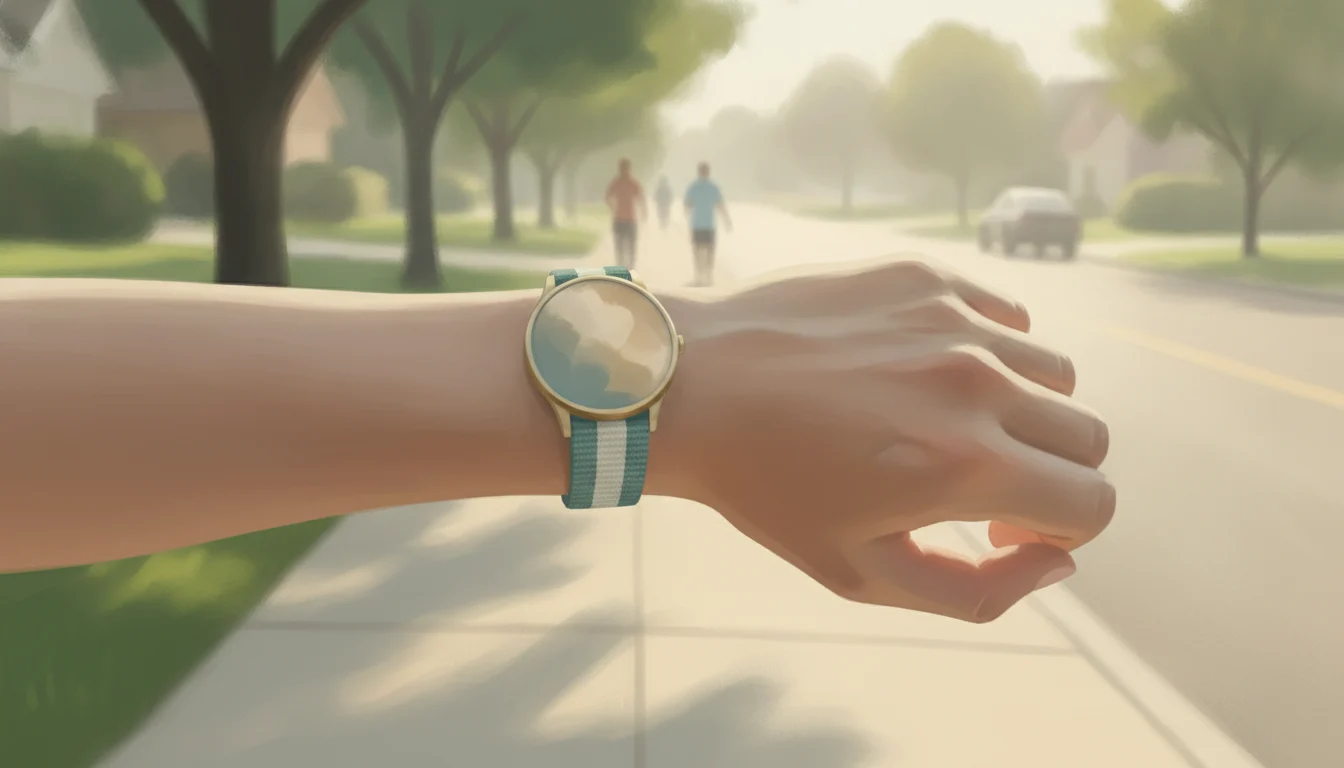
Wearables actually do nudge cardiac patients to move more
A 14-trial meta-analysis just out in JAHA found smartphone apps and wearable trackers added around 1,100 steps and 4 minutes of moderate activity per day. What that means for the rest of us.
A meta-analysis published this week in the Journal of the American Heart Association pooled 14 randomized trials and 1,057 people living with cardiovascular disease, and asked a simple question. Do smartphone apps and wearable activity trackers actually help these patients move more in daily life, compared to peers who do not use them?
The answer was modest, real, and worth taking seriously. The wearable users walked about 1,100 more steps each day, and added roughly four minutes of moderate to vigorous activity per day, compared to the control group (American Heart Association, 2026). Most of the trials involved people with coronary heart disease, which the authors flag as a limitation on generalizability.
A thousand extra steps a day does not sound dramatic. Over a year, though, that is roughly 400,000 steps a person would not otherwise have taken, and four minutes of moderate activity stacked across a week is a meaningful start toward the activity levels where cardiovascular benefit shows up. For people who have been told by a cardiologist that they need to be more active and who are not sure where to start, this is one of the cleaner pieces of evidence yet that the device on your wrist or in your pocket can make the difference between intending to move and actually moving.
What was in the boxes
The apps and devices in the meta-analysis were not exotic. They mostly did the things you would expect: personalized daily step goals, reminders, motivational messages, feedback on progress, sometimes a small gamification layer of quizzes or rewards, and in a few studies, light coaching or goal review. Nothing in there required a prescription, a specialist, or a long onboarding. The effect was being measured against not using one of these tools, not against an elaborate intervention.
How it lands for an older reader
Most of the people I work with through the Feldenkrais Method® are not in a cardiac rehab program, but a real fraction of them have been told by a clinician that they should be walking more, climbing more stairs, or just standing up more often. The advice is correct. The follow through is the hard part, and the follow through is exactly what this meta-analysis is measuring.
The body changes its activity habits the same way it changes any other habit, in small steps that are noticed and reinforced. A wearable does that reinforcement automatically, which is part of why it works. The other part, and the part that does not always come up, is that the same nudge applied to a body that is not paying attention to itself can just produce more pain or more frustration. Activity that does not feel safe in the body usually does not stick. You can read more about how movement habits and body sensation interact in our Feldypedia entry on movement decline with age.
Three questions worth raising at your next visit
If this study catches your eye, or if your doctor has already raised the activity conversation, three things to bring up:
First, ask what kind of step or minute target makes sense for your specific situation. The trials in this meta-analysis were on people with diagnosed cardiovascular disease, mostly coronary heart disease. Your number may be very different if you are coming from a different starting point, recovering from surgery, or living with joint or balance concerns. A blanket 10,000 steps target is not what the evidence supports.
Second, ask what "moderate" activity should feel like for you. The meta-analysis tracked moderate to vigorous activity, but that label means different things at different ages and conditioning levels. A useful rule of thumb is that you can hold a sentence but not a song. Your clinician can give you something more specific to your heart rate range or your last stress test if you have had one.
Third, ask what to do if the wearable becomes a stress factor. If hitting the step goal turns into another job, or if your sleep score makes you anxious, the data is not helping you. There is decent reason to think the tool only works as long as it does not become its own pressure source.
What the study is really pointing at
The wearable is the visible part of this story. The point underneath it is that moving matters, in small amounts, often, across the day, and that for many people who have been told by a clinician to be more active, the gap is not motivation. It is a body that has stopped expecting movement to feel good.
When activity feels safe and sustainable in the body, the behavior tends to stick, with or without a device. The reminder on your wrist or in your pocket is one perfectly reasonable scaffold while you rebuild the habit. The work underneath the reminder is where the lasting change lives. Learning to walk in a way that does not leave you sore the next day. Learning to climb a flight of stairs without bracing. Learning to stand up out of a low chair without holding your breath.
If you have been intending and not moving, a wearable is a reasonable thing to add. The deeper invitation, with or without the device, is to make moving feel like something the body welcomes rather than tolerates.
Let Feldy guide you, eyes closed
A calm voice walks you through gentle moves so your attention stays in your body, not on the screen.
Try Feldy Free for 7 daysNo credit card needed.
Sources
- Smartphone apps, wearable trackers helped people with heart disease boost physical activity— American Heart Association Newsroom / Journal of the American Heart Association
Movement Pulse is informational, not medical advice. See our editorial policy.
Move better with Feldy
See the programMovement Pulse Weekly
The week's best research, in your inbox Tuesday.
Movement science, gentle-practice ideas, and a practitioner's read on what's new. Free.
More from Movement Pulse

What held up in two new reviews of yoga and qigong was not balance or strength
Twenty one yoga trials and twenty two qigong trials, published ten days apart. The physical scores wobbled once the missing studies were accounted for. Quality of life did not.
Sep 7, 2026
The kind of exercise that helped attention most was the slowest one in the set
One hundred and ten trials, 8,130 people over sixty. No exercise type won across the board. The winner changed with the mental skill being measured.
Sep 10, 2026
Why walking feels heavier at 70 than at 40 is not weaker calves, it is quiet gripping
A recent gait study across 107 adults ages 26 to 86 reveals a change in ankle coordination most people never notice, and points to attention as the intervention.
Aug 19, 2026Ready to start moving better?
Gentle, guided lessons for your body. Try your first one free, no credit card required.