
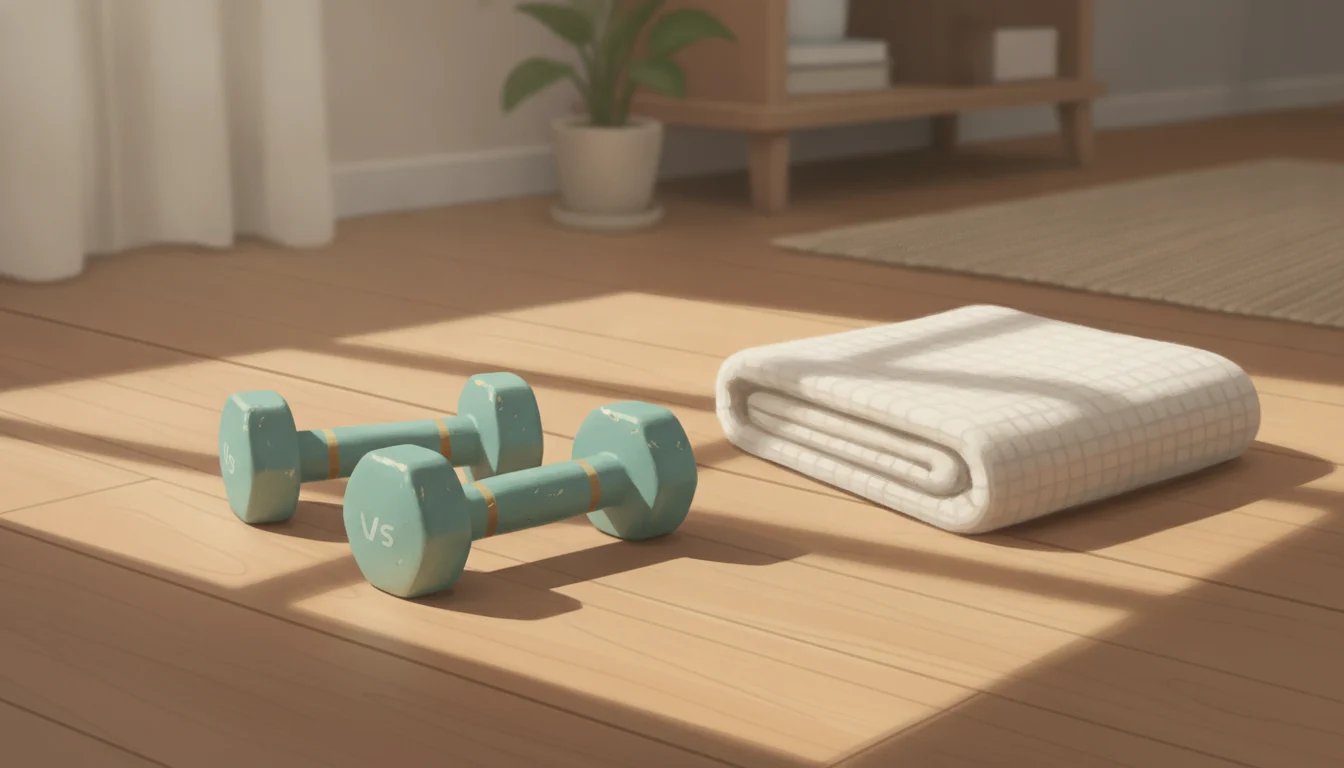
The strength training sweet spot is smaller than you think
A Harvard study tracking 147,000 people for three decades found about 90 minutes of strength work a week captures most of the longevity benefit, and more adds little.
Headlines this month carried a simple and inviting message: lift weights and you may live longer. The number sitting underneath the message is the part worth pausing on, because it is far smaller than the culture around strength training would lead you to expect.
Researchers at the Harvard T.H. Chan School of Public Health pooled three large groups of American adults, more than 147,000 people in all, and followed them for roughly thirty years, recording close to 36,000 deaths along the way. They then asked a careful question. How does the amount of strength training someone does relate to their risk of dying, and does doing more keep adding more (British Journal of Sports Medicine, 2026)?
The amount linked to the largest benefit was about 90 to 119 minutes a week. People in that range had a 13 percent lower risk of death from any cause over the study period, a 19 percent lower risk of dying from cardiovascular disease, and a 27 percent lower risk of dying from a neurological condition, compared with people who did no strength training at all (ScienceDaily, 2026). Pairing that strength work with regular aerobic activity, the walking, cycling, or swimming kind, was linked to the steepest reductions of all.
Then came the quieter result. Beyond about 120 minutes a week, the benefit stopped climbing. More time under the bar did not buy a longer life in this data. Even a modest 30 to 59 minutes a week carried some of the protection (Fox News, 2026). The shape of the result is not a straight line that rewards effort without limit. It is a curve that rises quickly and then flattens, which means most of the reward sits inside the first hour and a half.
More is not the currency
It is easy to read a study like this as permission to do more. The more honest reading is the opposite. The benefit lives in a small, repeatable amount, and the grind past it returns almost nothing. That is worth saying plainly, because the story most people carry about exercise is that intensity is the currency, that whoever strains hardest is buying the most health. This data does not support that story.
A second caution belongs here. This was an observational study, not a trial that assigned people to lift or not. It can show a strong and consistent association, and it does, but it cannot prove that the training by itself caused the longer lives. People who keep a modest strength habit going for decades tend to differ in other ways too. The researchers accounted for a great deal, including how much aerobic activity each person did, and the pattern held. Even so, linked to is the honest phrase, not caused.
Where this meets the work I do
I teach the Feldenkrais Method®, which is movement education rather than exercise or treatment, so I want to be careful about what this study does and does not touch. Strength training and the Feldenkrais Method are different things working by different mechanisms. Resistance training loads the body and builds tissue. The slow, attentive lessons I teach work on how you organize and sense movement, on reducing the bracing and the extra effort that make activity feel harder than it needs to be. Each has its own strengths, and neither stands in for the other.
What the two share is the quiet message inside this month's numbers. More is not the path. A sustainable amount, returned to often, is. So much of what stops people from keeping a strength habit alive for thirty years is not a shortage of willpower but the way effortful movement starts to ache, or to feel like a fight, until it drops off the calendar without a decision ever being made. When movement feels easy, pleasant, and comfortable, you only go where that holds, and a habit that feels that way is one you can actually keep. That is the part Awareness Through Movement® tends to help with. Not adding load, but making the movement you already do feel less like strain.
What to take from this
If you have been putting off strength training because you pictured long, punishing sessions, this study is permission to picture something smaller. Roughly an hour and a half a week, spread however suits you, appears to capture most of what the research can offer, and less than that is still not nothing. If you already train hard and enjoy it, there is nothing in this data that asks you to stop. Just know that the extra hours are likely buying other things, strength, capability, the plain pleasure of it, more than they are buying additional years.
For staying capable as the decades pass, the harder problem is usually not the workout itself but the wear that gathers around it, the stiffness and guarding that quietly lead people to move less over time. Our Feldypedia entries on movement decline with age and loss of flexibility after fifty look at that slow narrowing and at what tends to ease it.
For many people, the ability to move well is not lost with age so much as the trust that a manageable amount is enough. This study is a small, sturdy piece of evidence that it is. The goal was never to do the most. It was to keep moving, in a way you can sustain, for a long time. A little, done often and done with ease, turns out to be most of the point.
Let Feldy guide you, eyes closed
A calm voice walks you through gentle moves so your attention stays in your body, not on the screen.
Try Feldy Free for 7 daysNo credit card needed.
Sources
- Long-term resistance training with all-cause and cause-specific mortality: assessing dose response and joint associations with aerobic physical activity— British Journal of Sports Medicine
- Scientists found the strength training sweet spot for a longer life— ScienceDaily
- Resistance training 90 to 119 minutes per week linked to lower death risk— Fox News
Movement Pulse is informational, not medical advice. See our editorial policy.
Move better with Feldy
See the programMovement Pulse Weekly
The week's best research, in your inbox Tuesday.
Movement science, gentle-practice ideas, and a practitioner's read on what's new. Free.
More from Movement Pulse

Fifteen thousand people did the same digital knee program and went four different ways
A Lund University registry study tracked quality of life through a digital education and exercise program for knee and hip osteoarthritis. About half improved. A fifth got worse. The paper cannot say why, and says so.
Sep 22, 2026
The kind of exercise that helped attention most was the slowest one in the set
One hundred and ten trials, 8,130 people over sixty. No exercise type won across the board. The winner changed with the mental skill being measured.
Sep 10, 2026
What held up in two new reviews of yoga and qigong was not balance or strength
Twenty one yoga trials and twenty two qigong trials, published ten days apart. The physical scores wobbled once the missing studies were accounted for. Quality of life did not.
Sep 7, 2026Ready to start moving better?
Gentle, guided lessons for your body. Try your first one free, no credit card required.