
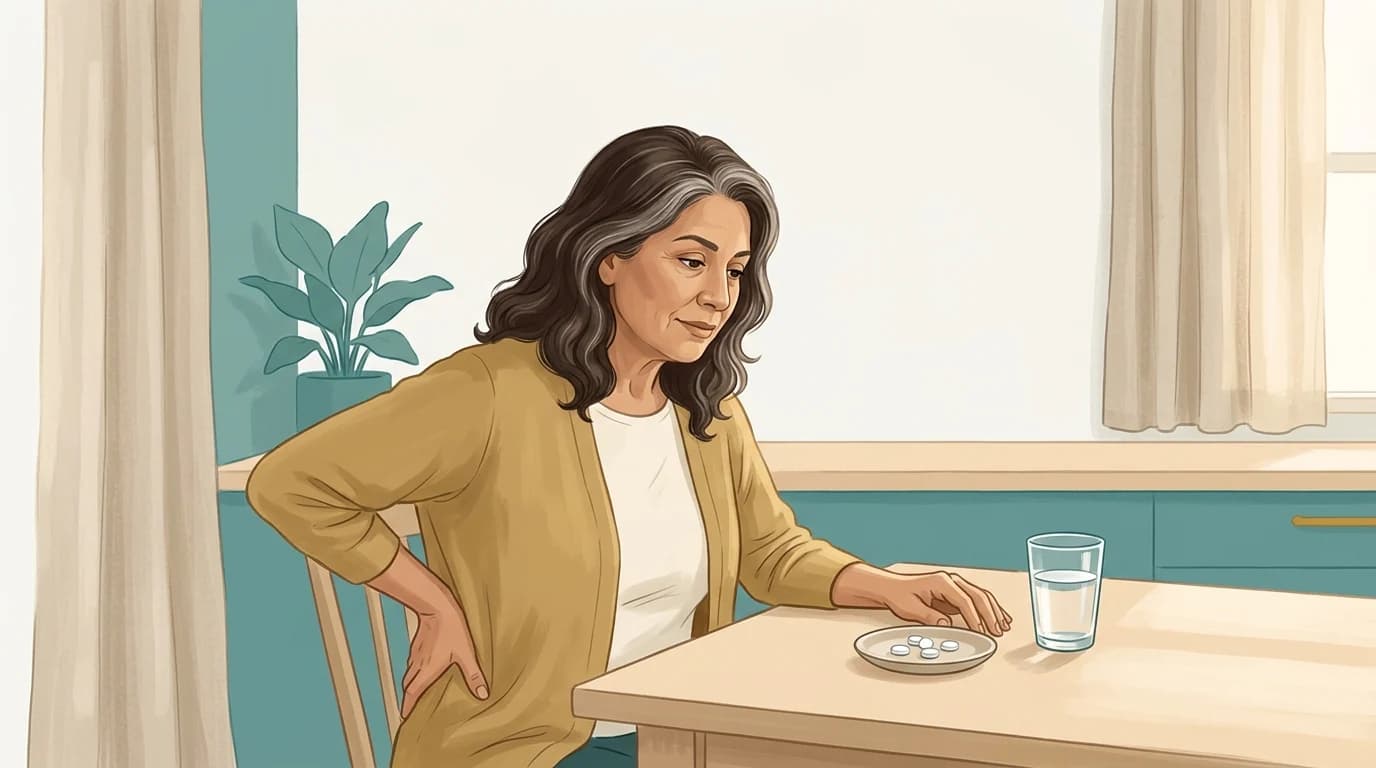
The back pain trial where a pill known to be a placebo did about as well as a painkiller
130 adults with chronic low back pain took a painkiller or a pill they knew was empty for three weeks. Paired with one encouraging video, the empty pill kept pace.
The usual story about placebos is that they only work on people who don't know. Tell someone the pill is empty, the thinking goes, and whatever relief it gave disappears with the secret.
A trial published on 1 October in Psychotherapy and Psychosomatics tested something close to the opposite. Elisabeth Winkler, Regine Klinger and colleagues gave 130 adults with chronic low back pain either a real painkiller or open label placebos, pills they knew contained no active drug, for three weeks, and then followed them for three months (Winkler and colleagues, 2026).
What the trial did
The design was a grid of four groups with a fifth alongside. Half the people on each pill watched a positive video before they started, built on what researchers call social observational learning: the expectation you form by watching someone else benefit. The other half watched a neutral video. The painkiller was novaminsulfone, also known as metamizole, an analgesic widely used in parts of Europe. The fifth group got no treatment at all and was simply followed over the same weeks, so the team could see how much chronic pain eases on its own.
That last group matters more than it looks. Pain came down in every group, including the people who received nothing, which is worth remembering whenever a study without a comparison group reports that people felt better.
What they found
Two combinations pulled clearly ahead of no treatment: the empty pill with the encouraging video, and the real painkiller with the neutral one. The authors describe the placebo and video result as clinically meaningful relief, and the gap between it and the active drug was too small to call.
The thread running through all five groups was expectation. People who expected more relief got more of it, at three weeks and again at three months, and the link was strong enough that chance is an unlikely explanation. Everyday function improved over time in everyone, but it didn't separate the groups.
The limits are real. Roughly two dozen people per group, three weeks of pills, one research team. A small trial can show a placebo and a drug as level simply because it was too small to tell them apart, and the published summary doesn't give the size of the pain changes in points. What it does not show is that chronic back pain is imaginary. The people in the empty pill groups had the same backs and the same long histories as everyone else in the trial.
A learning problem
Expectation isn't a mood. It is a prediction, and predictions are learned.
As a Feldenkrais® practitioner, I find that the most useful part of the trial. Again and again, people with long back histories tell me they know a movement will hurt before they've tried it, a knowledge built from hundreds of small moments at the sink, in the car, getting out of bed, and the nervous system carries that forecast into each movement before it begins. In an Awareness Through Movement® lesson, the guided group lessons of the Feldenkrais Method®, nobody argues with the forecast or asks anyone to think positively. We offer movements small enough that the forecast turns out wrong, again and again, and you only go where it feels easy, pleasant, and comfortable. The video borrowed someone else's experience. A lesson lets you collect your own.
What it asks of clinicians
The practical reading for a clinician sits in the first conversation. If one encouraging video, watched before a course of pills, was enough to bring pain down about as far as a real drug, then how a diagnosis is explained, the picture of the spine a person leaves the room with, and whether they ever see someone like them moving without fear all belong inside the treatment rather than around it. Knowing that healthy spines come in many back shapes is one small part of that picture. This trial did not test exercise, so it can't say how expectation shapes a movement programme. It does suggest that what a patient expects of their own back is worth asking about directly, not just noting in passing.
Between appointments is where those expectations get rehearsed, every time a person reaches for a low shelf and braces. Short, audio guided practice like the Feldy online movement program can sit alongside the plan a physiotherapist gives, not in place of it. The Feldypedia entry on chronic lower back pain has the wider picture.
Nobody in this trial was fooled. They knew the pill was empty, and their backs still responded to what they had seen. Which leaves a question for anyone who stopped bending a long time ago because bending always hurt: what would your back predict after a few weeks of different evidence?
Let Feldy guide you, eyes closed
A calm voice walks you through gentle moves so your attention stays in your body, not on the screen.
Try Feldy Free for 7 daysNo credit card needed.
Sources
Movement Pulse is informational, not medical advice. See our editorial policy.
Move better with Feldy
See the programMovement Pulse Weekly
The week's best research, in your inbox Tuesday.
Movement science, gentle-practice ideas, and a practitioner's read on what's new. Free.
More from Movement Pulse
Chronic back pain slowed how quickly people sensed their back, while their hands kept pace
Nineteen people with long standing low back pain and nineteen matched controls judged left from right on pictures of twisting bodies and rotated hands. Only the trunk task separated the groups. The answers stayed accurate, and the delay did not track how much it hurt.
Sep 26, 2026
The thing that stopped people finishing a pain education programme was not the schedule
Sixty three adults with chronic neck pain were asked to name, in their own words, what got in the way of staying with a pain neuroscience education and exercise programme. The barrier they rated highest was not the timetable. It was whether the programme fit their body.
Sep 11, 2026
The APA pain guideline backs exercise, then declines to say which kind is better
A summary of the APA's chronic musculoskeletal pain guideline has just appeared in American Psychologist. Its first line list is short and firm. Almost every comparison between one movement approach and another came back as insufficient evidence.
Aug 23, 2026Ready to start moving better?
Gentle, guided lessons for your body. Try your first one free, no credit card required.