
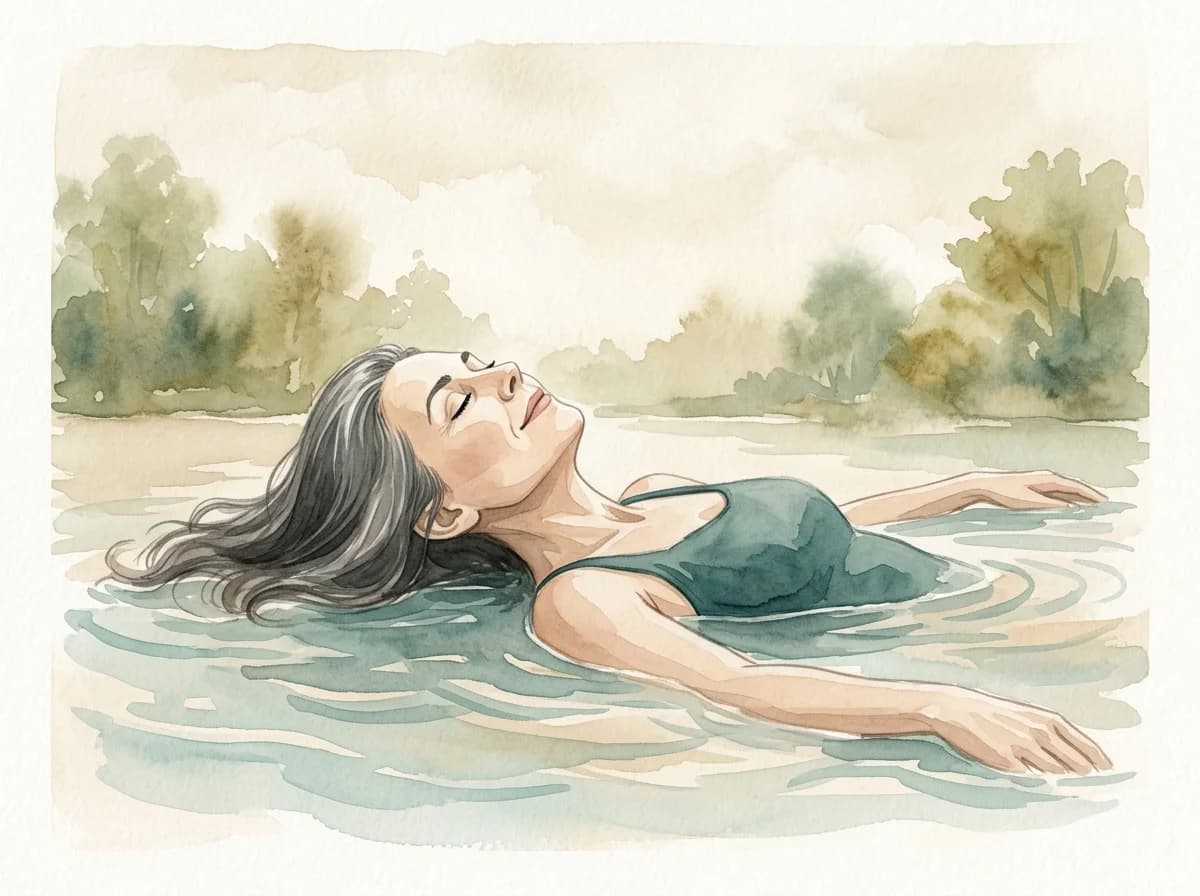
Why the first swimming trial for back pain is really a story about fear of moving
The first randomized trial of swimming for chronic low back pain compared it to education alone, not to other exercise. That comparison is the real story.
For all the times a doctor or a friend has suggested swimming for a sore back, no one had actually run the experiment. There was no trial testing whether swimming helps chronic low back pain, only the long standing sense that water is kind to a body in pain. The first proper trial has now landed, and the most useful part of it is not the answer you would expect.
The study, called EduSwim, ran at Macquarie University in Sydney and appeared in July 2026 in the British Journal of Sports Medicine (British Journal of Sports Medicine, 2026). The researchers recruited 76 adults, aged 26 to 74, who had lived with ongoing low back pain for at least three months. Half were guided through a personal swimming program over eight weeks, built up slowly with a physiotherapist. The other half received education about managing their back, the clear and reassuring kind of information a good clinician offers in a session or two. Everyone got the education. Only one group got the water.
The swimming group improved more. Their disability scores, the measure of how much a back interferes with an ordinary day, dropped by roughly half, and sat about thirty percent lower than the group given education alone by the end of the program (Macquarie University, 2026). The gap narrowed over the following year but did not disappear. What caught my attention, though, was tucked into the secondary results. Alongside pain and everyday function, the researchers tracked people's confidence in managing their pain and their fear that moving would make things worse. Those shifted too, in the same encouraging direction. The lead researcher, physiotherapist Deborah Wareham, described the starting point plainly. Swimming is commonly recommended for back pain, she noted, yet there had been a complete lack of evidence about whether it actually works.
Here is the detail worth keeping before the headlines smooth it over. The trial compared swimming to education, not to other kinds of movement. It did not set swimming against walking, or yoga, or gentle floor work, and crown swimming the winner. It found that adding graded, supported movement in water to good advice did more than the advice on its own. That is a real and helpful result. It is a very different result from swimming being the single best exercise for a back, which is the tidy sentence a tired body is most likely to take away.
What I think the water was really doing
What I see in the people I work with is that the water was probably doing something quite specific, and it is not mainly about fitness. A back that has hurt for months learns to brace. It anticipates the next wrong move and holds itself ready for it, and that constant holding becomes its own source of stiffness and tiredness. On land, the floor is always there to be landed on badly. In water, most of that threat quietly disappears. Buoyancy carries the weight the spine usually has to manage, and there is no hard surface waiting for a mistake. For a guarded back, that changes the whole proposition. The nervous system is finally given permission to let the back move, perhaps for the first time in a long while. So when the study reported fear of movement easing and confidence rising, I recognized it at once. That, far more than any particular stroke, is what I watch turn a corner in a lesson.
This is also why I would be careful about reading the result as a verdict on swimming itself. Swimming is one way to give the body that feeling of safety, and a lovely one if you have water you like and a body that enjoys it. Yoga, Pilates, Tai Chi, and the Feldenkrais Method® each work through a different mechanism, and each has its own strengths for a wary back. If you are weighing somatic pilates vs pilates for a back like this, that comparison looks at which one calms a braced body and which one builds core strength. What they share, at their gentlest, is that they can make movement feel safe enough to explore again. And none of this stands in opposition to clinical care. In the trial the swimming sat alongside a physiotherapist's guidance rather than replacing it, which is exactly the right relationship.
If you do not have a pool
If you do not have water nearby, or swimming has never appealed to you, I would not read this study as an instruction to take it up. I would read the mechanism underneath it. The transferable lesson is not to get in the water. It is to find movement that feels safe enough that you can stop bracing. Water is one route to that. Slow, attentive movement on the floor is another, and it asks nothing of a pool. The Awareness Through Movement® lessons the Feldenkrais Method is built on work on exactly this, using gentle attention rather than buoyancy to show a guarded back that it can move without being punished for it. You only go where the movement feels easy, pleasant, and comfortable, which is how the fear slowly loosens its grip.
The honest headline from this trial is not that swimming is the answer to a bad back. It is that a back in trouble responds to being shown, patiently and safely, that movement is allowed again. Whether you find that in a pool, on a mat, or in a few minutes of easy floor movement each morning matters far less than that you find it somewhere you can return to. The daily rituals inside the Feldy online movement program are made for that kind of return, a small and unheroic practice you can come back to on the good days and the hard ones alike. Start where it feels easy, and let the confidence build from there.
Let Feldy guide you, eyes closed
A calm voice walks you through gentle moves so your attention stays in your body, not on the screen.
Try Feldy Free for 7 daysNo credit card needed.
Sources
- Effectiveness of an individualised swimming and education programme for chronic low back pain (EduSwim): a randomised controlled trial— British Journal of Sports Medicine
- First trial confirms swimming reduces disability from chronic back pain— Macquarie University
- Could Swimming Be the Best Exercise for Chronic Back Pain?— Knowridge Science Report
Movement Pulse is informational, not medical advice. See our editorial policy.
Move better with Feldy
See the programMovement Pulse Weekly
The week's best research, in your inbox Tuesday.
Movement science, gentle-practice ideas, and a practitioner's read on what's new. Free.
More from Movement Pulse

With knee or back pain after 65, exercise may change how you walk more than how much
52 adults over 65 wore ankle sensors for twelve weeks. Their daily steps stayed flat while each ordinary step grew about an inch, a signal the authors call suggestive.
Oct 11, 2026
How much walking is enough for back pain
A 2026 analysis pooled 13 trials to put a number on walking for chronic back pain. The surprising part is how modest that number turned out to be.
Jul 23, 2026
45 back pain trials, and still no single best method
A network meta analysis pooled 45 trials of movement and manual therapy for chronic low back pain. No approach clearly won, which changes how to choose.
Jul 2, 2026Ready to start moving better?
Gentle, guided lessons for your body. Try your first one free, no credit card required.