
Yoga, Pilates, tai chi or qigong for chronic back pain? 25 trials found no clear winner
All four eased pain by a similar margin. Tai chi topped the ranking, yet every tai chi trial was measured against people doing nothing at all.
Ask almost anyone with a sore back which gentle class to try, and what they want back is a name. Yoga or Pilates? Tai chi, or the qigong group that meets on Tuesday mornings at the community centre? Time and energy are limited. Nobody wants to spend three months on something only to find out it wasn't much help.
A review published on 15 October went looking for that name. It pooled 25 randomized trials of yoga, Pilates, tai chi and qigong for chronic low back pain (Journal of Pain Research, 2026): 938 people in the practice groups, 737 in the comparison groups. All four practices did better than their comparison groups. But when the four were compared with one another, none clearly came out on top.
Four practices, a similar margin
The team, from Shanghai University of Sport, searched ten databases up to July 2026 and kept randomized trials in adults whose back pain had lasted at least three months without a clear structural cause. Every trial asked people to rate their pain on a ten point line. On average, people in the practice groups finished about one and a half points lower than people in the comparison groups, which sits close to the smallest change people with back pain tend to say they can actually feel. Modest. Real.
Then the four were set side by side. Qigong was the most studied (nine practice groups), then Pilates (eight), yoga (six) and tai chi (four), in programs lasting anywhere from three to twenty four weeks. The estimates ran from about one point for qigong to a little over two for tai chi, but the gaps between practices weren't reliable enough for the authors to say any one was genuinely better.
Why tai chi's first place needs a footnote
Tai chi ranked first, and the authors are unusually direct that this does not make it the best choice. Their own tables show part of the reason: every tai chi trial compared tai chi with people who received no care at all, and across the whole review the benefit looked largest in exactly that kind of comparison, at close to three points, and clearly smaller when the comparison group received usual care. A practice tested only against doing nothing will tend to look strong.
Earlier reviews of the same four practices haven't agreed either. One ranked Pilates first, another tai chi. Rankings, the authors write, depend on which trials happen to exist and how they're grouped, so they shouldn't be used alone to pick a "best" practice.
What the headline will miss
No trial in the set was judged at low overall risk of bias, and six were judged at high risk; people knew which practice they were getting, and they were also the ones rating their own pain, which leaves room for expectation to colour the result. The results also varied a great deal from one trial to the next, enough that in a new setting the benefit could fall anywhere from a clear drop in pain to almost nothing. The certainty of every comparison between practices was rated low.
Dose didn't sort itself out either. Longer programs, more sessions a week and longer sessions did not clearly do better, which the authors stress is not the same as saying dose doesn't matter (intensity was too rarely reported to judge). Side effects, in the four trials that reported them, were mild: some muscle soreness, brief dizziness. The authors declare no conflicts of interest.
Who each tends to suit
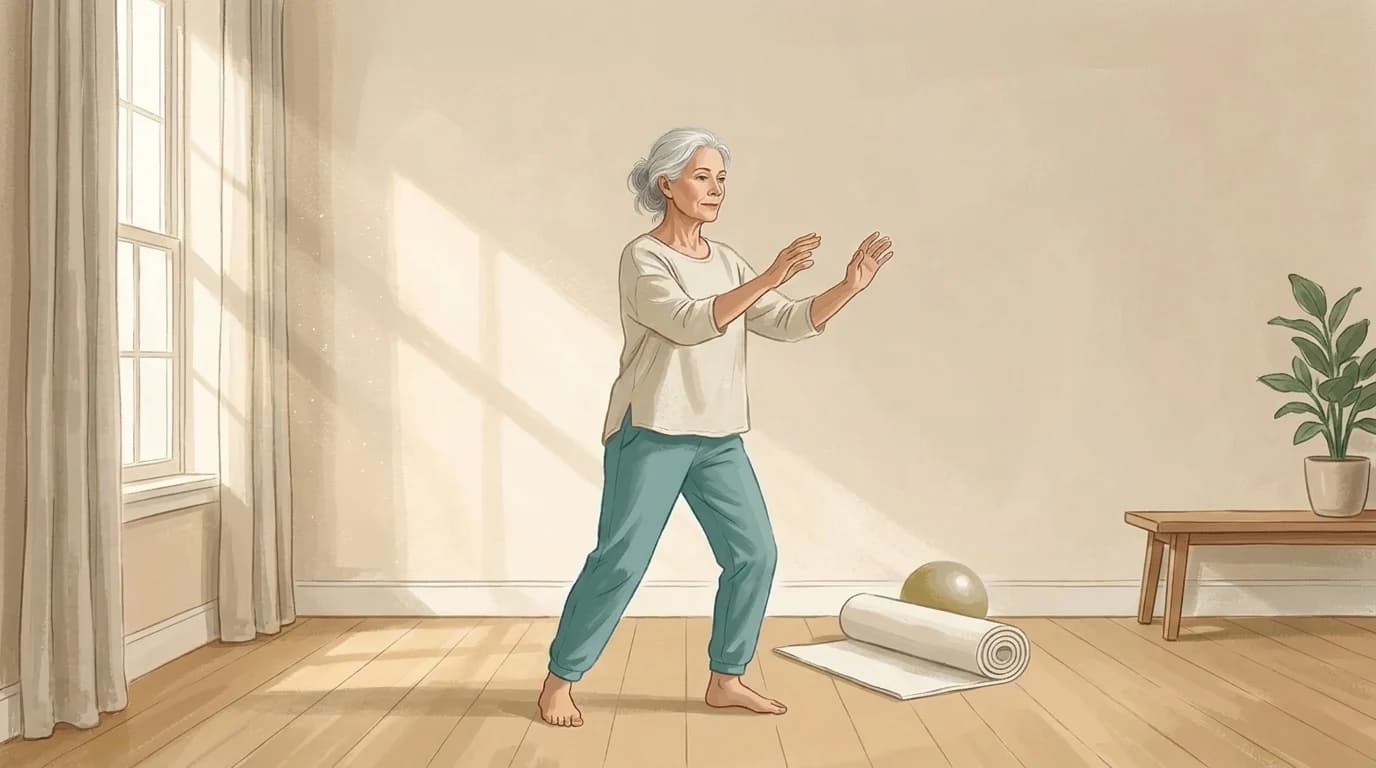
The four are different methods with different mechanisms, each with its own strengths, and they can feel very different from the inside. Pilates works on control and the deep muscles of the trunk, often on a mat. Yoga holds postures with attention to the breath, in styles that range from very soft to quite demanding. Tai chi is slow, continuous weight shifting done standing; qigong is gentler still, with repeated movements paired with breathing, and many classes can be done seated.
So the sorting is personal. If getting down to the floor and back up is a project in itself, tai chi or qigong may be easier to start. If you like precise instruction and a defined set of moves, Pilates may suit you. The authors' own suggestion is to choose by preference, ability, willingness and what's available nearby, rather than by the ranking. The question I'm asked most often is the narrower one, is yoga or Pilates better for back pain, and I've gone through that pair in more detail separately.
The better question
The authors define all four practices by one shared ingredient: structured movement combined with focused attention, breath, or both. That ingredient may matter more than the name on the door.
From a Feldenkrais® point of view, the better question isn't which class but how you are inside it. What I see again and again in my classes is that people with back pain that has lasted for years arrive ready to work hard: bracing the belly, holding the breath, pushing to finish the sequence. The Feldenkrais Method®, another self practiced method with its own very gentle and soft mechanism (this review didn't test it), asks for the opposite. You only go where it feels easy, pleasant, and comfortable, and you notice what changes. That habit travels into any class you choose.
Choosing, then
If you're seeing a physiotherapist, any of these can sit alongside what your physiotherapist gave you, and it's worth telling them which one you've picked.
Twenty five trials couldn't name a winner. Perhaps the more useful question is one none of them measured: halfway through the movement, are you holding your breath?
Let Feldy guide you, eyes closed
A calm voice walks you through gentle moves so your attention stays in your body, not on the screen.
Try Feldy Free for 7 daysNo credit card needed.
Sources
Movement Pulse is informational, not medical advice. See our editorial policy.
Move better with Feldy
See the programMovement Pulse Weekly
The week's best research, in your inbox Tuesday.
Movement science, gentle-practice ideas, and a practitioner's read on what's new. Free.
More from Movement Pulse

The exercise that made people feel best was not the one that calmed the inflammation
Fifty nine randomized trials, seven exercise methods, 3,404 adults with axial spondyloarthritis. Different methods moved different things, and one measure moved for nobody.
Sep 21, 2026
A back support helped in one trial. Then Cochrane pooled eight of them and found a gap
Cochrane went looking for evidence on lumbar supports and other assistive devices for chronic low back pain. It found eight small trials, 501 people, and not one study that recorded whether anyone fell.
Sep 5, 2026
A lumbar belt eased back pain in a new trial. How much people moved did not change
A multicenter trial put a soft lumbar belt against usual care for 12 weeks. The belt group improved more, and the secondary results are the interesting part.
Aug 21, 2026Ready to start moving better?
Gentle, guided lessons for your body. Try your first one free, no credit card required.