
Getting Started With Feldenkrais®: Your First Lessons
What a first Feldenkrais lesson is really like, how to begin at home without a class, and how it compares with starting yoga or Pilates instead.
In short
Getting started with Feldenkrais® usually means lying on the floor and following a recorded voice through small, slow movements for about 20 minutes. It fits best if you want to move with less strain and more comfort. Pick yoga or Pilates instead if what you want is a workout.

See how Feldy helps you move with more ease and awareness
Gentle guided lessons you can do at home. Start with a free 7-day trial.
Before you begin. This page is general education about a movement method, not medical advice. If you are recovering from surgery, living with a diagnosed spinal condition, or in pain that has not been looked at yet, please check with your doctor or physiotherapist before you begin.
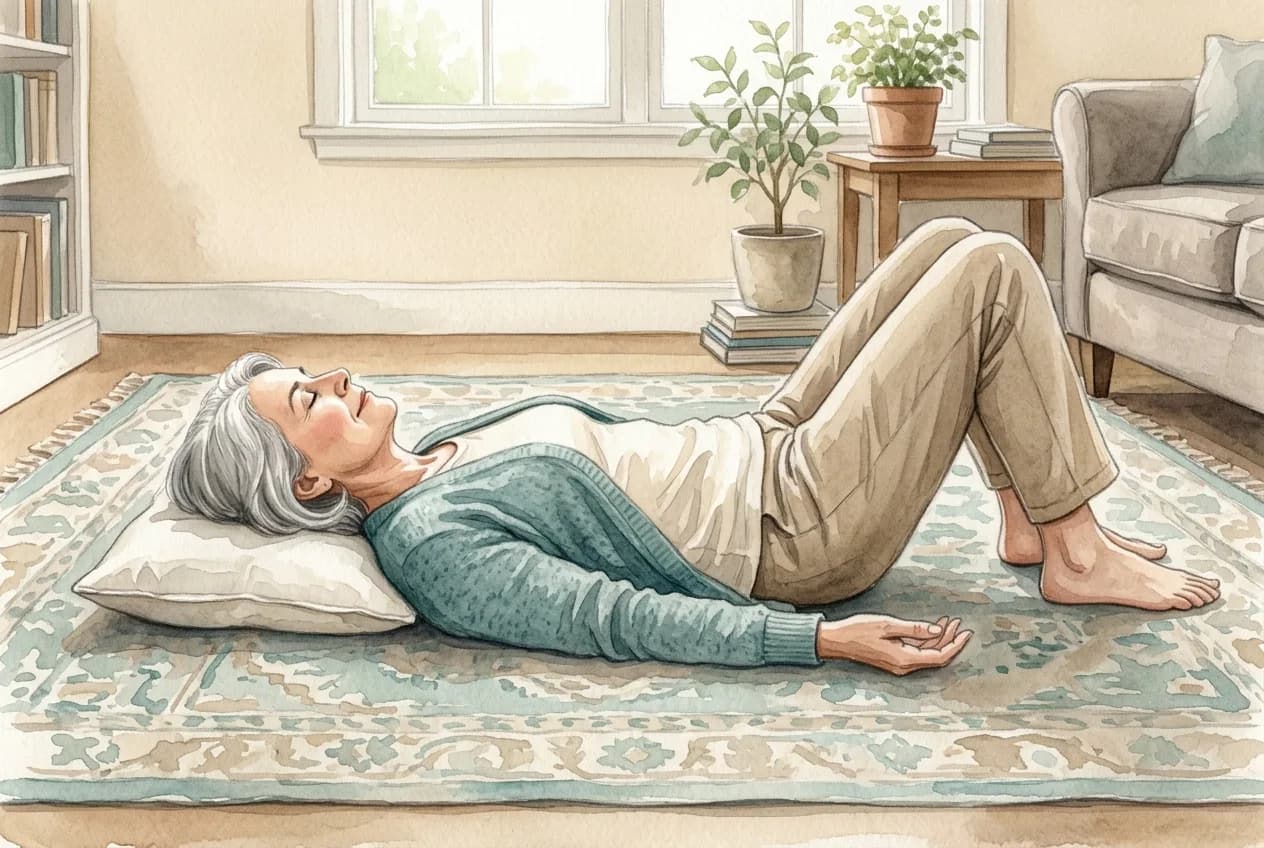
Getting started with Feldenkrais® is quieter than most people expect. There is no class to keep up with and no posture to hold. You lie on a rug on the floor, press play, and a voice walks you through small, slow movements for about twenty minutes while you notice what happens. That is the whole entry fee: a few square feet of floor, something loose to wear, and some curiosity.
What your first lesson actually feels like
A first Awareness Through Movement® lesson runs about twenty minutes. You will spend most of it on your back. The voice asks you to do something quite ordinary, such as tipping your pelvis a few millimetres, and then asks you to notice things you have never been asked about: which ribs move, whether your jaw tightened, where your weight sits.
Two things surprise almost everyone. The movements are far smaller than they sound, and the pauses feel long. Both are deliberate. Small movement is easier for your brain to read, and the rests are when the change settles. If you finish a lesson feeling you barely did anything, that is usually the sign you did it right.
Where Feldenkrais sits next to the other options
It helps to sort your choices into two groups, because they answer different questions. The menu is crowded for a reason: something like 1.71 billion people are living with a musculoskeletal condition at any one time (WHO, 2022), and many of them are shopping for a gentler way to move.
The first group is clinical care: physiotherapy, medicine, hands on treatment for a specific injury. If you have a diagnosis or a fresh problem, that is where to go. Feldenkrais sits alongside clinical care comfortably and is not a substitute for it.
The second group is other movement methods, and here the comparison is simply about mechanism. Yoga builds range and strength through held shapes. Pilates trains controlled, repeatable patterns from a set of exercises. Tai chi teaches continuous weight shifting on your feet. All three are good at what they do. Feldenkrais works on something narrower: how your nervous system organises a movement in the first place, and whether there is a cheaper way to do it. Our Feldypedia entry on the Feldenkrais Method explains that mechanism in more detail, and our own take on body awareness shows how we build a beginner program around it.
So: choose Feldenkrais first if effort, stiffness, or old guarding is the thing in your way. Choose yoga or Pilates first if you feel fine and want to get stronger or more flexible. Plenty of people end up doing both.
Your first two weeks, realistically
Pick one lesson and repeat it two or three times rather than sampling a new one each day. Repetition is where this method pays, because the second time through you notice things you missed. Do it at a time you are not rushed, since hurrying quietly cancels the whole point.
Wear something loose. Have a firm surface, a thin cushion for your head, and a few square feet of floor. That is the entire equipment list. If getting down to the floor is hard, most lessons can be done in a chair or lying on a bed, and starting that way is not a compromise.
Expect an uneven first fortnight. Some lessons will feel remarkable and others will feel like nothing much happened. That is normal, and the flat ones still count. If you want a written taste before committing to audio, our guide to somatic exercises for beginners walks through a full gentle lesson in text. When you would rather hear your first Feldenkrais lessons spoken aloud than read them, try Feldy free for a week and let a voice set the pace while you lie on the rug.
Find where to start
Not everyone who lands here should begin with this method, and that is worth knowing before you spend a month on it. A few questions about what your body is actually asking for will point you at the right family of movement.
Not sure which movement method fits you? Take the 60-second Movement Match quiz: three questions about what you actually want from moving, then one method to open with.
Learn to listen to your body
Now for the practice that trains it. The Feldy program sharpens your attention through slow, attentive Feldenkrais® lessons, so everyday movement feels lighter and more your own. Gentle, guided, and self-paced.
Start my free 7-day trialNo credit card needed.
Common Questions about getting started with Feldenkrais (FAQ)
What is the best Feldenkrais lesson for a beginner?
A short pelvic clock lesson done lying on your back is the usual starting point. You roll the pelvis very slightly in different directions while the rest of you stays quiet. It asks nothing of your balance, it is easy to make smaller if anything pinches, and it teaches the core skill the whole method rests on: paying attention while you move.
What should I avoid when getting started with Feldenkrais?
Avoid treating it like a stretch class. Do not push into range, do not repeat a movement until it burns, and do not try to reach the size of movement the voice describes. Also avoid doing lessons on a soft bed or a thick mat, because a firm surface is what lets you feel where your weight rests.
Is Feldenkrais safe if I already have pain?
For most people, yes, because every movement is meant to stay inside comfort and you set the size yourself. Stop and check with a clinician if a movement sharpens your pain, sends pins and needles down an arm or leg, or leaves you sore the next day. Movement education of this kind belongs alongside medical care, not in place of it.
How often should I practise when I am starting out?
Three or four short lessons in your first week is plenty. Little and often suits this work better than one long weekly session, because what you are building is attention rather than fitness. Many people settle into most days once the habit takes.
How long before I notice anything?
Quite often something shifts inside the first lesson, such as one shoulder resting closer to the floor than the other. That first change is usually small and may not last. A steadier difference in how you turn, bend, or get out of a chair tends to show up over four to six weeks of regular practice.
How is Feldenkrais different from yoga or Pilates for a beginner?
Yoga and Pilates teach you shapes and ask you to hold or repeat them well. Feldenkrais gives you no shape to reach. You explore several ways of doing an ordinary movement and let your nervous system keep whichever one costs least effort. Different mechanism, different feel, and neither one replaces the other.
Learn to listen to your body
See the programRelated resources
Is Feldenkrais® Safe? What to Know Before Your First Lesson
Why this slow, gentle method asks less of your body than almost any other practice, and the few situations where a doctor should weigh in first.
Pelvic Clock: A Gentle Feldenkrais® Lesson You Can Do Lying Down
A quiet lying down lesson: picture a clock face on your lower belly, then let your pelvis roll slowly from hour to hour, small, easy, and unhurried.
Shoulders turned further after a slow, varied lesson than after repeating one twist
Ready to start moving better?
Gentle, guided lessons for your body. Try your first one free, no credit card required.