
Neck PT Exercises: Gentle Lessons Alongside Physiotherapy
Small seated movements that keep the neck company between physiotherapy sessions. Slow, easy, shoulder and ear sharing the work, always below pain.
Before you begin. This lesson is gentle movement education, and it works alongside professional care rather than replacing it. Please see a healthcare professional promptly if you have numbness or weakness in an arm or hand, if your neck pain started with a fall or an accident, if turning your head brings on dizziness, or if a sudden severe headache arrives, especially with fever. While you practice, keep everything small and slow, stay well below any pain, and stop if something does not feel right to you.
The lesson
About 8-10 minutes. Move slowly, do less than you can, and stay well below any pain. Rest whenever you need to.
Prefer to listen than read?
Feldy voices gentle lessons like this for neck and upper back, so you can close your eyes and follow along.
- 1
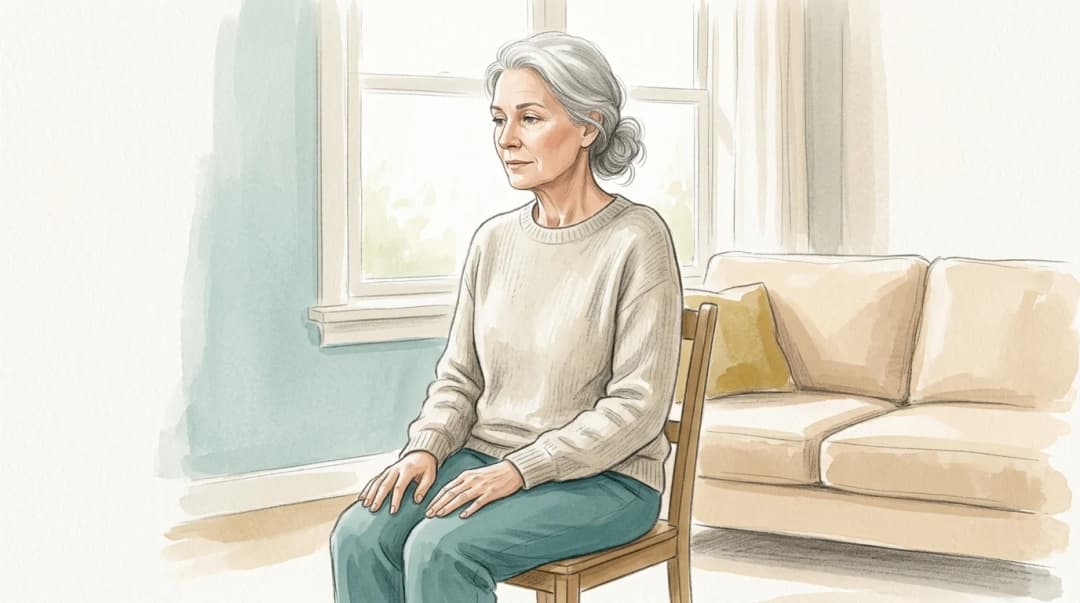
At the chair's edge. Sit near the front of a chair, feet resting on the floor, hands in your lap.
- 2
The starting point. Sense how your head sits above your shoulders. Does one shoulder rest higher than the other?
- 3
One shoulder rising. Slowly let your right shoulder rise a little toward your ear, then come down on its own. A few times, then rest.
- 4
The ear leans. Now tip your right ear a little toward that shoulder and return, far less than you could. Only imagine it if anything complains.
- 5
Meeting in the middle. The shoulder rises a little while the ear tips a little, sharing the distance. Then stop and rest.
- 6
The left side. Visit your left side the same way, shoulder, then ear, then both. Does one side feel easier?
- 7
A slow look around. Rest, then let your eyes lead your head in one slow turn each way. What, if anything, feels different about carrying your head?
Let Feldy guide you, eyes closed
You just read these steps. In the Feldy program, a calm voice guides you through each gentle move, so your attention can stay in your body instead of on the screen.
Try Feldy Free for 7 daysNo credit card needed.
Neck PT exercises usually arrive on a printed sheet: PT is short for physical therapy, and the sheet is the home program a physiotherapist writes out so your care continues between appointments. Those programs have a clear job. They build capacity, often through repetitions, holds, and a gradual increase in effort. The lesson above has a different job. It comes from the Feldenkrais® tradition, a form of movement education called Awareness Through Movement®, and it asks almost nothing of your muscles. Instead it invites you to move so slowly and so small that you can feel how your shoulder, your breath and your head already cooperate. If a physiotherapist is already part of your week, this lesson simply keeps that care company. If not, it stands on its own as gentle movement, and any decision about clinical care stays entirely yours.
Why gentle movement sits well beside neck PT exercises
A home program asks the neck to work. That is its purpose, and on a good day it is exactly what a recovering neck needs. But most people also have hours in between, at the desk, in the car, on the sofa, when the neck is not working so much as bracing. Shoulders creep upward without being asked. The breath grows shallow. By evening the neck can feel tired in a way that has little to do with effort and a lot to do with holding.
That in between time is where a slow, attentive lesson earns its place. When the ear and the shoulder learn to share a small tip, the neck gets a felt experience of doing less, and that experience travels into ordinary moments like checking a mirror or looking up from a screen. The evidence base for this way of working is young but encouraging: one review pulled together 20 randomized trials and called the results promising, for balance among other functions, while pointing out that study quality was uneven and that none of the trials recorded any harm (Hillier & Worley, 2015). Promising rather than proven is a fair summary, and it is plenty of reason to try ten quiet minutes.
If you are curious why necks and shoulders hold on this way in the first place, the Feldypedia article on neck and shoulder tension tells that story gently.
How to practice alongside your neck PT exercises
Pick a moment when your neck is murmuring rather than shouting. The end of a desk day works well, and so does the pause before bed. Sit on a firm chair, keep every movement at a fraction of what you could do, and rest between steps. Resting is not a break from the lesson. It is the part where your nervous system files away what it just felt.
Two habits make the biggest difference. Move slowly enough that you could stop mid movement without any effort. And keep the range so modest that a person across the room might wonder whether you are moving at all. Below that threshold, a neck that has been guarding often becomes willing to feel again, and feeling is what this practice runs on. On the days when even a tiny tip seems like too much, imagining the movement with full attention counts as practice too.
One more distinction worth keeping. Yoga, Pilates or Tai Chi are also self practiced ways of moving, each with its own mechanism and its own gifts, and none of them is being ranked here. Physiotherapy belongs in a different category altogether: it is clinical care, and this lesson works alongside it, never in place of it.
Who should wait before trying this
Some necks need a clinical eye before any self guided movement, however gentle. Please put this lesson aside and see a healthcare professional promptly if you have numbness or weakness in an arm or hand, if your pain began with a fall or an accident, if turning your head brings on dizziness, or if a sudden severe headache appears, especially together with fever. None of those signs mean something terrible is happening, but each deserves to be looked at properly.
For an ordinary tired, guarded neck, this page keeps good company with its neighbors. The seated turning practice in exercises for cervical neck pain explores a different theme, the eyes and ribs helping the head turn, and the lying down practice in Feldenkrais for neck tension suits evenings when a chair feels like too much. All of them, and the guided audio versions from Feldy, share the same quiet premise: attention first, effort last. Should you like a calm voice to lead your neck through small tips and turns on the days between appointments, you can try Feldy free for a week and feel how it sits alongside your home program.
Find where to start
If your bookshelf of options has grown faster than your certainty, you are in good company. A short quiz can narrow things down before you spend another evening reading.
Wondering which movement method matches the way you like to practice? The Movement Match quiz asks three quick questions and hands you one primary method, with a complementary one beside it.
Common Questions about neck PT exercises (FAQ)
What are the best gentle neck PT exercises for a sensitive neck?
The kindest place to begin is with movements so small and slow that pain never enters the picture, like the seated lesson on this page. If a physiotherapist has given you a program, that program is built for your specific neck, and a lesson like this one simply keeps it company on the quieter days.
What should I avoid when moving a sore neck at home?
Leave out fast circles of the head, pulling on the neck with your hands, pushing into the far end of a turn, and anything that asks you to hold a position through discomfort. A sensitive neck tends to respond better to less than you think you need.
Can I do this lesson on the same day as my physiotherapy exercises?
Many people can, because the two ask different things of the neck. A clinical program usually builds capacity through repetition and load, while this lesson is small, slow and attentive. If your program came with specific instructions about rest days, those instructions belong to your physiotherapist, and it is worth asking them.
How often should I practice?
A few minutes most days suits a neck better than one long weekly session. This lesson is short on purpose, so it can fit into a morning or an evening without becoming another task.
How long until I notice a change?
Some people feel their head turning more easily by the end of the first sitting. For others the shift is gradual, arriving over a few weeks of quiet practice. Either pace is normal and neither one means you are doing it well or poorly.
How is this different from the exercises my physiotherapist gave me?
A physiotherapy program is clinical care, designed around your diagnosis, and it often works by gradually building strength and tolerance. This lesson is movement education. It uses attention and very small movements so you can notice how the head, shoulders and breath cooperate. The two approaches do different jobs, which is why they can sit side by side.
When should I see a professional about my neck?
Promptly, if you notice numbness or weakness in an arm or hand, if the pain began with a fall or an accident, if turning your head makes you dizzy, or if a sudden severe headache shows up, particularly with fever. Those signs deserve a clinical eye before any self guided movement.
A softer neck, a freer upper back
See the programRelated resources
Exercises for Cervical Neck Pain: Gentle Whole Body Lessons
Cervical simply means the neck part of the spine. These small, slow exercises invite the eyes, the ribs and the rest of you to share the work of turning.
Feldenkrais® for Neck Tension: Gentle Lessons That Help
Feldenkrais for neck tension uses slow, attentive movement to ease the holding patterns behind a stiff neck. Here is how it works, plus a short lesson to try.
With neck pain, the shoulder blade shift you make yourself may outlast one done for you
Ready to start moving better?
Gentle, guided lessons for your body. Try your first one free, no credit card required.