
Pressure Points for Neck Pain Relief, With a Gentle Lesson
Where the common neck pressure points sit, how much pressure is enough, and a short movement lesson so a guarded neck has somewhere easy to go afterwards.
Before you begin. This is general self care, not medical advice. Please skip pressure over skin that is broken, bruised, or infected, and over any recent injury. Get medical help straight away for neck pain that follows a fall or a car accident, or that comes with fever, a very stiff neck and headache, weakness, numbness spreading into an arm, or trouble with speech or vision. Check with a clinician first if you are pregnant, take blood thinners, or have a bleeding disorder.
The lesson
About 5 to 10 minutes. Move slowly, do less than you can, and stay well below any pain. Rest whenever you need to.
Prefer to listen than read?
Feldy voices gentle lessons like this for neck and upper back, so you can close your eyes and follow along.
- 1
Sitting and settling. Sit near the front of a chair, feet flat on the floor, arms resting easy.
- 2
A first turn. Turn your head a small way to each side, slowly, as a reference. Smaller if anything catches. Where does your neck feel sore today?
- 3
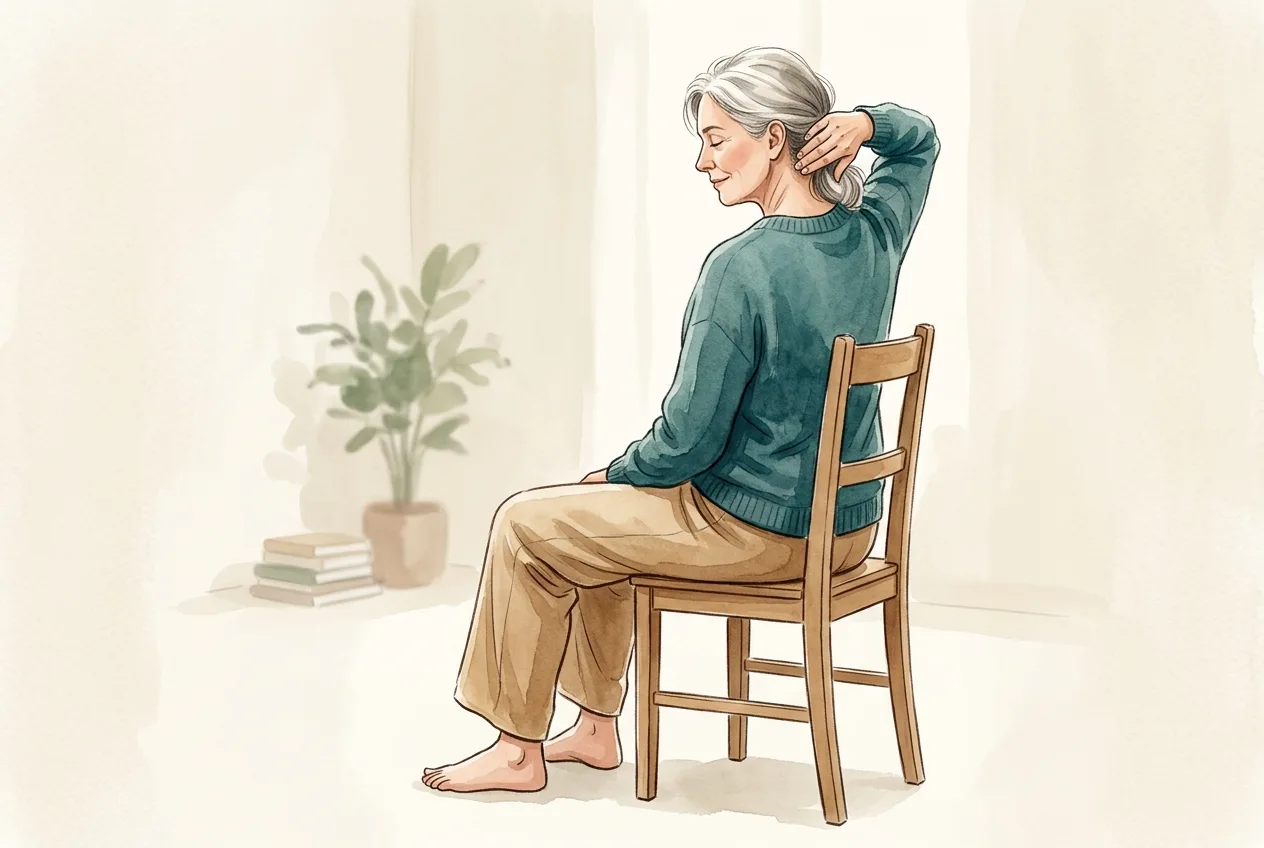
Below the skull. Rest two fingertips in the hollows just below your skull, one either side of the spine. Steady, friendly weight for a slow count of twenty.
- 4
Top of the shoulder. Move one fingertip to the soft ridge on top of your shoulder, halfway along. Another slow count of twenty, then the other side.
- 5
Hands down. Rest your hands in your lap and do nothing for a few breaths. Lighter pressure next time if anything was sore.
- 6
Turning once more. Turn your head slowly to each side again, still small. Compared with the first turn, what is different, if anything?
Let Feldy guide you, eyes closed
You just read these steps. In the Feldy program, a calm voice guides you through each gentle move, so your attention can stay in your body instead of on the screen.
Try Feldy Free for 7 daysNo credit card needed.
Pressure points for neck pain relief are the tender spots along the base of the skull, the side of the neck, and the top of the shoulder that many people press when the neck feels sore and short of movement. Pressing them is simple, free, and safe for most people. The lesson above pairs two of those spots with a few small head turns, because pressure and movement do rather different jobs.
Tender spots in muscle are common enough that clinicians have a name for the pattern. Myofascial pain, the sore band and tender point picture, is reported in 30% to 93% of people seeking care for muscle and joint pain, a range so wide because there is no agreed test for it (StatPearls, 2025). So a tender patch in your neck is ordinary. It is information, not a diagnosis.
What pressure points for neck pain relief are doing
Two things seem to happen when you rest a finger on a sore neck spot with steady weight.
The first is local. Sustained gentle pressure on a tender patch of muscle often leaves it feeling softer and warmer within a minute. People describe it as the spot letting go under the finger.
The second is about attention. Pressing a spot brings your awareness to it. A neck that has been braced all afternoon without you noticing is suddenly something you are paying attention to, and awareness alone tends to reduce holding. That is a large part of why a slow, quiet minute works better than thirty seconds of hard digging.
Our Feldypedia article on neck and shoulder tension covers how that holding pattern builds up over a working week.
Where to find the main neck pressure points
You do not need a chart. Four areas cover almost everything people use at home.
- Under the base of the skull. Run your fingers up the back of your neck until you meet the ridge of bone. The small hollows just below it, either side of the spine, are the most used spot of all.
- The top of the shoulder. The soft ridge halfway between the base of your neck and the point of your shoulder. Often the tenderest place on a screen worker.
- The side of the neck. The long muscle band you can feel when you turn your head away. Use light pressure only, and stay off the soft front of the throat.
- The web between thumb and index finger. A traditional point used for head and neck complaints. Please leave it alone during pregnancy.
Rest a fingertip on the spot with weight that feels firm and friendly, hold for twenty to sixty seconds, then take the hand away. That is the whole technique.
Why pressure points for neck pain relief work better with movement
Pressure quiets a spot. It does not tell your neck what to do next.
If you press the base of your skull, feel it soften, and then go straight back to the same screen at the same angle for another two hours, the spot will be back tomorrow. The muscle was doing a job. It was holding your head in a position you spend a great deal of time in.
This is where slow movement earns its place. Turning your head a short way and coming back, over and over, gives your neck a chance to notice it has options. The Feldenkrais Method® works almost entirely this way: small, comfortable movement done with attention, so the nervous system updates a habit rather than being forced out of it. If you want more of that style, our neck stiffness stretches and our Feldenkrais lesson for neck tension both stay in the same gentle range, and the Feldy program for neck and upper back builds it into a weekly rhythm.
The shoulder has its own version of this pairing, set out in our page on acupressure points for shoulder pain relief.
A note on care
Please treat all of this as supportive self care. Neck pain that follows a fall or a car accident, neck pain with fever and a very stiff neck, weakness or numbness travelling into an arm, or any change in speech or vision needs medical attention rather than a pressure point. Neck pain that keeps getting worse over several weeks deserves an appointment too. If a physiotherapist is already looking after your neck, keep to what they asked for and let this sit quietly beside it.
Find where to start
Some sore necks want quiet pressure, some want small movement, and some want fewer hours in the same chair. Working out which kind you have saves a lot of guessing. If it turns out your neck wants movement rather than pressure, you can try Feldy's guided lessons on a free 7 day trial.
Not sure which movement method suits your neck? Take the 60 second Movement Match quiz. Answer three short questions and it names the single method worth your first week.
Common Questions about pressure points for neck pain relief (FAQ)
Are pressure points for neck pain relief safe to press at home?
Gentle, steady pressure held for short spells suits most people. Skip any spot where the skin is broken, bruised, or infected, and stay off a recent injury. Please check with a clinician first if you are pregnant, take blood thinners, or have a bleeding disorder. Neck pain after a fall or a crash, or neck pain with fever, weakness, or numbness in an arm, needs medical attention rather than self care.
Where are the main pressure points for neck pain?
The four most used self care spots are the small hollows just under the back of the skull, the soft ridge on top of the shoulder between neck and shoulder tip, the muscle band that runs down the side of the neck, and the fleshy web between thumb and index finger. All of them are used with slow, comfortable pressure. Please avoid the thumb web during pregnancy.
What is the best pressure point for a stiff neck?
For most people the best single spot is the hollow just below the base of the skull on the sore side. It sits where several small neck muscles attach, and it is the area that quietly works overtime when you spend the day looking at a screen. Rest a fingertip there with comfortable weight for twenty to sixty seconds and let your jaw be loose while you do it.
What should I avoid when pressing neck pressure points?
Avoid hard or bruising pressure, avoid digging into the soft front of the throat, and avoid pressing on the bony bumps of the spine itself. Stay away from any spot that gives you a sharp pain, dizziness, or tingling down an arm. Long, forceful sessions are not better than short gentle ones, and a neck that is already irritated tends to answer force with more holding.
How often can I use pressure points on my neck?
A few short spells a day is plenty. One to three minutes of gentle work, two or three times a day, gives your neck regular attention without leaving it tender. Little and often does more than one long session. If your neck feels sore the day after, use less pressure rather than stopping altogether.
How long until pressure points for neck pain relief make a difference?
Many people feel a softer, warmer patch within a minute or two of steady pressure. That early ease is usually short lived on its own. Lasting change in ongoing neck pain tends to build over a few weeks of small daily habits, especially when the pressure is paired with easy movement and with breaks from long screen sessions.
How is acupressure different from stretching a sore neck?
Stretching asks a sore neck to travel toward the end of its range, which a guarded neck often resists. Pressure asks nothing of the joint at all: you hold still and let a tender patch soften under your finger. Many people find they work well together. A moment of quiet pressure, then a small easy movement, gives the newly quieter muscle somewhere friendly to go.
A softer neck, a freer upper back
See the programRelated resources
Neck Stiffness Stretches: Small Turns Beat Long Holds
Neck stiffness stretches usually get pulled too far and held too long. A stiff neck tends to give ground faster to slow attentive turning inside the easy range.
Stiff Neck and Headaches: The Link and Gentle Relief
Why a stiff neck and headaches so often arrive together, and how slow, pain-free movement of the neck and shoulders can quietly ease both at once.
With neck pain, the shoulder blade shift you make yourself may outlast one done for you
Ready to start moving better?
Gentle, guided lessons for your body. Try your first one free, no credit card required.