
What Is Functional Integration® in Feldenkrais? A Plain Guide
Functional Integration explained simply: what happens in a hands on Feldenkrais session, how it compares to Awareness Through Movement, and what you can practice at home.
In short
Functional Integration® is the one to one, hands on format of the Feldenkrais Method®. A practitioner uses slow, gentle touch to guide you through movement, tailored to how you personally move, so your nervous system can sense easier, more comfortable ways to organize the body.

Prefer to ease in gently?
See a few gentle exercises for body awareness to try.
Functional Integration® is the hands on, one to one format of the Feldenkrais Method®, and it is the side of the method most people have never heard of. Instead of a teacher talking a group through a lesson, as in its better known sibling Awareness Through Movement®, a certified practitioner works with you individually, using slow, gentle, attentive touch to move you and to sense how you move. There is no forcing, no cracking, and no pushing through resistance. The practitioner's hands are asking questions rather than making demands, and your nervous system does the answering. Our Feldypedia guide to the Feldenkrais Method covers the wider background of the method these sessions belong to.
The evidence base covers both formats of the method together. A 2022 systematic review of sixteen randomized controlled trials found that Feldenkrais lessons improved gait, balance, mobility, and quality of life in older adults, and eased pain for people with neck, back, and shoulder complaints (IJERPH, 2022).
What happens in a Feldenkrais Functional Integration session
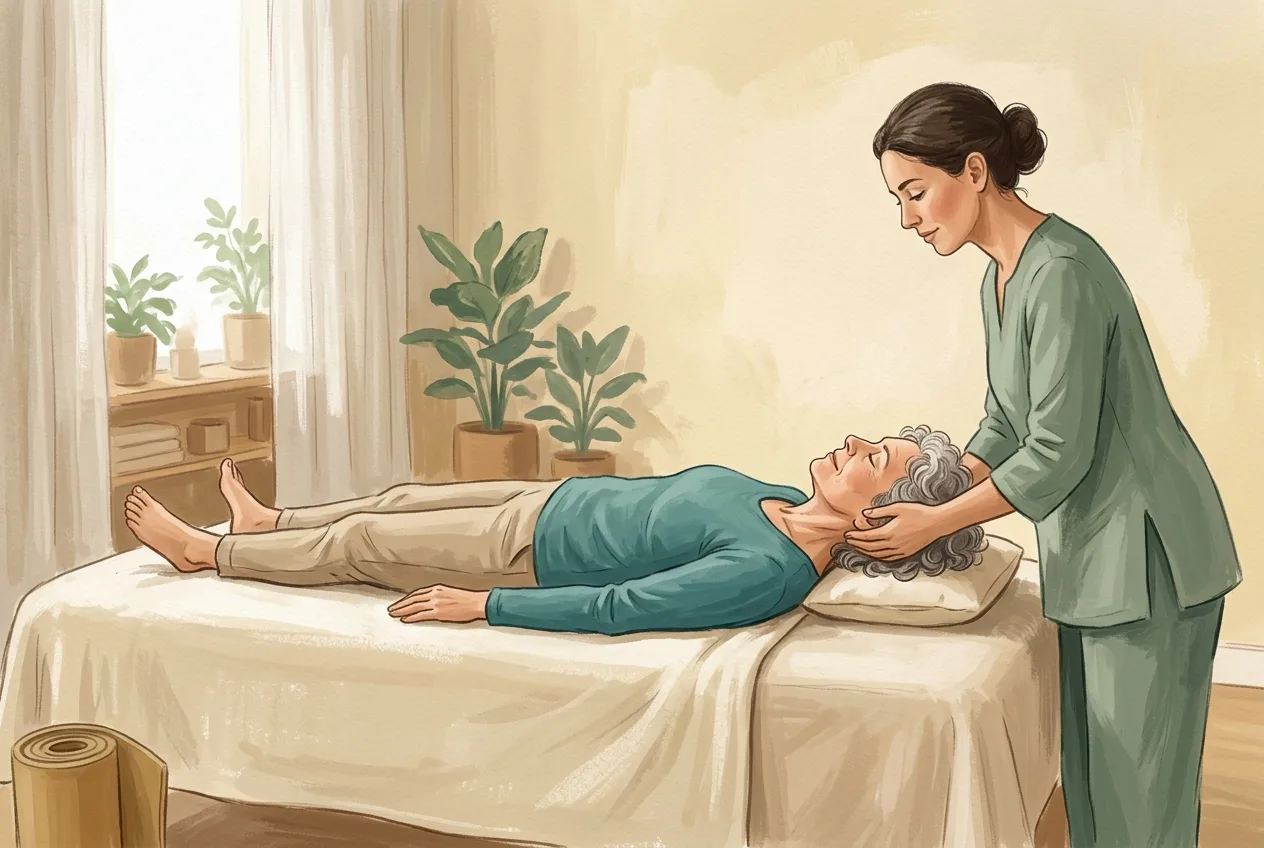
You arrive dressed in comfortable clothes and lie on a low, wide padded table, sometimes with rollers or cushions arranged so you can fully rest. The practitioner then begins to move you, very slowly and very gently: perhaps tilting your pelvis a few millimeters, rolling your head, or lifting an arm to feel how the shoulder responds. They are listening through their hands for where movement travels easily through you and where it pauses, and they use that information to suggest gentler options, not to impose anything.
A session usually runs about forty five minutes to an hour. Most people describe it as deeply calming, closer to being carefully listened to than to being worked on. Afterward you might notice you stand differently, breathe lower, or feel one side of yourself resting more fully against the floor. Those small differences are the lesson.
Functional Integration vs Awareness Through Movement
This is the comparison worth understanding, because the two formats are siblings. Awareness Through Movement is the group format: a teacher guides you with spoken words through slow movement sequences, and you move yourself while paying attention. Functional Integration is the individual format: the practitioner's hands do the guiding, and the lesson is improvised around your particular way of organizing yourself, in the moment, on that day.
Neither format is the advanced one. Touch can reach places words cannot, which makes Functional Integration valuable when someone struggles to sense a part of themselves or cannot easily follow verbal instructions. Words can reach places hands cannot, which makes Awareness Through Movement endlessly repeatable, practical at home, and something you own for yourself. Many practitioners weave the two together. If the group format is new to you, our plain guide to Awareness Through Movement walks through it in the same spirit as this page.
Can you do Functional Integration online or at home
No, and it helps to know that before you go searching. Functional Integration lives in skilled touch, so it only happens in person, and certified Feldenkrais practitioners are thin on the ground in many towns and countries. If there is one near you, a session is a lovely experience and a fine way to meet the method. If there is not, you have lost nothing, because the format built for home practice is Awareness Through Movement.
That is the practical path most people can actually keep up: short, audio guided lessons you follow on your own floor, at your own pace, as often as suits you. It is what the Feldy online program is built on, and you can try it free for 7 days, no credit card needed. If you would rather sample the flavor first, our 10 Feldenkrais exercises make a gentle written starting point, and the somatic exercises for beginners page walks you through a first full lesson.
How often people go, and who it suits
There is no standard prescription, because a session is a lesson rather than a treatment dose. Some people book a single session out of curiosity. Others arrange a weekly series of four to six around a particular concern, then space visits out as home practice takes over. Functional Integration tends to suit people who want individual attention: those living with persistent discomfort, people rebuilding trust in their body after injury or surgery, older adults, musicians and dancers refining their craft, and people with neurological conditions for whom a group class moves too fast. Because nothing is forced and everything stays within comfort, it also welcomes people who simply cannot picture themselves in an exercise class. The Feldy program for body awareness carries the same spirit into daily home practice.
A note on care
Functional Integration is movement education, not medical treatment, and it sits alongside the care of your clinician rather than replacing it. If you have a medical condition, a recent injury, or unexplained pain, it is wise to check in with a professional first and to keep them in the picture. Other approaches such as yoga, Pilates, or massage work through different mechanisms, and plenty of people enjoy them side by side with Feldenkrais work. Curiosity, not either or, is the useful attitude here.
Learn to listen to your body
Now for the practice that trains it. The Feldy program sharpens your attention through slow, attentive Feldenkrais® lessons, so everyday movement feels lighter and more your own. Gentle, guided, and self-paced.
Start my free 7-day trialNo credit card needed.
Common Questions about functional integration (FAQ)
What is Functional Integration in the Feldenkrais Method?
Functional Integration is the individual, hands on format of the Feldenkrais Method. Instead of following spoken instructions, you lie comfortably while a practitioner moves you slowly and gently, listening with their hands to how you organize yourself. The touch is not massage and not manipulation; it is a quiet conversation with your nervous system about easier ways to move.
What happens in a Functional Integration session?
You usually lie clothed on a low, wide table, sometimes supported by rollers or pads. The practitioner moves parts of you slowly, within complete comfort, noticing where movement flows and where it hesitates. Nothing is forced and nothing needs to hurt. A session commonly lasts around forty five minutes to an hour, and many people stand up afterward feeling lighter or more evenly supported.
What is the difference between Functional Integration and Awareness Through Movement?
They are the two formats of the same method. In Functional Integration, a practitioner guides you individually through gentle touch, so the lesson is shaped around your particular way of moving. In Awareness Through Movement, a teacher guides a group with words, and you move yourself while paying close attention. The learning principle is identical; only the medium differs.
Can you do Functional Integration online or at home?
Not really. Functional Integration depends on skilled touch, so it only happens in person, and certified practitioners are scarce in many areas. The part of the Feldenkrais Method that travels beautifully to home practice is Awareness Through Movement, which is verbally guided and works well from audio recordings.
How many Functional Integration sessions do people usually have?
There is no fixed course. Some people come for a single session out of curiosity, others book a short series of weekly sessions around a specific concern, and some return occasionally the way you might revisit a good teacher. Because each session is a lesson rather than a dose, the useful question is whether you are noticing changes in how you move between visits.
Who is Functional Integration for?
It suits people who want individual attention: those in persistent discomfort, those recovering confidence after injury or surgery, older adults, performers, and people with neurological conditions who find group classes hard to follow. Because everything stays slow and within comfort, it is welcoming to people who cannot imagine getting down on the floor for a class.
Learn to listen to your body
See the programRelated resources
Functional Integration® vs Awareness Through Movement®
One is a private hands on session with a practitioner. The other is a spoken lesson you do yourself. For almost everyone starting out, the second is the right door.
Is the Feldenkrais Method® a Massage? A Straight Answer
Feldenkrais and massage explained side by side: what each one does, why the hands on Feldenkrais format can feel massage like, and how to choose between them.
Asked to picture a short walk, older adults imagined four seconds. It took them six

Ready to start moving better?
Gentle, guided lessons for your body. Try your first one free, no credit card required.