
Tennis elbow that lingers: grip gained more with motor learning added
Pain at rest eased a little more too, in 43 adults over six weeks. Pain during use eased in both groups, with no clear difference.
If your tennis elbow has hurt for months, even though you do the exercises you were given, you may wonder whether anything else is worth adding. A kettle, a shopping bag, the lid of a jar: they can still send that ache along the outside of your forearm.
A small trial found that adding motor learning training to the usual exercises was linked to a greater gain in grip strength and a slightly bigger drop in pain at rest. It followed 43 adults with long lasting tennis elbow. Both groups did the same six week program of strengthening and stretching (Gercek and Sari, Journal of Hand Therapy, 2026). Pain while using the arm eased in both groups, with no clear difference between them.
After months of pain, it's easy to start believing the arm is simply worn out. Pain that lasts is not a sign that you failed, or that the arm can't change. You can start from where it is today.
A stronger grip, less pain at rest
Motor learning is how your nervous system learns, or relearns, to organise a movement. The authors suggest that long lasting tennis elbow isn't just a tendon problem. Changes in the nervous system may play a part too.
Their main measure was a left or right test. You see a picture of a body part and say as quickly as you can whether it is a left or a right one. The added practice group improved more than the other group in speed and accuracy. They also gained more grip strength, about 5 kilograms more than the comparison group, and their pain while resting dropped a little further.
So if your elbow is taking a long time to settle, motor learning practice is something to ask your physiotherapist or hand therapist about. It sits alongside the strengthening work, not in place of it.
Pain in use: no clear edge
Pain during activity, pain at night, and the everyday function scores (how the arm copes with daily tasks) all improved in both groups, and on these the extra practice didn't show a clear added benefit. It went with gains in grip and in pain at rest, but not clearly in the things you do all day.
What the headline will miss
The group doing the extra practice also spent more time in treatment, twice a week on top of the same program. So some of their improvement may simply come from more time and attention. Nobody measured the brain directly, so the nervous system explanation is still an idea, not a finding. The paper's summary doesn't explain what the motor learning practice involved. The study also didn't test Feldenkrais lessons, so I can't say whether it was similar to what I describe below. It ran for six weeks with no later check, and the people in it were mostly women with an average age of about 42, younger than many readers here. I'd read it as an early, encouraging signal, not a settled answer.
How a lesson would approach it
An Awareness Through Movement® lesson in the Feldenkrais Method® wouldn't start at the sore spot. (You can follow one at home as Feldenkrais audio.) It would go through what still moves easily: the shoulder blade, the fingers, the wrist rolling while the elbow rests. In people whose arm has hurt for a long time, I often see a grip that closes early and hard, long before a cup or a bag asks for it. As if the hand is getting ready for the pain it remembers. The habit made sense once, and because it was learned, it can change. A stronger grip and a softer hand can go together: the strength is there when the bag needs it, and the hand can let go when nothing does. In my experience, repetitive strain often builds the same way, as a pattern of effort that grows over time, not only as wear.
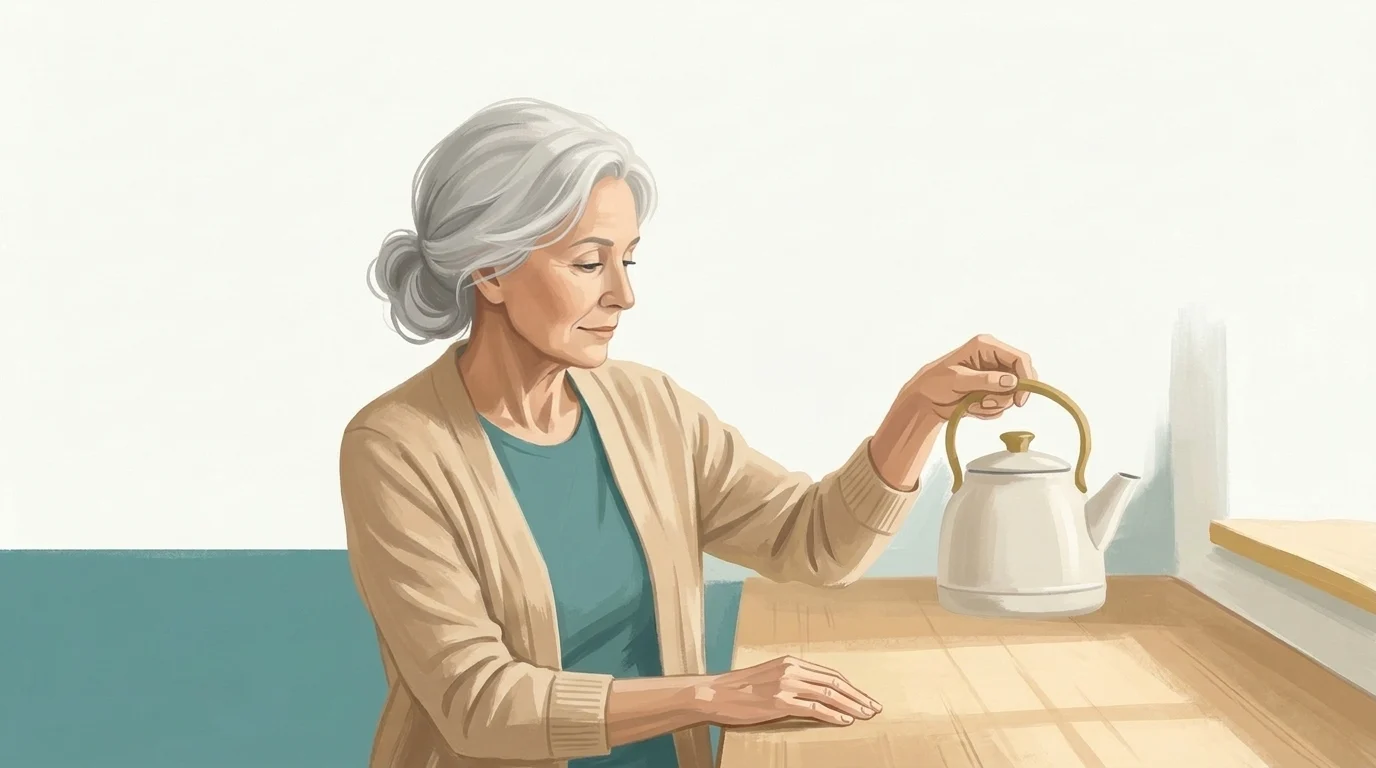
Next time you lift the kettle, notice when your hand starts to tighten, before the weight has even left the counter. Then, staying only where it feels easy and comfortable, see whether you can let it close a moment later, and a little less.
Let Feldy guide you, eyes closed
A calm voice walks you through gentle moves so your attention stays in your body, not on the screen.
Try Feldy Free for 7 daysNo credit card needed.
Sources
Movement Pulse is informational, not medical advice. See our editorial policy.
Move better with Feldy
See the programMovement Pulse Weekly
The week's best research, in your inbox Tuesday.
Movement science, gentle-practice ideas, and a practitioner's read on what's new. Free.
More from Movement Pulse
After a broken wrist, people who pictured moving regained more wrist use
Arm and wrist worked better in four small trials. People practised with a mirror or with imagery; pain and grip showed no clear gain.
Nov 15, 2026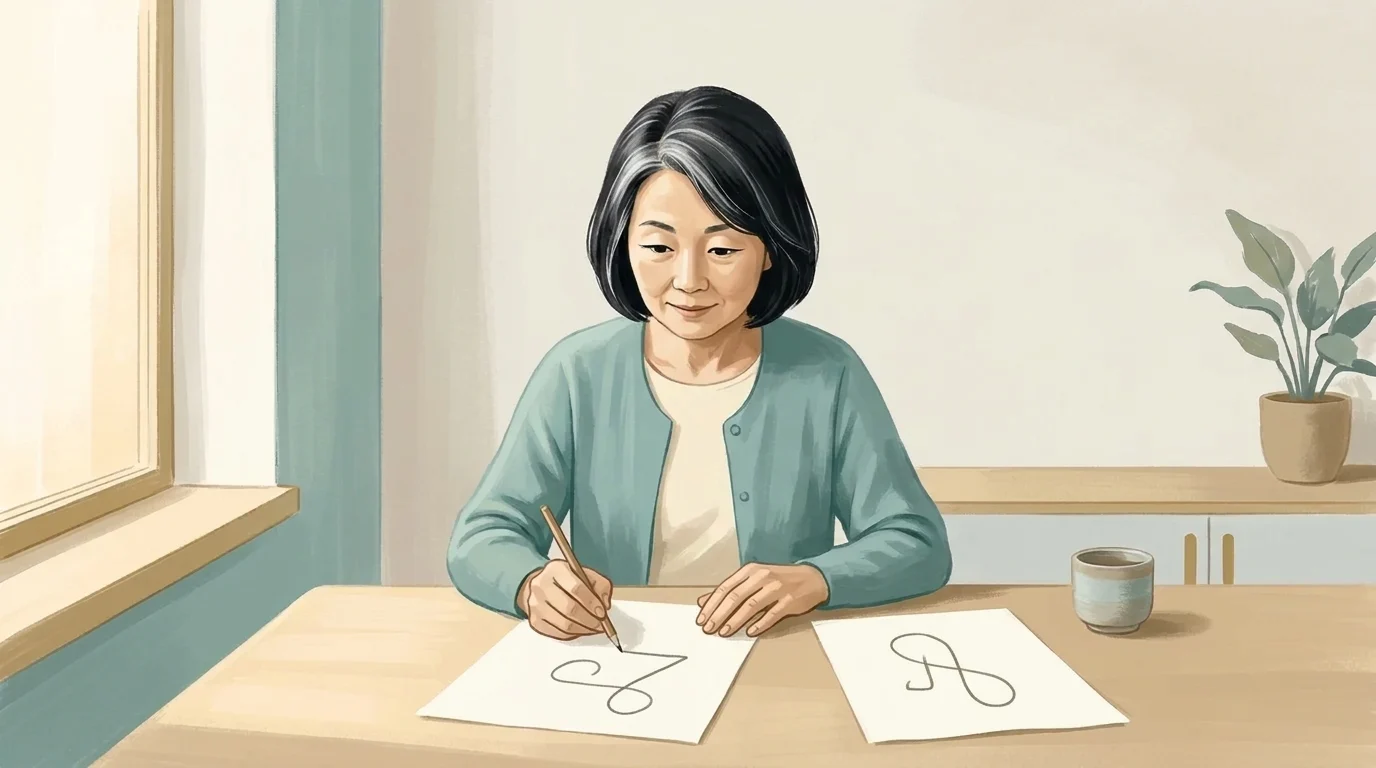
Practising a new movement sideways and upside down helped about as much as repeating it
Across 11 experiments, Yale volunteers practised unfamiliar symbols turned sideways or upside down. Their upright copies improved about as much as with plain repetition.
Oct 22, 2026
Asked to picture a short walk, older adults imagined four seconds. It took them six
Picture yourself walking across the room and back. A new study timed that picture in 85 adults in their seventies, then timed the real walk.
Oct 3, 2026Ready to start moving better?
Gentle, guided lessons for your body. Try your first one free, no credit card required.