
Sacroiliitis: What It Is, What It Feels Like and Causes
Sacroiliitis is sore, inflamed sacroiliac joints. Here is what it feels like, why it happens, who diagnoses it and where gentle movement fits beside medical care.
In short
Sacroiliitis is inflammation of one or both sacroiliac (SI) joints, where the base of the spine meets the pelvis. It often shows up as buttock or low back pain that is worse after long standing, on stairs, or in the morning. Only a doctor can tell you the cause, and gentle movement sits alongside that care, not in place of it.

Prefer to ease in gently?
See a few gentle exercises for lower back pain to try.
Before you begin. This page is general information, not a diagnosis, and Feldy is not a treatment for sacroiliitis. Inflammatory and infectious causes need a doctor, so see your GP or a rheumatologist (a doctor who specialises in joint and immune conditions) to find out what is going on. Seek urgent care for fever with back pain, sudden severe pain, numbness or weakness in a leg, or any change in bladder or bowel control. Keep taking any medicines your doctor has prescribed, and check with them before you change your activity.
Sacroiliitis is inflammation of one or both sacroiliac joints, the places where the base of your spine meets your pelvis. People usually call them the SI joints. Inflammation means the joint is irritated and sore, and the reason can be very different from person to person. This page explains what it is, how it tends to feel, why it happens and what you can sensibly do day to day.
The first thing to know is that sacroiliitis is a description, not a final answer. It tells you where the trouble is. It does not tell you why. That is the job of a doctor, and it matters, because some causes need medical treatment and some do not.
What sacroiliitis feels like
Most people feel it as a deep ache in the buttock or the low back, often on one side. It can also reach the groin or the back of the thigh. Some people feel it on both sides.
A few patterns come up again and again:
- Pain that grows with long standing or after a lot of walking.
- Pain on stairs, when getting out of a car, or when turning over in bed.
- Stiffness and pain that are worst in the morning or after sitting for a while, and ease once you get moving. This pattern is more typical of inflammatory types.
Notice that last one. Ordinary strain usually feels better with rest. Pain that is stiffest after rest and eases with gentle movement runs the other way, and it is worth telling your doctor.
For a fuller map of the symptoms, our guide to sacroiliac joint dysfunction symptoms goes through them one by one.
Why did I get sacroiliitis?
There is no single cause. A doctor will think about several possibilities.
An inflammatory condition. The best known is axial spondyloarthritis, a long term condition where the immune system inflames the joints of the spine and pelvis. Ankylosing spondylitis is the form where changes show on an X ray. The SI joints are often the first place it appears. The NHS says symptoms of ankylosing spondylitis develop gradually, over months or years, and that a GP who suspects it should refer you to a rheumatologist (NHS, 2023). Our guide to ankylosing spondylitis and the SI joint looks at this one in depth.
Injury or repeated strain. A fall onto the buttocks or a car accident can irritate the joint. So can years of uneven loading.
Wear and tear. Like other joints, the SI joints can develop arthritis with age.
Infection. This is rare, but it is serious. It usually comes with fever and strong pain, and it needs urgent medical care.
Changes around pregnancy. The ligaments around the pelvis can loosen and put different demands on the joints. That is all we will say here, because it is a topic for your midwife or doctor.
How a doctor finds the cause
Diagnosis is a medical job. Your GP will ask about your pain, your stiffness and your family history, then examine you. Depending on what they find, they may arrange blood tests, an X ray or an MRI scan, and may send you to a rheumatologist. A rheumatologist is the specialist for inflammatory joint problems.
You do not need to learn the scan terms. What helps most is a clear story. Write down when the pain is worst, how long morning stiffness lasts, what eases it and whether anything runs in your family. That gives the doctor real information to work with.
Where gentle movement and attention fit
Medical care comes first for sacroiliitis, and gentle movement sits beside it. It is not a treatment for the inflammation, and nothing here replaces what your doctor or physiotherapist advises.
What slow, attentive movement can do is change how you live with a sore pelvis. When a joint hurts, the body tends to guard. You may hold your breath, tense the buttocks and stiffen the hips without noticing. Over time that guarding can add its own ache to the day.
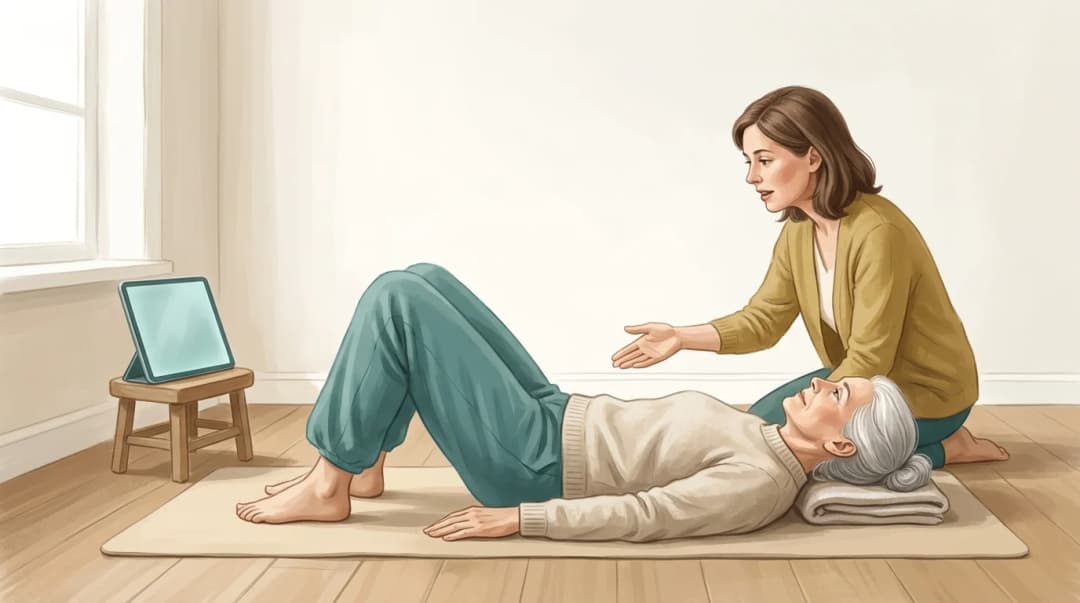
The Feldenkrais Method® is a way of paying quiet attention to how you move. In a lesson you move slowly, within comfort, and notice where you hold. Many people find that this makes standing, walking and getting up feel easier to organise. It is a different mechanism from stretching or strengthening, so it does not compete with them.
If you want to try something short and easy, our lesson on how to relax your back is a gentle place to begin. Keep every movement small enough to be comfortable, and stop if the pain climbs. For more everyday ideas, read relief from sacroiliac joint pain.
A few day to day habits are worth trying:
- Change position often, rather than staying still for long.
- Walk in shorter spells, with rests between them.
- Notice whether you clench your buttocks or hold your breath when the joint hurts.
- Keep a short note of when stiffness is worst, to share with your doctor.
Our Feldypedia article on chronic lower back pain adds the wider picture of how long standing back pain and the nervous system interact.
Red flags: when not to wait
Please do not use this page in place of a medical visit if you notice any of these:
- Fever together with back pain.
- Sudden, severe pain, especially after a fall or accident.
- A leg that feels numb or weak.
- New trouble controlling your bladder or bowels.
- Pain that wakes you at night, or morning stiffness that lasts well over half an hour.
The first four need urgent care. The last two are good reasons to book a doctor's appointment soon.
Find where to start
If a sore pelvis has you unsure what kind of movement would feel kind to it, it can help to start from what suits you. The quiz below looks at your preferences and points you to a movement method, and your doctor can tell you whether it is right for your situation.
Wondering what would suit you? Take the Movement Match quiz, a few quick questions that point you toward a movement method, then talk it through with your care team.
A gentler way through back pain
Now you understand why it braces. The Feldy program helps your back unlearn that guarding, through slow, attentive Feldenkrais® lessons you follow at home. Gentle, guided, and self-paced.
Start my free 7-day trialNo credit card needed.
Common Questions about sacroiliitis (FAQ)
What is sacroiliitis?
Sacroiliitis is inflammation of one or both sacroiliac joints, the two joints where the sacrum (the flat bone at the base of your spine) meets the hip bone on each side. It is a description of what is happening in the joint, not a single disease. A doctor works out the cause, which can range from an inflammatory condition to an injury or simple wear.
Is it safe to move when I have sacroiliitis?
Gentle, comfortable movement is usually fine and many people find it eases stiffness, but it depends on the cause. Check with your doctor first, especially if the cause is inflammatory or infectious. Stay within comfort, stop if pain climbs, and never move through sharp pain, fever, numbness or weakness.
How often should I move if my SI joints are sore?
Brief spells through the day tend to suit sore joints better than a single long session. Shift your position now and then, and give yourself a few minutes of easy movement when stiffness builds. Follow any plan your doctor or physiotherapist has given you first.
How long does sacroiliitis last?
It varies a great deal because the causes differ. Pain from an injury or a short spell of overload may settle over weeks, while inflammatory types tend to come and go over months or years and need ongoing medical care. If the pain has lasted more than a few weeks, ask a doctor to look at it.
How is sacroiliitis different from SI joint dysfunction?
Sacroiliitis means the joint is inflamed. SI joint dysfunction is a broader, looser label for pain that seems to come from the joint, often without clear inflammation. The feel can be similar, which is why a doctor, and sometimes a scan or blood test, is used to tell them apart.
Is sacroiliitis the same as sciatica?
No, though they can feel alike. Sacroiliitis usually stays around the low back and buttock. Sciatica is a nerve pain that tends to run down the leg past the knee, often with pins and needles. Your doctor can tell which one you have.
When should I see a doctor about sacroiliitis?
See a doctor for any buttock or low back pain that has lasted more than a few weeks, that wakes you at night, or that is clearly worse in the morning and eases with movement. Go urgently for fever with back pain, sudden severe pain, a numb or weak leg, or new trouble with bladder or bowel control.
A gentler way through back pain
See the programRelated resources
Sacroiliac Joint Dysfunction Symptoms: What They Feel Like
Pain low and to one side, worse standing up from a chair. The symptoms of sacroiliac joint dysfunction, what mimics them, and where gentle movement helps.
Relief From Sacroiliac Joint Pain: What Helps Over Time
SI joint pain relief often comes from small daily changes first, then steady gentle movement. Here is what helps today, in the coming weeks, and when to ask a clinician.
Online back programs that eased pain noticeably all included a person
Ready to start moving better?
Gentle, guided lessons for your body. Try your first one free, no credit card required.