
Ankle Tendonitis Treatment: What Usually Helps and Why
Where ankle tendons get sore, what treatment usually looks like, from footwear to slow loading exercise, and how the way you walk shapes the load they carry.
In short
Ankle tendonitis treatment usually means easing the load on the sore tendon rather than resting completely, wearing supportive shoes, and building the tendon back up with slow, gradual loading exercise. Ice and simple painkillers are there for comfort. A boot or a specialist is for severe or stubborn cases.

Prefer to ease in gently?
See a few gentle exercises for body awareness to try.
Before you begin. Nothing here is a diagnosis. Some ankle stories need urgent assessment rather than self care: a sudden snap or a feeling of being kicked at the back of the ankle, being unable to push off or stand on tiptoe, a calf that is hot and swollen, or pain that is getting worse quickly. If any of these fit, seek medical help the same day.
Ankle tendonitis treatment usually comes down to one idea: give the sore tendon a load it can cope with, then build that load up slowly. Neither total rest nor pushing through tends to settle it. The middle path, easing off, supporting the foot, then loading the tendon step by step, is what most clinicians now suggest. How you walk decides a surprising share of that load, which is where this page ends up.
What ankle tendonitis actually is
A tendon is the tough cord that joins a muscle to a bone. Tendonitis means a tendon that has become irritated and sore, usually because it was asked to do more than it was ready for. The "itis" ending points to inflammation. In tendons that have hurt for weeks, though, there is often little real inflammation to find. The tissue is more tired and disorganised than swollen. That is why many clinicians now say tendinopathy instead. The word simply means a tendon that hurts and is struggling with its workload.
Tendon pain has a rhythm. It is often stiff and sore for the first steps of the morning, eases once you are moving, then aches again after a long day. It tends to be tender along one line rather than across the whole joint. Arthritis, by contrast, usually aches deep inside the joint itself rather than along a cord you can trace with a finger.
Three common spots for tendonitis in the ankle
At the back: the Achilles. This is the thick cord you can feel above the heel. It joins the calf muscles to the heel bone and drives every push off. It can be sore in its middle section, or lower down where it meets the bone. Over a lifetime, about 2.35 in every 1,000 adults are affected, sport is the strongest link, and moderate level evidence favours slow lowering heel exercise for the pain (StatPearls, 2024).
On the outer side: the peroneal tendons. Two tendons curve behind the bony knob on the outside of the ankle. They turn the sole outward and steady the ankle on uneven ground. Old sprains, or a habit of walking on the outer edge of the foot, tend to wake them. Our guide to outside ankle pain when walking looks at that side more closely.
On the inner side: tibialis posterior. This tendon wraps behind the inner ankle bone and fans out under the foot. It holds up the arch with every step. When it is irritated, the inner ankle aches and the arch can feel tired. Our page on pain on the inside of the ankle maps that area, including one sign worth taking seriously: an arch that is visibly flattening.
What ankle tendonitis treatment usually involves
Most care follows the same broad shape, whichever tendon is involved.
Ease the load, do not remove it. Tendons dislike two things: sudden jumps in demand, and long spells of nothing. So the first move is usually to trim the activities that flare the pain, not to stop walking. Shorter walks, flatter routes and fewer stairs for a couple of weeks often let things calm down. Weeks of complete rest tend to leave the tendon weaker and no less sore.
Support the foot. Shoes with a firm heel and some cushioning reduce the strain on each step. A small heel lift can quiet a sore Achilles for a while. An arch support or insole can take some work off tibialis posterior. They buy comfort while the loading does the real work.
Load it gradually. This is the part with the strongest evidence behind it. A physiotherapist builds a programme that asks a little more of the tendon each week. For the Achilles, the classic version is slow heel lowering off a step. You rise up on both feet, then lower slowly on the sore side. Some soreness during the exercise is usually accepted, as long as it settles by the next day. The programme typically runs for about three months, sometimes longer.
Comfort measures. The NHS style self care list is short. Ice wrapped in a cloth for up to twenty minutes, a few times a day. Paracetamol, or an ibuprofen gel from the pharmacy, if those suit you. These do not change the tendon. They make the weeks of loading easier to live with.
When more is needed. A walking boot may be suggested if the pain is severe, the arch is collapsing, or a peroneal tendon keeps snapping over the bone. A specialist referral makes sense when several months of loading have changed nothing, or when a scan is needed. Shockwave therapy is sometimes offered. Steroid injections are generally avoided around the Achilles because they raise the risk of rupture. Surgery is rare and comes last.
Ankle tendonitis treatment and the way you walk
The tendon did not choose its own workload. How hard the Achilles pulls, how far the arch sinks, how much the outer ankle has to brace: all of this is decided higher up the leg.
Think about push off. Some people drive each step mainly from the calf, with the toes gripping the ground. Others let the hip carry the leg forward, so the calf only finishes the movement. The first habit sends a great deal of load into the Achilles. The second spreads it out.
Or think about how the foot rolls. A foot that sinks inward asks tibialis posterior to hold the arch up on every step. A foot that stays out on its edge keeps the peroneal tendons busy stopping the ankle from tipping. Both patterns usually go with how the knee tracks and how the pelvis travels over the standing leg. So a sore ankle tendon is partly a question about the whole leg. There is more on this in our Feldypedia article on gait changes and walking difficulty.
Awareness that sits alongside the loading programme
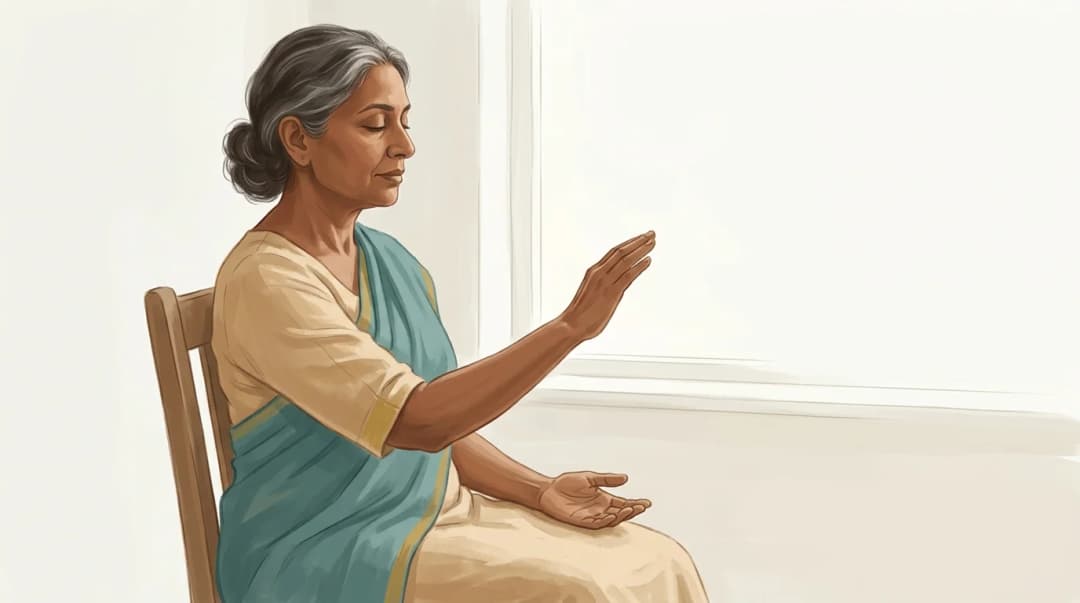
This is where the Feldenkrais Method® can add something to a loading plan. It does not repair a tendon and it is not a treatment. What it offers is attention. The lessons are slow and mostly done lying down. You notice how weight travels through each foot, what the hip does as the leg swings, and whether you push off with a grip or a roll. Once a walking habit becomes visible, it can begin to shift. Many people find their steps feel lighter, though nobody can promise that.
The loading builds the tendon's capacity. The awareness work looks at how much load reaches the tendon in the first place. Our somatic exercises for beginners lesson is a gentle place to try this kind of noticing. If your sore spot is the Achilles, our page on Achilles tendon stretches explores slow ankle movement for a guarded heel cord. Feldy's free trial gives you seven days of short audio lessons that work with the foot, leg and pelvis together. The body awareness page explains who tends to enjoy this way of working.
Alongside clinical care and other methods
Everything above sits alongside what your doctor or physiotherapist gives you. They can examine the tendon, rule out a tear, scan it if needed, and shape the loading programme to your case. Movement awareness does not replace any of that.
Other movement methods take different routes. Yoga brings long holds and calf stretches, which some people find soothing and others find too much for a sore tendon. Pilates works on foot and hip control with more structure. Alexander Technique looks at habit in standing and walking, much as this page does, though through hands on guidance. The one that fits is the one you will actually keep doing.
Find where to start
If you are unsure whether slow, attentive movement is a fit for your ankle, it helps to know the options before choosing. Several methods work with how you stand and walk, and they suit different people.
Wondering which movement method would suit a sore ankle tendon? Answer three quick questions in the Movement Match quiz, it ends by naming one method and the reason it fits your answers.
Learn to listen to your body
Now for the practice that trains it. The Feldy program sharpens your attention through slow, attentive Feldenkrais® lessons, so everyday movement feels lighter and more your own. Gentle, guided, and self-paced.
Start my free 7-day trialNo credit card needed.
Common Questions about ankle tendonitis treatment (FAQ)
Is it safe to start ankle tendonitis treatment on my own?
For mild tendon pain that built up gradually, gentle self care is usually reasonable: ease the activities that flare it, wear supportive shoes, and use ice or paracetamol for comfort. Skip self care and get seen the same day if you felt a snap, cannot push off, or have a hot swollen calf. If you have diabetes, take steroid tablets, or have recently had a fluoroquinolone antibiotic, talk to your doctor before loading the tendon, since these raise the risk of tendon damage.
How often should I do the loading exercises?
That depends on the programme your physiotherapist sets. Many Achilles plans ask for slow heel lowering most days, sometimes twice a day, for around twelve weeks. Mild soreness during the exercise is usually accepted if it has settled by the next morning. If the tendon is worse the next day, the load was a step too far and gets scaled back.
How long does ankle tendonitis take to ease?
Recent, mild tendon irritation often settles within a few weeks once the load is more sensible. Tendon pain that has been around for months usually needs a longer loading programme, and many people notice change somewhere between six and twelve weeks. Progress tends to zigzag rather than climb in a straight line.
How is ankle tendonitis different from an ankle sprain?
A sprain injures a ligament, the tissue that joins bone to bone, and it usually comes from one clear twist, with swelling and bruising soon after. Tendonitis involves a tendon, which joins muscle to bone, and it usually builds over weeks without a single moment of injury. Tendon pain is stiff first thing, eases with movement, and is tender along one line rather than across the joint.
What is the best ankle tendonitis treatment for someone who walks a lot?
Keeping the walking but trimming it is usually more useful than stopping. Shorter, more frequent walks on flatter ground, shoes with a firm heel, and a loading programme from a physiotherapist tend to form the core. Paying attention to how you push off, so the hip shares the work with the calf, can change how much load each step sends to the tendon.
What should I avoid with ankle tendonitis?
Sudden jumps in activity, hills or running through sharp pain, and weeks of complete rest all tend to set things back. Hard calf stretching over the edge of a step can irritate an Achilles that is sore where it meets the heel bone. Flat, worn shoes take away support the tendon is relying on. Steroid injections into the Achilles are generally avoided because of the risk of rupture.
When should I see a professional about ankle tendonitis?
Straight away if you felt a snap or a kick at the back of the ankle, cannot rise onto tiptoe, have a hot swollen calf, or the pain is getting worse fast. Otherwise, if two to three weeks of sensible self care has not shifted things, or walking is becoming limited, book an assessment rather than waiting another month.
Learn to listen to your body
See the programRelated resources
Achilles Tendon Stretches: Slow, Gentle Ankle Movement
Achilles tendon stretches reimagined as slow, small ankle movement for a guarded heel cord, with notes on where loading programs do the heavy work.
Pain on Inside of Ankle: What Lives There and What Helps
A map of the inner ankle, the patterns that show up there, and why the whole leg has a say in what that small area is asked to carry.
Your balance got better, but did your sense of where your body is get better too
Ready to start moving better?
Gentle, guided lessons for your body. Try your first one free, no credit card required.