

How to Release Tight Calves Without Forcing Them
A calf can feel tight because it is short, busy, or held on guard. What genuinely helps, from warmth and varied walking to slow, curious ankle movement.
In short
To release tight calves, combine gentle sustained lengthening with warmth, varied walking, ankle movement in every direction, and shoes that let the heel come down. Because tightness often reflects a calf on quiet duty, slow attentive ankle and foot movement usually changes the feeling more than force.

Prefer to ease in gently?
See a few gentle exercises for body awareness to try.
Before you begin. This page is movement education, not medical advice. A calf that is swollen, hot, reddened, or painful in one leg only, particularly after surgery, immobility, or long travel, needs urgent medical assessment before any self-care.
If you have been searching for how to release tight calves, you have probably already met the standard advice, a stretch at the wall, held and repeated, and noticed that the looseness it buys rarely lasts past lunchtime. So let me offer a more candid starting point. Tightness is a sensation, not always a measurement. A calf can feel tight because it genuinely has little range, because it is working hard to steady an ankle or a foot, or because your nervous system is holding it ready for action it never quite takes. Those are three different situations, and they respond to different things, which is why the answer here comes in layers rather than in one move.
Before the layers, one plain safety note. A calf that is swollen, hot, reddened, or painful in one leg only deserves urgent medical assessment rather than stretching, especially in the weeks after surgery, a period of immobility, or a long journey. Those signs can point to a clot in a deep vein, which is never a self-care project. Everything below assumes the ordinary kind of tightness, gradual, familiar, and present in both legs.
Start with what you ask of your calves all day
The most useful step costs nothing: spend one day noticing what your calves are actually doing. Hours perched on the balls of the feet at a counter. A right foot hovering tensely over the pedal through a long drive. Heeled shoes keeping the muscle shortened from breakfast to bedtime. Toes that quietly grip the floor whenever you concentrate or brace. A calf given twelve hours of work like that will report for duty as tight in the evening no matter what you do to it in the ten minutes before bed. Change the ask, and the sensation often changes with it: catch the gripping toes and let them soften, rest the driving foot at stops, come down off the forefoot when you notice you have drifted up there. If the deeper mechanics interest you, our explainer on why your calves are always tight tells that side of the story; this page stays with what to do about it.
How to release tight calves during the day
With the daily load in view, the practical layers earn their place.
Gentle sustained lengthening still belongs in the toolkit. A slow, comfortable lengthening of the calf, the kind you could hold while chatting, gives a genuinely short muscle a patient invitation toward range. The word comfortable is doing real work in that sentence, because a pull strong enough to make you grimace tends to be met with more guarding, not less.
Warmth is underrated. Calves soften noticeably after a warm bath or shower, and a walk begun warm feels different from one begun cold. If your calves are at their worst on winter mornings, warm socks and a few minutes of easy ankle movement before you stand up can change the whole first hour.
Walking variety matters more than walking volume. Different speeds, a gentle hill, grass instead of pavement, a slower stroll with your attention on how each foot rolls. Every variation asks the calf for a slightly different length and rhythm, and variety is exactly what a muscle stuck in one job has been missing. The calf shares every step with its tendon, and that partnership has limits worth respecting: among athletes, the cumulative lifetime incidence of Achilles tendinopathy reaches roughly 24 percent (StatPearls, 2024), a reminder that the kind answer to an overworked lower leg is variety and gradual change rather than sudden enthusiasm.
Move the ankles in every direction. Slow circles, tilts of the sole inward and outward, easy pointing and flexing, done sitting with no load at all. Daily life only ever asks the calf for up and down, and offering the whole compass reintroduces options it stopped using. Our guide on how to improve ankle mobility goes further into that territory.
Finally, footwear. A shoe that lets the heel come all the way down lets the calf visit its full length hundreds of times a day without a single deliberate stretch. If raised heels have been your habit for years, make any change slow and partial, since the calf will need months, not days, to befriend the new geometry.
A muscle on duty cannot be pulled loose
Here is the perspective my own training brings to this question. I teach the Feldenkrais Method®, a form of movement education built around Awareness Through Movement®, and its central observation about tightness is this: a muscle that is quietly on duty will feel tight no matter how much you pull on it, because pulling never addresses the reason it is working. The calf that steadies a wobbly ankle, or stands watch over an old sprain, is doing a job. Until the job changes, the tension has nowhere to go.
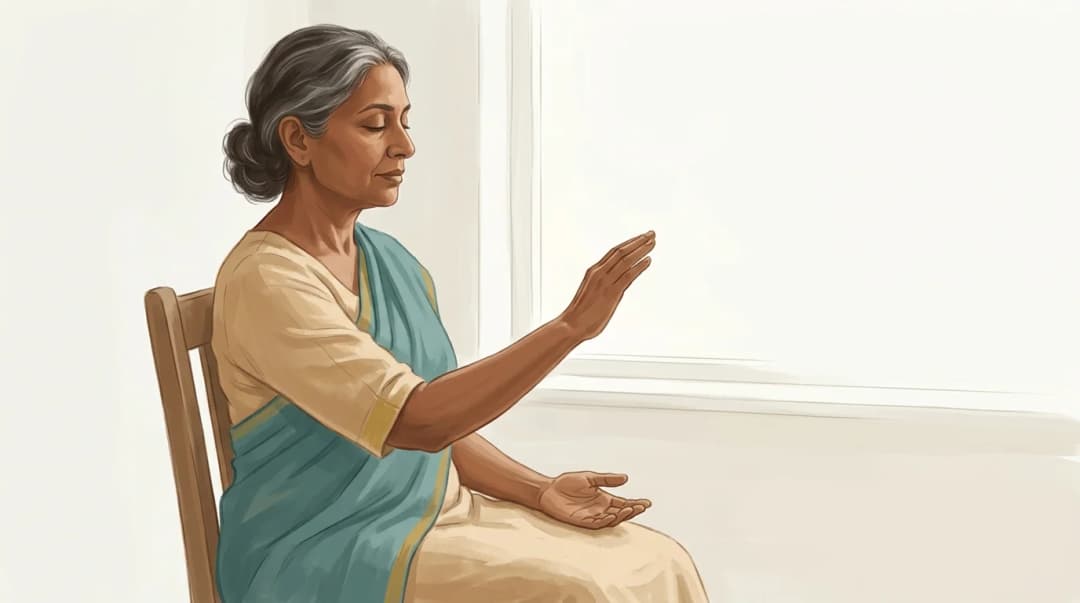
What does change the job is slow, curious movement of the ankle and foot. Move the foot gently enough to feel its whole path, in ranges that seem like almost nothing, and the nervous system receives an updated report: this territory is known, and nothing here needs defending. People are routinely surprised that five quiet minutes of this shifts the feeling in the calf more than a month of determined pulling did. The effect tends to reach the walking itself, since how you push off and roll through each foot sets the calf's daily workload; our Feldypedia entry on gait changes and walking difficulty maps that connection, and the entry on the Feldenkrais Method describes the approach as a whole.
Two boundary lines keep all of this straight. If a doctor or physiotherapist is already involved with your leg, their care continues in its own lane, and the attention work here sits quietly beside it. Foam rolling, sports massage, massage guns, and static stretching are a separate matter: neutral tools that act on the tissue from the outside through their own mechanism, and many people combine them freely with this approach. The guided audio lessons at Feldy take the attention route, and the body awareness program gives the feet, ankles, and calves several unhurried sessions of their own.
What helps release tight calves at night
Night cramps deserve their own paragraph, because they are common, miserable, and stubbornly under-explained. What reliably ends a cramp in the moment is returning the muscle to length: stand and set the whole foot flat on the floor, or sit and draw the toes toward you until the knot lets go. Prevention is murkier. Easy ankle movement and a comfortable calf lengthening before bed help some people, staying hydrated is sensible, and the evidence behind most supplements is weaker than the marketing suggests. If cramps visit most nights, mention it to your doctor, partly because some medicines can play a part and a review of yours may be worth having.
A last word about expectations, because you deserve a straight one. Nothing on this page makes tightness disappear for good, and I would be wary of anyone promising that. Calves answer to what each day asks of them, so the sensation will keep reflecting your hours of standing, walking, driving, and bracing. What you can genuinely change is the mix: more variety, more warmth, more slow attention, a lower perch for the heel, and a lighter daily load. Keep at that steadily, and most calves find less and less to complain about.
Learn to listen to your body
Now for the practice that trains it. The Feldy program sharpens your attention through slow, attentive Feldenkrais® lessons, so everyday movement feels lighter and more your own. Gentle, guided, and self-paced.
Start my free 7-day trialNo credit card needed.
Common Questions about tight calves (FAQ)
Is it safe to work on tight calves, and who should be careful?
Gentle movement, warmth, and easy lengthening suit most people, because nothing here pushes toward pain. Take extra care, and check with your doctor first, if you have reduced sensation in the lower legs, a recent calf or Achilles injury, or a diagnosed circulation problem. A calf that is swollen, hot, or painful on one side only is a medical matter, not a self-care one.
How often should I work on releasing my calves?
Small doses woven through the day do more than one determined session. A minute of slow ankle circles while the kettle heats, an easy comfortable lengthening after a warm shower, a short walk with some variety in it. Visiting the calves briefly on most days beats saving everything up for a single long effort.
How long until tight calves feel different?
The sensation itself often shifts within minutes of warmth or slow ankle movement, which tells you the nervous system has a hand in it. A change you notice across a whole week usually takes a few weeks of varied walking, adjusted footwear habits, and regular unhurried movement. True changes in range are slower still, and nothing here promises permanence.
How is this different from foam rolling or a massage gun?
Rolling and percussion tools press on the tissue from the outside, and many people enjoy the immediate softening they bring. The approach on this page works from the inside instead, changing what the calf is asked to do each day and how much guarding it carries. They act through different mechanisms and answer different questions, so neither one replaces the other.
Do I still need static stretching if I do this?
Gentle sustained lengthening keeps its place, particularly when a calf genuinely lacks range, so there is no need to abandon it. Its job description changes, though. Rather than carrying the whole answer, it becomes one layer beside warmth, walking variety, ankle movement, and attention to daily habits, and it serves you best when it stays comfortable rather than heroic.
When should I see a professional about tight calves?
Seek urgent care for one-sided swelling with heat, redness, or pain, above all after an operation, time confined to bed, or a long flight, since a clot in a deep vein has to be ruled out. Beyond that, book an appointment if tightness arrived suddenly, follows an injury, comes with numbness or weakness, or has not budged after several weeks of patient self-care. A doctor or physiotherapist can assess what is going on, and the ideas here keep their place beside whatever a clinician recommends.
Learn to listen to your body
See the programRelated resources
Why Are My Calves Always Tight? The Real Reasons
Why are my calves always tight? Often it is not short muscle but a nervous system on guard. Here are the real reasons, plus why gentle awareness beats stretching.
Achilles Tendon Stretches: Slow, Gentle Ankle Movement
Achilles tendon stretches reimagined as slow, small ankle movement for a guarded heel cord, with notes on where loading programs do the heavy work.
Your balance got better, but did your sense of where your body is get better too
Ready to start moving better?
Gentle, guided lessons for your body. Try your first one free, no credit card required.