
Sofa Posture: How to Sit on a Couch Without Aching
There is no single way to sit on a sofa. What actually makes an evening on the couch sore, and the small changes that make it comfortable again.
In short
Good sofa posture is not one fixed position. What leaves people stiff after an evening on the couch is holding the same shape for hours, usually with the pelvis rolled back and the head pushed forward. Changing position often matters far more than finding the perfect one.

Prefer to ease in gently?
See a few gentle exercises for body awareness to try.
Sofa posture is one of those subjects where the usual advice does more harm than good. Sit up straight, we are told, as if there were one shape for a couch and the rest were failures. In my experience the shape matters much less than people think. What matters is how long you stay in it.
Why an evening on the couch leaves you stiff
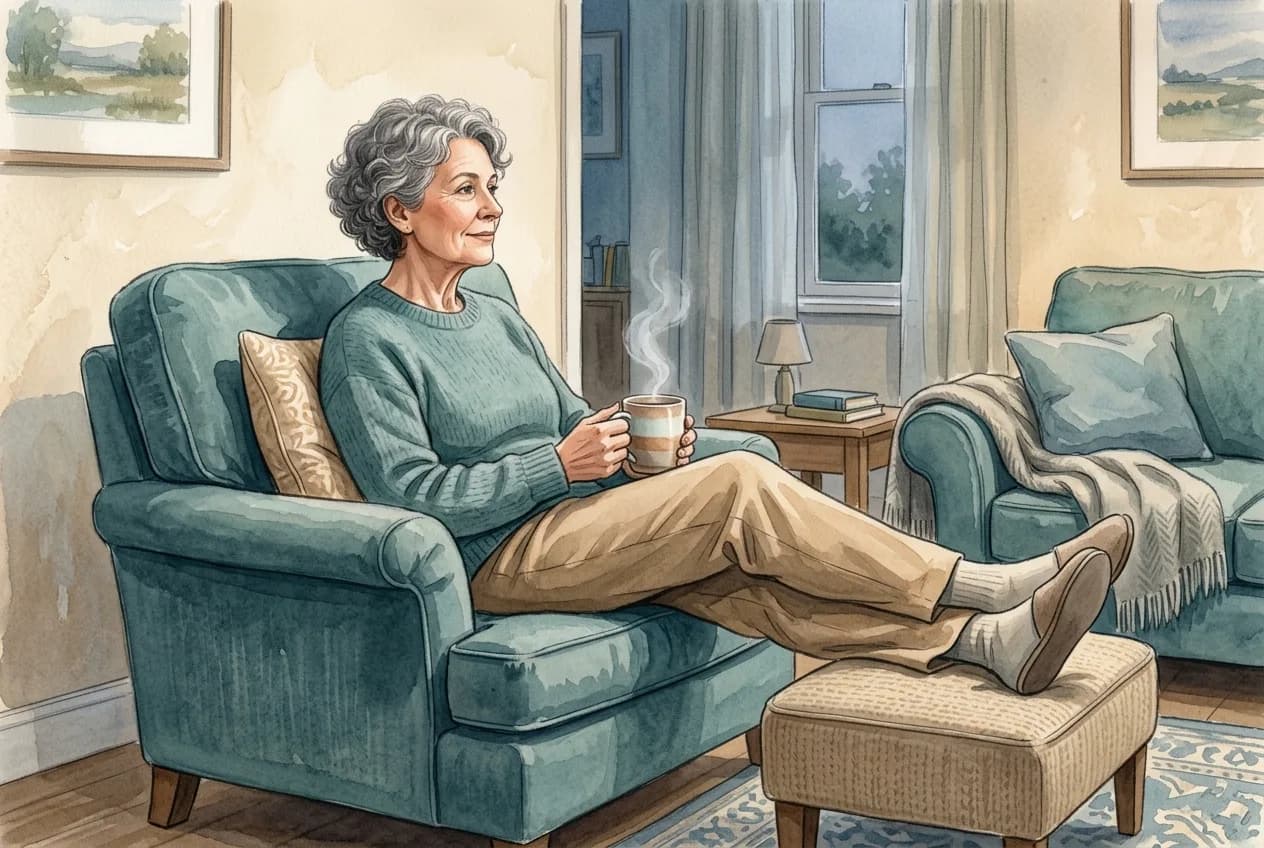
Watch someone settle onto a sofa. The pelvis rolls backwards, the lower back rounds into a long C, the ribs drop, and the head travels forward so the eyes can still find the television. It is a perfectly reasonable position. Almost everybody adopts some version of it, and for ten minutes it is entirely fine.
The difficulty is the clock. Two hours in one shape means two hours of the same tissues under the same load, and the same muscles quietly holding you there. Tissue that is loaded identically for a long time gets uncomfortable. That is true of an upright shape too, which is why sitting rigidly to attention for an evening also leaves people sore.
Standing up afterwards is where you feel it. The back does not want to straighten immediately, the hips feel short, and the first few steps are careful ones. That is not damage. It is the body having got very good at one position.
Musculoskeletal conditions of this kind are widespread: around 1.71 billion people worldwide live with one, and low back pain is the single largest contributor (WHO, 2022). Very little of that is caused by any one bad position. A great deal of it is about how bodies get used across a day.
The sofa itself is part of the story
Sofas are designed for relaxing, not for supporting. Most are deep, so a person of average height cannot reach the backrest with their spine and the floor with their feet at the same time. Something has to give, and it is usually the pelvis, which slides forward and tips back.
Most are also soft, which means you sink unevenly and continue sinking through the evening. And most are aimed at a television that sits slightly off to one side, so the whole body gently twists towards it for hours.
None of that is a design fault. It just means the sofa asks something of you that a dining chair does not. Our Feldypedia entry on lower back pain from sitting covers what long, still sitting does to a back in more detail.
What actually helps with sofa posture
Start with the depth. If your feet do not comfortably reach the floor when your back touches the backrest, you have two options: sit further back and put your feet on a low stool, or put a firm cushion behind your lower back so that the seat becomes effectively shallower. Either works. Both stop the pelvis from sliding away from you.
Then look at the twist. If the television is off to one side, turning the sofa or the screen a few degrees removes a mild rotation that your spine has been holding all evening. It is a small change with a disproportionate effect.
Then, and this is the part that matters most, move. Not exercises, just changes. Cross the other leg. Shift your weight onto the other hip. Stretch your legs out along the sofa for a while and then bring them back. Stand up when the kettle needs filling instead of waiting until the programme ends. A body that visits eight positions in an evening is far more comfortable than one that visits one, regardless of which one it is.
Why noticing beats holding a position
Here is the practical problem with posture advice: nobody can hold a position by willpower for two hours. You sit up straight, forget within ninety seconds, and then feel vaguely guilty about it later. That cycle helps nobody.
The Feldenkrais Method® approaches sitting differently. Rather than teaching a shape to maintain, it improves how clearly you feel yourself, so that becoming uncomfortable registers earlier and you shift before the stiffness sets in. Small, slow movements done lying down give the nervous system a much better picture of the pelvis, the ribs and the head, and a body that is sensed accurately tends to reorganise itself without instruction.
Our somatic exercises for beginners are a straightforward introduction to this way of working. If getting off the sofa is itself the hard part, our sit to stand exercises address that directly, and our general posture exercises cover the standing side of the same question.
What to leave alone
You do not need to sit rigidly upright on your sofa. An evening spent enforcing a military posture is usually more uncomfortable than the slouch it replaced, and it rarely survives past the first advert break.
You also do not need to buy your way out of this. Posture braces, wedge cushions and lumbar rolls can all be useful for some people, but none of them addresses duration, which is the main driver. A folded towel behind the lower back does most of what an expensive cushion does.
And if your back is already sore, do not spend the night on the sofa. That is a reliable way to wake up stiffer.
Different movement traditions come at sitting from their own angles. Pilates builds trunk control through graded work. Yoga trains position and breath together. The Alexander Technique works directly on the relationship between head, neck and back in sitting and standing. Each has genuine value. What the Feldenkrais route offers here is attention rather than effort, which is a better fit for something as unstructured as an evening on the couch. If you already see a physiotherapist about back pain, this sits alongside their advice rather than replacing it.
The lessons inside Feldy are short, done lying down, and built around noticing rather than performing. The first week costs nothing and asks for no payment details.
Find where to start
Different bodies get on with different methods, and the sofa is only one part of a bigger picture. A short quiz makes the choice for you.
Want a starting point chosen for your body? Take the 60-second Movement Match quiz. Three questions, then a movement method picked to suit how you feel.
Learn to listen to your body
Now for the practice that trains it. The Feldy program sharpens your attention through slow, attentive Feldenkrais® lessons, so everyday movement feels lighter and more your own. Gentle, guided, and self-paced.
Start my free 7-day trialNo credit card needed.
Common Questions about sofa posture (FAQ)
Is slouching on the sofa actually bad for me?
Slouching for a few minutes is harmless, and the body is well built for it. What causes trouble is holding any single shape for hours without variation, slouched or upright. If a position is comfortable and you change out of it regularly, it is very unlikely to be doing you harm.
How often should I change position on the sofa?
Every twenty to thirty minutes is a reasonable guide, and it does not need to be a big change. Shifting your weight to the other hip, uncrossing your legs, or standing up for the length of an advert break is enough. The aim is variety rather than discipline.
How long before my back stops aching after evenings on the couch?
Many people notice a difference within a week or two of simply moving more often while they watch television. Longer standing stiffness usually takes a few weeks of regular gentle movement to shift. If nothing changes after about six weeks, or the pain is getting worse, it is worth having it looked at properly.
How is this different from buying a posture support cushion?
A cushion changes the shape of the seat, which can genuinely help by filling the gap behind your lower back. It does not change how long you stay still, and that is usually the bigger factor. Gentle movement works on the other half of the problem: it makes you more aware of where you are, so changing position happens naturally rather than by reminder.
What is the best couch posture for lower back pain?
There is no single best couch posture, and any source naming one is oversimplifying. What tends to work is sitting far enough back that the sofa supports you, filling the gap behind your lower back with a cushion if there is one, keeping both feet reachable to the floor or a footstool, and changing position often. Comfort is a reliable guide here.
What should I avoid when sitting on a sofa for a long evening?
Avoid staying frozen in one shape for two hours, sitting twisted to see a television placed off to one side, perching on the front edge with no support behind you, and long stretches with a laptop on your knees and your head dropped forward. Also avoid sleeping the night on a sofa if your back is already sore.
When should I see a professional about sitting pain?
Get it looked at if pain travels down a leg with numbness, pins and needles or weakness, if it wakes you at night regularly, if it followed a fall, if you feel unwell alongside it, or if sitting has become difficult enough to limit your normal evening. Persistent pain that has not shifted in six weeks also deserves an in person opinion.
Learn to listen to your body
See the programRelated resources
Muscle Pain or Joint Pain? How to Tell the Difference
Where an ache seems to live gives you clues. Simple things to notice, why the two often overlap, and when it is time to ask a professional.
Yoga vs Pilates: Differences, Benefits and How to Choose
Yoga vs Pilates in plain words: what each one trains, who each suits, and a gentler third option if your body is stiff or cautious.
Practising a new movement sideways and upside down helped about as much as repeating it
Ready to start moving better?
Gentle, guided lessons for your body. Try your first one free, no credit card required.