

Sciatica Sleeping Position: Relief Through the Night
Which sciatica sleeping position brings relief through the night, how to get into bed without twisting, and what to do when the leg pain wakes you at 3am.
In short
For sciatica, the sleeping position that brings most people relief is side lying with a firm pillow between the knees, or back lying with the knees propped on a stack. Both keep the pelvis level and the low back long all night. Front lying tends to provoke the nerve.

Prefer to ease in gently?
See a few gentle exercises for lower back pain to try.
Before you begin. This page offers general comfort guidance for nighttime sciatica, not medical advice. New or growing weakness in the leg, numbness in the saddle area, or any loss of bladder or bowel control needs urgent medical care, so please do not wait until morning. Also speak with a doctor or physical therapist if the pain is severe, keeps you awake most nights, or is not settling over a couple of weeks.
Sciatica changes character after dark. By day you can shift, stand up, walk it off. At night you are asked to hold one shape for seven hours while an irritated nerve decides how it feels about that, which is why the sleeping position you choose is the single biggest lever you have on relief from sciatica overnight. For most people that means side lying with a firm pillow filling the space between the knees, or lying face up with the knees propped on a stack. This slow, comfort-led way of arranging yourself comes out of the Feldenkrais Method® and other patient, awareness-based movement work.
Sciatica is common enough that most of us will meet some version of it: lifetime incidence runs somewhere between 10% and 40%, peaking in the fourth decade of life (StatPearls, 2024). Our Feldypedia entry on sciatica and nerve-related back pain explains what is happening along the nerve. If you would like some gentle daytime movement to go with the better nights, our guide to feldenkrais exercises for sciatica is a kind place to begin. And if your trouble is the daytime hours, the sofa and the armchair rather than the mattress, our companion guide to the best resting position for sciatica covers that side of the day. This page stays with the night.
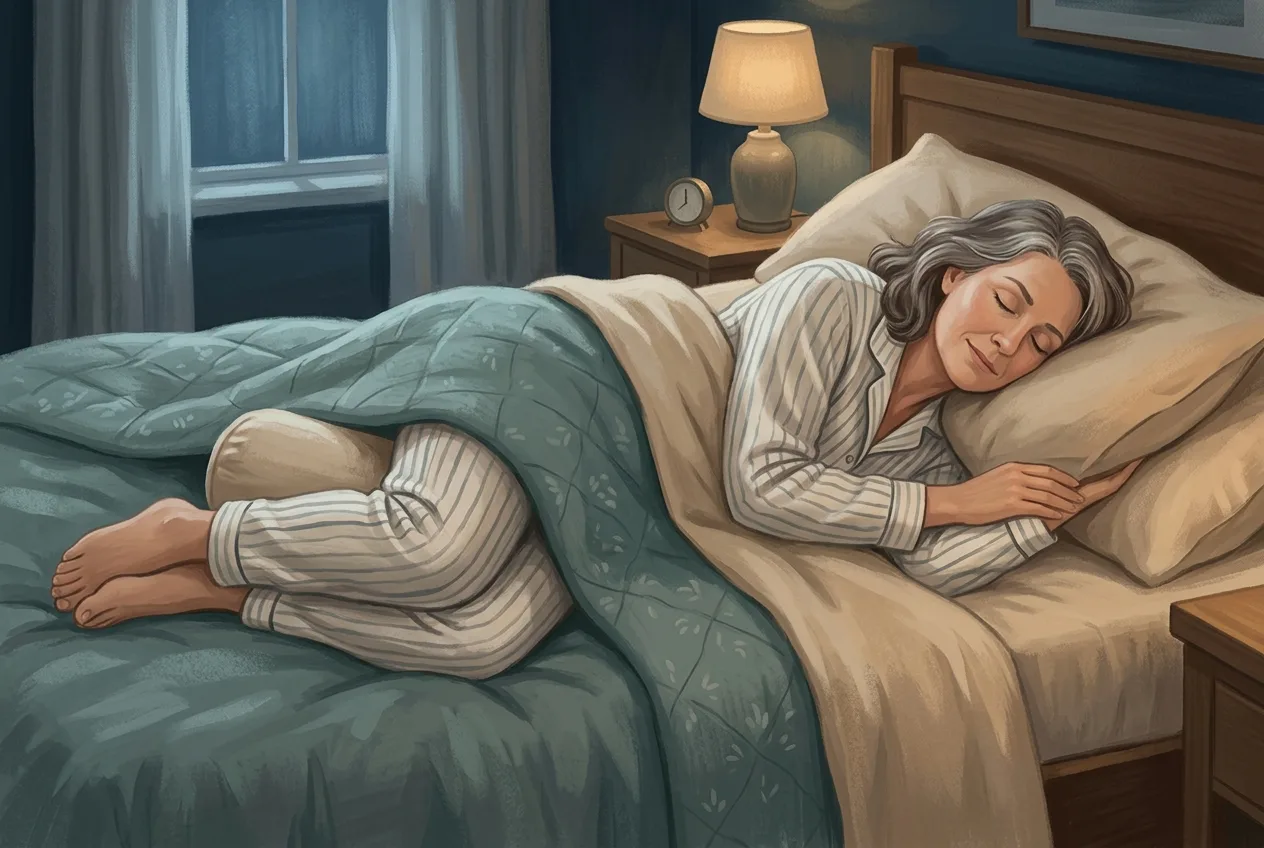
The sciatica sleeping position most people land on: side lying
Ask a room full of people with a cranky sciatic leg how they sleep and most of them will say on their side. What makes it work is the pillow, and specifically a firm one that fills the whole distance from knee to ankle. Leave that gap empty and the upper leg slides forward and down, hauling the pelvis into a slow twist your low back then has to hold against until morning. Fill it, and the two hip joints stay stacked, the pelvis stays square, and the nerve gets a wider, quieter path to sit in.
Most people find it easier with the sore leg uppermost, so it is not pressed into the mattress, though this is genuinely individual. Give each side two or three nights before you judge. A head pillow thick enough to keep your neck level with the rest of your spine finishes the setup, and if your mattress lets your waist sag, a small folded towel tucked under it evens things out.
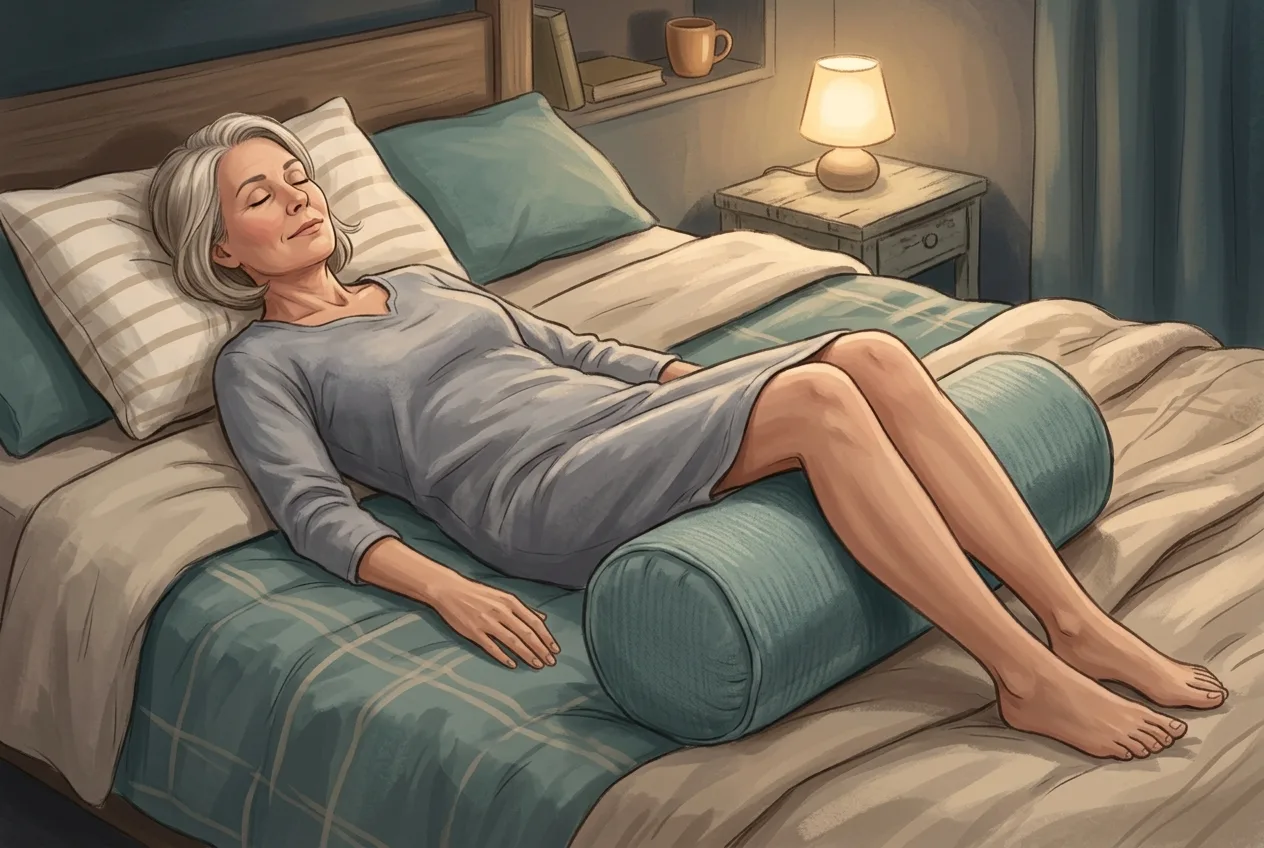
Back lying with the knees held up
If your side will not have you, lie face up and put something substantial under your knees: two pillows, a rolled duvet, a bolster. Stretched out flat with the legs long, the lumbar curve tends to lift away from the mattress, and that sustained arch is often what has the leg complaining by two in the morning. Bending the knees over a support lets the pelvis tip toward neutral and the low back settle down into the bed. Begin with roughly a fist and a half of height and adjust from there. Some people do best with the whole lower leg resting on a stack, hips and knees both softly bent, which is worth trying if the leg throbs whenever it is straight.
Why front lying tends to provoke a sciatic leg
Sleeping face down asks two awkward things of you at once. The low back is held in its deepest arch for hours, which narrows the spaces the nerve roots travel through, and the neck has to stay turned to one side so that you can breathe. For a lot of people with nerve-related leg pain, that pairing reliably produces a bad night. It is worth noting that this is not universal. A minority, often those whose symptoms ease with gentle backward bending during the day, sleep face down quite happily. If you are a lifelong front sleeper and cannot picture another way, a flat pillow under the hips and lower belly takes some of the arch out of the position, and keeping the head low rather than on a thick pillow reduces the turn in the neck.
Into bed and out of it without twisting
The sharpest catch of the whole night is often the bed itself, and it is nearly always a twist that causes it. Going in: sit on the edge about where your hip will finish up, then lower yourself onto your forearm and elbow while both legs lift together as one unit, so the whole of you pivots as a single piece. Coming out: run the same thing backwards. Bend the knees, roll all of you onto your side facing the edge, then let the lower legs travel off the mattress while you press up through the underneath elbow and the top hand. Legs going down and trunk coming up work as counterweights, so the low back barely has to lift anything. Sit for a moment before you stand. None of this wants speed.
When sciatica wakes you at 3am
Waking in the small hours with a hot line down the leg is its own particular misery, partly because you are too foggy to think and too sore to drop off again. A few things help more than lying there enduring it. Change your shape instead of holding still: roll to the other side, or come onto your back with the knees supported, so the nerve has a different geometry to occupy. Then give the leg something small and easy to do, a few slow ankle circles, or a knee sliding an inch or two along the sheet and back, always well inside comfort. Small movement often quiets a nerve more effectively than stillness, because it brings circulation back and lets your nervous system gather the impression that moving is not a threat. If twenty minutes go by and nothing shifts, get up, walk to the kitchen and back, and lie down again in a fresh arrangement. Our gentle sciatica exercises are the daytime version of the same idea, and running through them in the evening often makes the night that follows easier. If a tight piriformis is part of your picture, it is worth knowing which piriformis syndrome exercises to avoid, since a few of the usual stretches can stir the nerve rather than settle it.
Why the first steps in the morning are often the worst
Almost everyone with sciatica reports the same thing: the walk from the bed to the bathroom is the hardest walk of the day. There are a couple of reasons for it. Spinal discs take on fluid while you lie still overnight, so early in the morning they are fuller and the spine is a little taller and stiffer than it will be by lunchtime. On top of that, tissue that has not moved for seven hours is slow to get going, and a body that spent the night braced against pain wakes up still bracing. So treat the first few minutes kindly. Before you swing your legs out, spend a minute rolling your pelvis a fraction one way and the other, or drawing the knees up and letting them settle back. Stand slowly, keep the first steps short, and save any big forward bend until the leg has warmed. Mornings usually loosen on their own within ten or twenty minutes, and simply knowing that takes some of the fear out of them.
When the night needs a doctor, not a pillow
Everything here is comfort guidance rather than medical care, and it sits alongside whatever your doctor or physical therapist has already given you. Some signs need attention straight away, whatever the hour: new or worsening weakness in the leg, numbness in the saddle area, or any change in bladder or bowel control. Please seek urgent medical care for those rather than waiting for morning. It is also worth booking an appointment if pain is severe, if it wakes you most nights, if it has not begun to settle within a couple of weeks, or if night pain arrives with fever or weight loss you cannot explain. For ordinary sciatica that is gradually calming, supported positioning and easy movement within comfort are usually safe, and the Feldy program for lower back pain is built on exactly that unhurried approach. If you are weighing up which gentle class might suit a sensitive back by day, our comparison of whether is yoga or pilates better for back pain lays out where each one fits.
A gentler way through back pain
Now you understand why it braces. The Feldy program helps your back unlearn that guarding, through slow, attentive Feldenkrais® lessons you follow at home. Gentle, guided, and self-paced.
Start my free 7-day trialNo credit card needed.
Common Questions about sciatica sleeping position relief (FAQ)
What is the best sleeping position for sciatica?
Side lying with a firm pillow filling the space between the knees suits most people, because it keeps the two hip joints stacked and stops the pelvis twisting overnight. Back lying with the knees propped on pillows is the other reliable option, since it lets the low back rest down instead of arching. There is no single right answer, so try both across a few nights and let the leg decide.
Should I sleep on the painful side or the other side?
Most people are more comfortable with the sore leg uppermost, so it is not being pressed into the mattress, but this is genuinely individual and plenty of people prefer the opposite. Give each side two or three nights rather than judging from one. Whichever side you choose, the pillow between the knees matters more than which way you face.
Is sleeping on your front bad for sciatica?
Face-down sleeping tends to provoke a sciatic leg, because it holds the low back in its deepest arch for hours while the neck stays rotated to one side. It is not forbidden, and a minority of people sleep that way with no trouble at all. If you are a lifelong front sleeper, a flat pillow under the hips and lower belly takes some of the arch out of the position.
What should I do when sciatica wakes me up at 3am?
Change your shape rather than lying still and arguing with it: roll to the other side, or come onto your back with the knees supported, so the nerve sits in a different geometry. Then give the leg something small to do, a few slow ankle circles or a knee sliding an inch along the bed. If twenty minutes pass with no change, get up, walk a little, and lie back down in a fresh position.
How long until a better sleeping position brings relief?
Many people notice the leg quieting within that same night, once the pelvis is properly propped and nothing is dragging on the nerve any more. A steadier improvement in sleep usually builds over one to three weeks. This is different from stretching, which asks a tissue to go somewhere new: positioning simply removes a pull that was there for hours, so it tends to help sooner and asks nothing of you.
When should I see a doctor about sciatica at night?
Seek urgent care for new or growing weakness in the leg, numbness in the saddle area, or any loss of bladder or bowel control, at any hour. Book a doctor or physical therapist if the pain is severe, if it wakes you most nights, if it has not begun settling within a couple of weeks, or if night pain comes with fever or unexplained weight loss.
A gentler way through back pain
See the programRelated resources
Best Resting Position for Sciatica: Easing the Nerve
The best resting position for sciatica keeps the spine neutral and takes pressure off the nerve, with supported back-lying and side-lying setups plus tiny gentle movements between rests.
How to Lie Down With Lower Back Pain: Easier Positions
How to lie down with lower back pain using supported, neutral positions, plus how to get onto a bed or floor and back up by rolling rather than twisting.
The exercise that made people feel best was not the one that calmed the inflammation

Ready to start moving better?
Gentle, guided lessons for your body. Try your first one free, no credit card required.