
How to Release Tension in Upper Back: Gentle Ways
Learn how to release tension in upper back muscles by easing effort, breathing into your back ribs and moving in small, slow ways.
In short
To release tension in upper back muscles, ease the effort that keeps them working. Breathe into your back ribs, slide your shoulder blades in small slow movements, and turn gently through your ribs. Changing position often and adding warmth also help. Small, slow movement usually feels better than pressing hard.

Prefer to ease in gently?
See a few gentle exercises for neck and upper back to try.
Wondering how to release tension in upper back muscles, the ones between and around your shoulder blades? The most useful answer is often to ease the effort that keeps them working. Small, slow movements and easy breathing help many people more than pressing hard. This guide draws on ideas from the Feldenkrais Method® and from everyday practice, to give you a few simple things to try.
Back and neck complaints are common. The World Health Organization estimates that 222 million people worldwide live with neck pain (WHO, 2022). Upper back tension is a close neighbour, and the two often travel together.
Why the upper back holds on
Think about a normal day. You sit for hours, look at a screen, reach forward and maybe hold your breath when you concentrate. Your shoulders drift up, your head leans ahead of your body, and the muscles across your upper back stay quietly busy.
Over time, the ribs and upper spine tend to move less. Less movement can feel like more tightness. Stress adds to it, because many of us brace our shoulders when we feel pressure and never notice we are doing it.
If you want the longer story about causes, read why is my upper back so tight. This page is about what you can try.
Why small and slow often works better than pressing hard
When a muscle feels tight, the natural reflex is to push into it or pull on it. That can feel good for a moment. Yet a body that is already guarding may simply guard more.
Small, slow movement gives you time to notice. You can feel where you hold, and you can try a lighter way of doing the same thing. Many people find that the area softens as their attention arrives, with no force at all. You learn by noticing, not by pushing.
How to release tension in upper back: three things to try
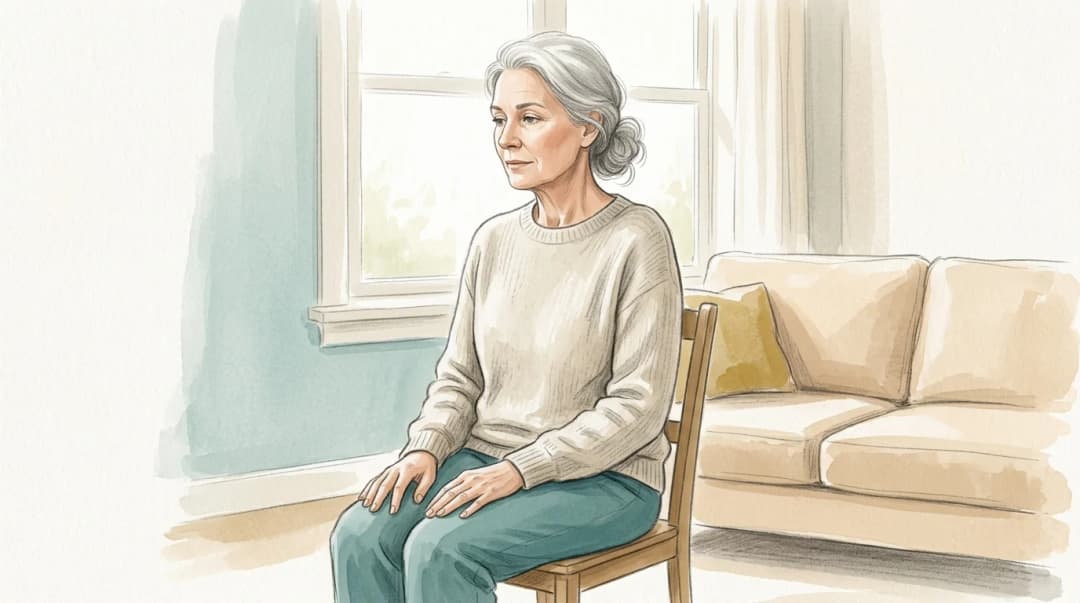
Sit on a chair with your feet on the floor. Let your back be supported if that feels comfortable. Move slowly, stay well within ease and rest between each one.
Breathe into your back ribs. Place one hand on your side ribs, near the back. Breathe in through your nose and notice whether the ribs widen under your hand. You do not need to breathe deeply. Just let the breath be quiet and let the back of the ribs join in. Do this for a minute.
Slide your shoulder blades a little. Rest your hands on your thighs. Let one shoulder blade glide a small way toward your spine, then let it glide back. Make it so small it is almost invisible. Try the other side. Notice which side moves more easily, and do not try to change it.
Turn gently through your ribs. Cross your arms loosely over your chest. Turn a short way to the right, letting your eyes lead and your ribs follow. Come back to the middle and rest. Turn to the left. Notice whether your breath keeps flowing as you turn. Stay small and comfortable.
For a longer, guided version that follows the same spirit, try Feldenkrais for neck tension.
Everyday ways to ease upper back tension
Movement is only part of it. These small habits add up.
- Change position often. Stand up, walk to the window or shift how you sit every half hour or so.
- Add warmth. A warm shower or a warm pack on the upper back can invite the area to soften.
- Catch the hold. A few times a day, ask yourself: are my shoulders up? Is my jaw tight? Am I holding my breath? Just noticing is a good start.
- Let your arms be supported. When you sit, rest your forearms on a desk or armrests so your shoulders do not carry their weight.
If your neck feels tight too, our guide to how to release tension in neck and shoulders covers that area. The Feldypedia article on neck and shoulder tension explains why these areas so often hold on together. If you want company on the way, the Feldy program offers short guided lessons built around this kind of slow, curious movement.
When to get it checked
Tension from sitting and stress is common and usually harmless. Some signs need a professional. See a doctor right away for chest pain, or upper back pain with shortness of breath. Also get checked for numbness or weakness in your arms, pain after a fall or injury, fever, or pain at night that does not ease when you change position. Gentle movement is a comfort tool. It does not replace an assessment.
Find where to start
Not every body likes the same approach. Some people enjoy a guided lesson, others prefer a slow walk or a different practice. If you are curious which style may suit you, a quick quiz can point the way.
Not sure which movement method fits you? Take the 60-second Movement Match quiz, three questions to point you toward a method that suits your upper back and your week.
A softer neck, a freer upper back
Now for the part that changes it. The Feldy program meets a held neck with slow, listening Feldenkrais® movement rather than force, at home on your own time. Gentle, guided, and self-paced.
Start my free 7-day trialNo credit card needed.
Common Questions about releasing upper back tension (FAQ)
Is it safe to try these gentle upper back movements?
For most people, small slow movements that stay comfortable are safe. Keep everything well within ease, and stop if you feel sharp pain, pins and needles or dizziness. If you have a known spine condition, a recent injury or you are unsure, check with your doctor or physical therapist first.
How often should I do them?
A few short visits across the day usually help more than one long session. Try one or two minutes every couple of hours while you sit, plus a calmer five minutes once a day. Keep each visit light, and finish while it still feels good.
How long until I notice a difference?
Many people notice a little more ease in the first session, mostly in how the shoulders sit and how freely they breathe. Longer standing habits tend to change over days and weeks of regular, gentle practice. Results vary from person to person, and nothing here is guaranteed.
How is this different from massage?
Massage is something done to you, and many people enjoy it. This approach is something you do yourself: you notice where you hold and try easier ways of moving. The two can sit side by side. Many people find that learning to notice their own holding helps ease last longer between sessions.
What should I avoid when my upper back feels tense?
Avoid forcing, jerking or cracking your back, and avoid pressing hard on sore spots until they bruise. Skip any movement that brings sharp pain, numbness or tingling. Also avoid staying in one position for hours. Gentle changes and short breaks tend to work better than hard effort.
When should I see a professional about upper back tension?
Seek care promptly for chest pain, or for upper back pain with shortness of breath. Also seek care for numbness or weakness in your arms, pain after a fall or injury, fever, or pain that wakes you at night or keeps getting worse. Tension that does not ease after a few weeks is also worth a check.
Can stress and held breath cause upper back tension?
They can play a part. When you feel under pressure, many people tighten the shoulders and hold their breath without noticing. The muscles between and around the shoulder blades then stay busy for hours. Noticing this pattern is often the first step toward easing it.
A softer neck, a freer upper back
See the programRelated resources
Exercises for Upper Back Ease: Small, Slow, and Gentle
Exercises for upper back stiffness that stay small, slow, and below pain, so the space between your shoulder blades can feel lighter through the day.
Lower Trapezius Exercises: A Gentle Shoulder Blade Lesson
Lower trapezius exercises usually mean gym drills. This slow, small lesson lets you notice your shoulder blades sliding down your back, with rests in between.
With neck pain, the shoulder blade shift you make yourself may outlast one done for you
Ready to start moving better?
Gentle, guided lessons for your body. Try your first one free, no credit card required.