
Neck Muscles Twitching: Common Causes and When to Worry
A small flutter in the neck is usually harmless and often tied to stress, tiredness or long hours at a screen. Here is what it is and when to ask a doctor.
In short
Neck muscles twitching is usually a harmless flutter, where a few muscle fibres fire on their own. Stress, poor sleep, caffeine, hard exercise and long hours with the head forward are common triggers. See a doctor if it comes with weakness, muscle loss, trouble swallowing or speaking, or numbness.

Prefer to ease in gently?
See a few gentle exercises for neck and upper back to try.
Before you begin. See a doctor promptly if twitching comes with weakness, muscle loss, difficulty swallowing or speaking, or numbness, or if it spreads to more than one place or lasts more than two weeks. This page is general education and does not replace medical advice.
Neck muscles twitching can be unsettling, especially when it happens again and again. The good news is that a small flutter in the neck is very common, and it is usually harmless. This page explains what a twitch is, what tends to set it off, the signs that need a doctor, and what many people find helpful.
What a twitch in your neck muscles is
Your muscles are made of thousands of thin fibres. Each group of fibres is wired to a single nerve cell. Sometimes that nerve fires by itself, and the small group of fibres it controls flickers. Doctors call this a fasciculation. It is a tiny flutter under the skin, like a pulse that is not your pulse.
Most twitches are too small to move your head. You may only see a faint ripple or feel a soft tapping. They usually last a few seconds, then stop, and they may come back to the same spot later in the day.
Neck twitching is not the same as a spasm. A spasm is a strong tightening of a whole muscle. A twitch is much smaller. The two can happen in the same week, and both are often linked to held tension.
Common triggers for neck muscles twitching
Most twitches have an everyday cause. The NHS notes that twitches are common and very rarely a sign of anything serious, and that they are often linked to stress, tiredness, caffeine, alcohol or some medicines (NHS, 2023). Here are the usual suspects for the neck:
- Stress and anxiety. A worried body holds the neck and jaw tightly, and tired muscles flicker.
- Tiredness and poor sleep. Nerves and muscles are touchier when you are short of rest.
- Caffeine and alcohol. Coffee, strong tea and energy drinks can make nerves fire more easily, and alcohol can play a part too.
- Some medicines. If a twitch started with a new medicine, check the leaflet and ask your doctor or pharmacist.
- Hard exercise. A tough workout can leave neck and shoulder muscles tired and twitchy for a day or two.
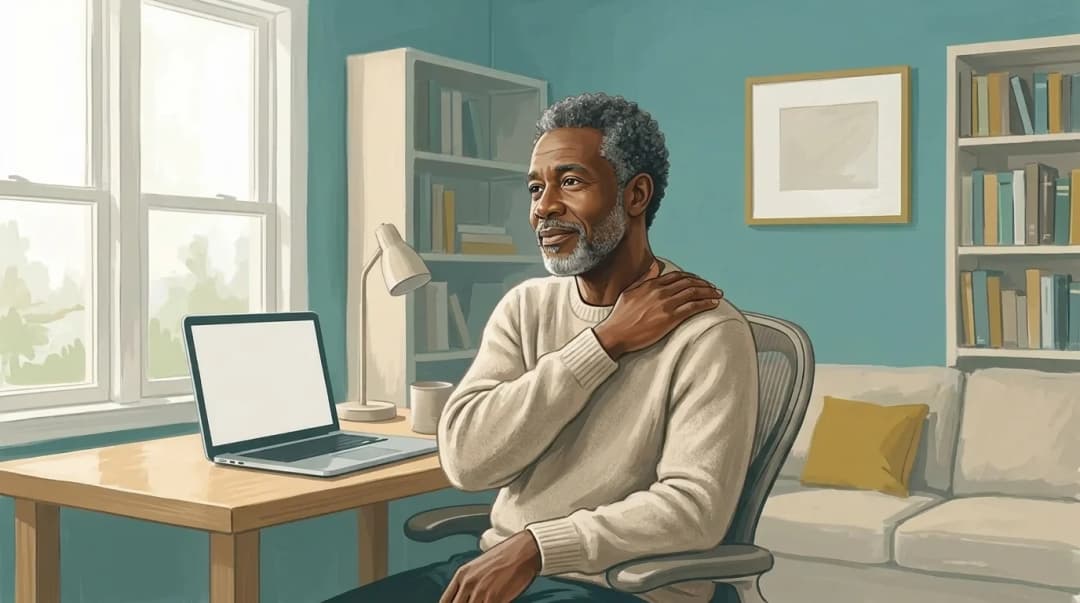
- Long hours with your head forward. Your head is heavy. When it sits ahead of your body at a screen, the neck muscles work steadily to hold it up. Muscles that work for hours often start to flutter.
It helps to know that benign twitches are common and usually come and go. They can be annoying, and they are very rarely a sign of a health problem.
When twitching in the neck needs a doctor
Twitching on its own, without other changes, is very rarely a sign of a serious nerve condition. The picture changes when twitching comes with other signs. See a doctor promptly if you notice:
- Twitching together with weakness, such as trouble lifting your arm or holding up your head
- Muscles that look smaller or thinner than before
- Trouble swallowing or speaking
- Numbness that spreads, or a muscle that feels stiff
- Twitching in more than one place, or twitching that keeps growing or spreading
- Twitching that lasts more than two weeks
It is also sensible to check in if the twitching follows an injury, or if worry about it is taking over your days. A doctor can examine you, and that often settles the question.
What tends to help with neck muscles twitching
If your doctor has seen nothing worrying, these simple steps are where most people start:
- Sleep. Regular, unhurried sleep is often the biggest single change.
- Less caffeine. Try cutting back for a week and see what you notice.
- Easing held neck tension. Change position often. Look away from the screen, roll your shoulders gently, and let your head balance easily over your shoulders.
- Slow, attentive movement. Small, easy movements done with curiosity can calm a busy neck.
- Breath. A longer, softer out breath tells the whole body it can let go a little.
For more on the everyday tightness behind many twitches, read our Feldypedia article on neck and shoulder tension. If stress is in the picture, our page on muscle twitching from anxiety goes further, and the guide to tight tendons in the neck covers a related feeling.
How awareness can help with neck muscles twitching
The Feldenkrais Method® is a gentle way of learning through movement. It does not treat twitching, and nobody can promise it will stop one. What it offers is a way to notice habits of holding that you may not know you have.
Many of us keep the neck slightly braced all day without knowing it. We lift the chin toward a screen, tighten the jaw, and hold the breath while we read. In Awareness Through Movement® lessons, you move slowly and notice the effort you use. Many people find the neck begins to soften once they can feel what it is doing.
Feldenkrais® teachers often say that you cannot let go of what you do not feel. So the first step is simply to sense. The lesson Feldenkrais® for neck tension is a good place to begin, and it sits alongside any care from your doctor. If you want to try this kind of guided, eyes closed practice at home, Feldy's free 7 day trial is one way to start.
One thing to notice
The next time you feel a twitch, pause. Ask yourself one question: where is my head balanced right now? Is it sitting over your shoulders, or has it drifted forward toward the screen or the page? Is your chin lifted, or your jaw set? You do not need to change anything. Just notice. That small bit of attention is where learning begins.
A softer neck, a freer upper back
Now for the part that changes it. The Feldy program meets a held neck with slow, listening Feldenkrais® movement rather than force, at home on your own time. Gentle, guided, and self-paced.
Start my free 7-day trialNo credit card needed.
Common Questions about neck muscles twitching (FAQ)
Is it safe to ignore neck muscles twitching?
Often yes, when it is a small flutter that comes and goes and nothing else has changed. Notice how it behaves over a week or two. If it lasts more than two weeks, shows up in more than one place, or arrives with weakness, stiffness, muscle loss, numbness, or trouble swallowing or speaking, do not wait. A short check with a doctor gives peace of mind either way.
How often is neck twitching normal?
Many healthy people feel an odd twitch now and then, and some feel it often during a stressful or tired week. A few twitches a day that fade when life calms down are common. Twitching that lasts more than two weeks, or keeps getting stronger, is worth mentioning to a doctor.
How long until neck muscle twitching goes away?
Many twitches fade within days once sleep improves, caffeine drops or a busy spell passes. Some linger a little longer and then settle. There is no fixed timetable. If it lasts more than two weeks, or you are worried, ask a doctor.
Is neck twitching different from a muscle spasm?
Yes. A twitch is a tiny flicker in a small part of a muscle, often too small to move the neck. A spasm is a stronger, longer tightening of the whole muscle that can hurt and limit movement. They can happen together, and both are often linked to held tension.
When should I see a doctor about twitching in my neck?
Go promptly if twitching comes with weakness, muscle wasting, trouble swallowing or speaking, spreading numbness, or if it keeps growing. Also go if it lasts more than two weeks, shows up in more than one place, or follows an injury. A twitch on its own, without these signs, is rarely a sign of a serious condition.
Can anxiety cause twitching in the neck?
Yes, it is one of the most common triggers. A tense, alert body holds the neck and jaw tightly, and tired muscles can flicker. Noticing the tension and giving it time to ease often helps. Our page on muscle twitching from anxiety goes deeper on this link.
A softer neck, a freer upper back
See the programRelated resources
Feldenkrais® for Neck Tension: Gentle Lessons That Help
Feldenkrais for neck tension uses slow, attentive movement to ease the holding patterns behind a stiff neck. Here is how it works, plus a short lesson to try.
Muscle Twitching From Anxiety: Why It Happens and What Helps
A flicker in the calf, the eyelid, the thumb. Why a worried nervous system twitches, how checking keeps the loop running, and gentle ways to settle it.
Sore neck and shoulders at work? The desk setup mattered less than people assume
Ready to start moving better?
Gentle, guided lessons for your body. Try your first one free, no credit card required.