

The 4 7 8 Breathing Method: How It Works, and When It Helps
The 4 7 8 breathing method is a counted pattern with a long exhale. Here is how to do it, what it can realistically offer, and what to do if counting makes things worse.
In short
The 4 7 8 breathing method means breathing in through your nose for a count of four, holding for seven, then letting the air out through your mouth for eight. Four rounds is the usual dose. The long exhale is the part that tends to settle a busy body. Shorten the counts if seven feels like a strain.

Prefer to ease in gently?
See a few gentle exercises for stress and sleep to try.
Before you begin. This pattern includes holding the breath, which does not suit everyone. Skip the hold, or the whole practice, if you are pregnant, have asthma or another lung condition, a heart condition, low blood pressure, or a history of panic attacks, and check with your doctor first. Never practise it standing, driving, or in water. Counting the breath makes some people more anxious, not less, and stopping is a perfectly good decision. This page is not treatment for insomnia or anxiety.
The 4 7 8 breathing method is a counted breathing pattern: in through the nose for four, hold for seven, out through the mouth for eight. Four rounds is the usual suggestion, and it was popularised by the physician Andrew Weil as a way to settle before sleep. The appeal is its simplicity. You need nothing, and it takes under two minutes.
It is worth naming why so many people go looking for it. Anxiety is widespread. Across a year, an anxiety disorder affected 19.1 percent of US adults, and women more often than men (NIMH). Plenty of us arrive in bed with a nervous system still running the day.
How to do it, gently
Let the air out first, so you are not starting full. Then:
- In through your nose, quietly, counting to four
- Keep the air in for a count of seven
- Out through your mouth for a count of eight, lips slightly parted
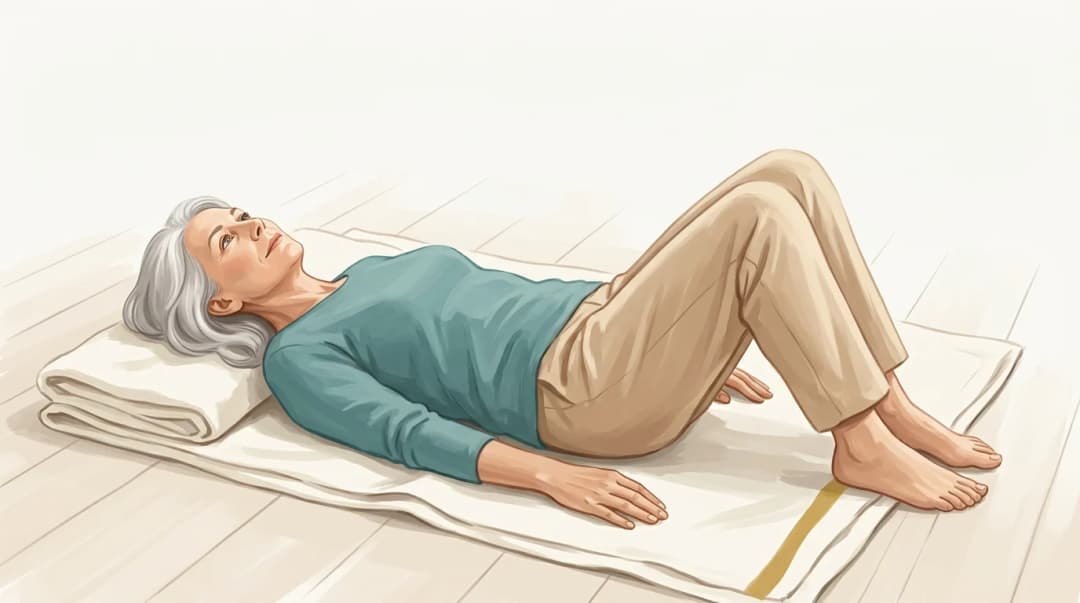
That is one round. Do four. Sit or lie down while you learn it.
Two adjustments most articles leave out. First, you choose the speed of the count. If a slow seven has you gasping into the eight, count faster, or halve everything to two, three and four. The shape matters, the numbers do not. Second, if the hold makes you uneasy, drop it and simply make the out breath longer than the in breath. You keep almost all of the benefit.
What it can and cannot do
The honest position: there is very little research on this specific count. What has been studied more broadly is slow breathing with an extended exhale, which does reliably slow the heart a little and is associated with feeling calmer. The 4 7 8 pattern is one tidy way of doing that, not a uniquely powerful one.
It will not switch off a racing mind on demand, and it is not a treatment for insomnia or anxiety. Where it earns its place is as a small, portable way of changing gear, and as something to do that is kinder than lying there checking the clock. Our guide on how to relax your mind to sleep covers the wider bedtime picture, and Feldypedia on sleep disruption and physical tension looks at the body side of a wakeful night.
If you want an even breathed alternative, our box breathing for sleep lesson uses matched counts instead.
When counting is the wrong tool
Some people focus on the breath and immediately feel short of air. That reaction is real and reasonably common, and pushing through it is not clever. If a count turns your attention into surveillance, the practice is working against you.
There is also a structural reason breathing exercises can feel like hard work. If your ribs barely move, because your shoulders are up, your belly is held, and your back has been braced all day, then a big count asks for air from a cage that is not free to expand. Our guide on shallow breathing goes into that.
The other route in: move, then breathe
Rather than instructing the breath, you can free up what surrounds it. The Feldenkrais Method® does exactly that. You lie down and move the ribs, spine, and pelvis in small, slow ranges while noticing what the breath does on its own. Nobody counts anything. For people who find breath exercises fiddly or faintly alarming, this often lands better, because attention rests on movement while the breathing quietly reorganises itself.
Feldy takes that approach into a short daily practice: voice guided audio lessons you follow lying down, including a bedtime ritual. Our somatic exercises for sleep is the simplest way to try it, and the stress and sleep program page shows how the evening lessons are built.
Find where to start
Counted breathing suits some people beautifully and irritates others. It is worth finding out which you are before committing your evenings to it.
Not sure whether counting or moving suits you better? Take the 60 second Movement Match quiz: three questions, then one movement method matched to your evenings.
A calmer body, easier nights
Understanding it is calming, moving with it more so. The Feldy program is meditation in movement, slow Feldenkrais® lessons that help a busy body settle so sleep can arrive on its own. Gentle, guided, and self-paced.
Start my free 7-day trialNo credit card needed.
Common Questions about the 4 7 8 breathing method (FAQ)
How do you do the 4 7 8 breathing method?
Sit or lie comfortably and let the air out first. Breathe in quietly through your nose while you count to four. Keep the air in for a count of seven. Then release it through your mouth for a count of eight, lips slightly parted, without forcing. That is one round, and four rounds is the usual suggestion. Count at whatever speed keeps the whole thing comfortable.
Is the 4 7 8 breathing method safe?
For most healthy adults, sitting or lying down, yes. The hold is the part to respect. Skip it if you are pregnant, have asthma, a lung or heart condition, low blood pressure, or panic attacks, and ask your doctor first. Never do it standing, driving, or anywhere near water. Stop if you feel dizzy, tingly, or breathless.
How often should I practise it?
Twice a day is the common suggestion, plus whenever you want to settle. Four rounds is enough, and many people build up slowly rather than starting there. If it becomes a nightly obligation you dread, that has stopped serving you.
How long until it helps me sleep?
Some people feel drowsier inside a few rounds on the first night. Others notice nothing for a week or two, and a few never take to it. Nothing here forces sleep, and treating it as a sleep switch tends to backfire, because trying hard to sleep is itself alerting. Give it a fortnight, then judge honestly.
What is the best breathing pattern for sleep?
The one with a long, easy exhale that you can do without counting effort. The 4 7 8 pattern qualifies, and so does simple even breathing, and so does a slow out breath with no count at all. If the seven count leaves you gasping into the eight, halve everything and keep the same shape.
What should I avoid when trying 4 7 8 breathing?
Avoid forcing a big inhale, avoid straining to reach the counts, and avoid the breath hold entirely if it makes you uneasy. Avoid practising it while standing or driving. Avoid using it as a test you can fail, since watching for results keeps you awake more reliably than anything else.
How is 4 7 8 different from box breathing?
Box breathing uses even counts, often four in, four held, four out, four held, which tends to feel steadying and alert. The 4 7 8 pattern is deliberately lopsided, with the exhale twice as long as the inhale, which suits settling down and bedtime better. Different shapes, different jobs.
What if counting the breath makes me more anxious?
Then stop counting, and it is a common enough reaction that it is worth naming. For some people, watching the breath closely brings a feeling of not getting enough air. Gentle movement with attention often lands better, because the attention has somewhere else to go while the breathing sorts itself out.
When should I speak to a professional?
If you cannot sleep most nights for more than a few weeks, if you wake gasping or your partner notices you stop breathing, or if daytime tiredness is affecting your driving or work. Also if anxiety is growing rather than easing. Breathing practices sit alongside medical care and never replace it.
Try it for a week or two without turning it into a project. If it helps, keep it. If it does not, there are gentler doors into the same room.
A calmer body, easier nights
See the programRelated resources
Box breathing for sleep: a gentler bedtime version
A calm bedtime lesson in box breathing for sleep: even in and out breaths, small optional pauses, and full permission to rest instead of chasing sleep.
Body Scan for Sleep: A Feldenkrais® Lesson to Do in Bed
A body scan for sleep from the Feldenkrais tradition: tiny movements give busy attention somewhere to land, done lying in bed with the lights off.
Lying down is not the same as resting, and researchers have now measured the difference
Ready to start moving better?
Gentle, guided lessons for your body. Try your first one free, no credit card required.