
How to Sleep With Piriformis Syndrome: A Gentle Guide
How to sleep with piriformis syndrome: side-lying with a pillow between the knees, or on your back with the knees supported, keeps the hip from twisting. Plus a gentle pre-sleep practice.
In short
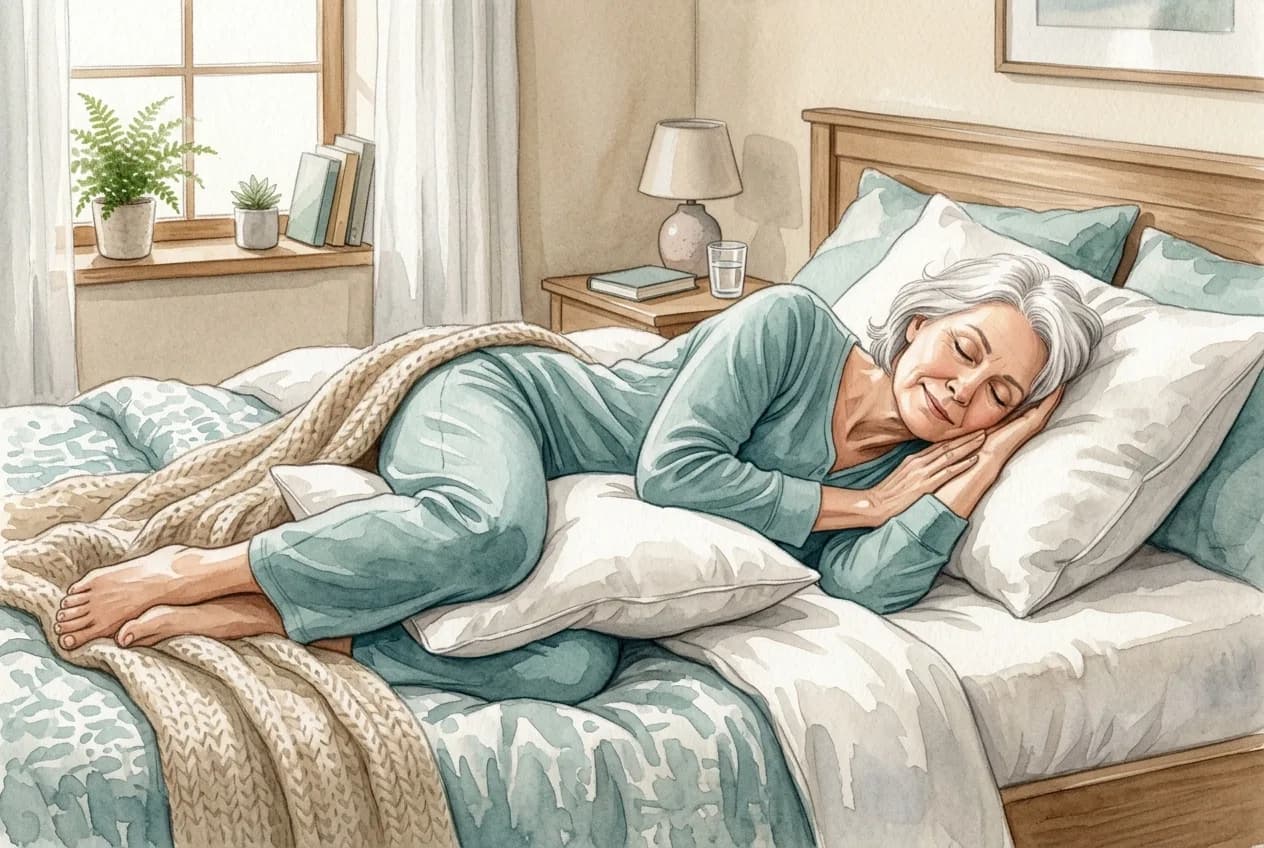
To sleep with piriformis syndrome, the most comfortable setups for most people keep the hip from twisting. Lie on your side with a pillow between your knees so the top leg does not drop and rotate the pelvis, or lie on your back with a pillow under your knees. It usually helps to avoid sleeping directly on the painful side and to avoid lying flat on your stomach. A few minutes of gentle, slow movement before bed can also settle the buttock and hip.

Prefer to ease in gently?
See a few gentle exercises for stress and sleep to try.
Before you begin. General information, not medical advice. Piriformis syndrome involves the sciatic nerve, so keep all movement small, slow, and well below any pain, and stop if symptoms travel further down the leg. See a doctor or physiotherapist for pain that is severe, spreading, or lasting, for numbness or weakness in the leg or foot, and urgently for any loss of bladder or bowel control or numbness around the groin, which needs immediate care.
If buttock and leg pain keep waking you, learning how to sleep with piriformis syndrome can make a real difference to your nights. Piriformis syndrome is irritation around a deep muscle in the buttock, the piriformis, which sits close to the sciatic nerve, so positions that twist or compress the hip tend to make the night harder. The good news is that small changes to how you lie, together with a few minutes of gentle movement, can help the area settle. The Feldenkrais Method® supports this not by stretching the muscle, but by inviting the buttock and hip to let go of the guarding they hold onto.
Pain around the lower back and hip is extremely common. Low back pain affects roughly 619 million people worldwide, and the figure is rising (WHO, 2023). Nerve related discomfort that travels into the buttock and leg, as piriformis irritation often does, is one of the patterns that most disrupts sleep, because lying still for hours gives the irritated area plenty of time to make itself known.
How to sleep with piriformis syndrome: positions that keep the hip neutral
The simple principle behind a comfortable night is keeping the hip from twisting. When you lie on your side without support, the top leg tends to drop forward, which rotates the pelvis and tugs on the deep buttock. A firm pillow between the knees holds the top leg level with the hip, so the pelvis stays neutral and the piriformis is left in peace. Many people find this the kindest setup. If side-lying is sore, lying on your back with a pillow under the knees takes the pull off the lower back and lets the hips rest in an easy, open position.
It also helps to notice what tends to aggravate the area. Sleeping directly on the painful side can press on the irritated tissue, so resting on the other side, or on your back, is often more comfortable. Lying flat on your stomach tends to flatten the lower back and turn the neck, which many people with piriformis irritation find harder on the hip. None of these are rules. They are starting points, and your own comfort is the better guide.
A gentle practice to try before sleep
What truly helps the area settle is slow, attentive movement that never reaches for a stretch. As you rock the pelvis through a tiny range, let the knees sway gently side to side, and rest the deep buttock heavy and quiet, the guarding around the piriformis can begin to release. This patient, awareness led way of working sits at the heart of how Feldy guides each lesson, helping the body discover ease without grasping for a stretch. For background, see the Feldypedia guide to the Feldenkrais Method and the article on sciatica and nerve related back pain. For the wider picture of how tension disrupts rest, see sleep disruption and physical tension.
How to explore this safely
Set up your bed so support is within reach: one pillow for between or under the knees, and a head pillow that keeps your neck level. Keep every movement small and slow, well below any pain, and rest often. Because piriformis irritation involves the sciatic nerve, stop if symptoms begin to travel further down the leg, and make the movements smaller before you make them bigger. If your pain is severe, spreading, or lasting, or if you notice numbness or weakness in the leg or foot, let a doctor or physiotherapist guide you. For daytime care of the area, see our gentle piriformis stretches, and for another sleep setup challenge, our guide to how to sleep with anterior pelvic tilt.
A calmer body, easier nights
Understanding it is calming, moving with it more so. The Feldy program is meditation in movement, slow Feldenkrais® lessons that help a busy body settle so sleep can arrive on its own. Gentle, guided, and self-paced.
Start my free 7-day trialNo credit card needed.
Common Questions about how to sleep with piriformis syndrome (FAQ)
What is the best sleeping position for piriformis syndrome?
Most people are most comfortable lying on their side with a firm pillow between the knees, which keeps the top leg from dropping and twisting the pelvis, or on their back with a pillow under the knees. The aim is a neutral, untwisted hip. Try both and let comfort guide you, since the kindest position varies from person to person.
Should I sleep on the side that hurts or the other side?
Many people find it eases things to avoid lying directly on the painful side, since that can press on the irritated area. Lying on the other side with a pillow between the knees is often more comfortable. If side-lying is sore either way, resting on your back with the knees supported is a gentle alternative.
Is it bad to sleep on my stomach with piriformis syndrome?
Stomach sleeping tends to flatten the lower back and turn the head to one side, which can add strain through the hips and spine. Many people with piriformis irritation find it less comfortable. If it is your habit, a thin pillow under the hips can reduce the arch, though side or back sleeping usually suits the area better.
How does gentle movement before bed help piriformis syndrome?
Slow, small movement can quiet the guarding that builds in the deep buttock through the day, so the area feels less gripped when you lie down. It is not a stretch and not a fix. It is a way to help the nervous system let go of effort it no longer needs, which often makes settling into a comfortable position easier.
Why does piriformis pain feel worse at night?
Staying in one position for hours lets pressure gather on a single spot in the buttock, and there are fewer daytime distractions to draw attention away from it. A hip that twists as the top leg drops forward adds a slow pull on the area. Supporting the knees so the pelvis stays level, and shifting position when you stir, usually softens this pattern.
How long until sleeping more comfortably helps?
Some people feel a more settled night quite soon after changing position and adding a calm pre-sleep practice. Easing piriformis irritation overall usually takes longer and depends on what is driving it. Gentle, regular movement and comfortable nights support each other, but lasting change is gradual.
When should I see a professional?
Book a visit with a doctor or physiotherapist when buttock or leg pain is severe, spreading, or lingering, or when you notice numbness or weakness in the leg or foot. Seek urgent care for any loss of bladder or bowel control, or numbness around the groin or inner thighs, since these can signal a serious problem that needs immediate attention.
A calmer body, easier nights
See the programRelated resources
Feldenkrais® for Sleep: What It Can Do
For nights when the body will not settle, here is where Feldenkrais lessons sit next to cognitive behavioural therapy for insomnia, yoga nidra, and sleep apps.
Worst Sleeping Position for Sciatica (and Kinder Options)
The worst sleeping position for sciatica is usually face down, but the answer depends on what is irritating the nerve. How to work out which is which.
The deep sleep number your tracker reports was not the one that matched how people felt
Ready to start moving better?
Gentle, guided lessons for your body. Try your first one free, no credit card required.