
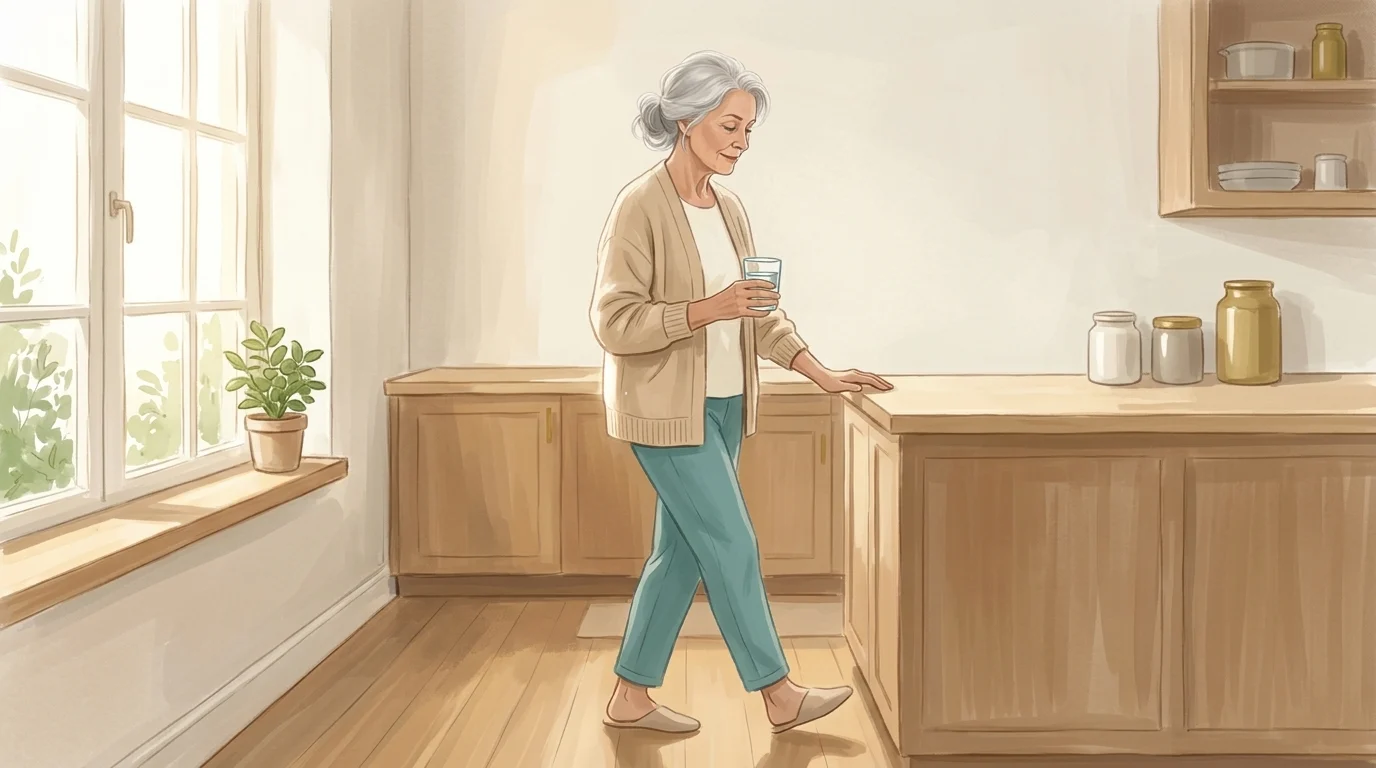
After 65, brain fog eased as much with slow, varied walking as with mental puzzles added
Walking sideways, backwards and in slow figure eights already asks plenty of attention, so a quieter walk may be enough to start with.
You walk into the kitchen and stop. Why did you come in here? A word you've used all your life hangs just out of reach, and the whole afternoon feels like reading through a smeared window.
When people describe this, the advice that tends to come back is to work the brain harder: do the crossword, learn a language, and on your daily walk, count backwards from a hundred in sevens. Doubling up has a logic to it. Life asks us to walk and think at the same time, so why not train both together?
A trial published on 20 October in BMJ Open put that idea to a fair test, and its result points somewhere quieter (Dansuk and Menek, 2026).
What the trial tested
Physiotherapists at Istanbul Medipol University Hospital recruited 90 adults aged 65 and over (the typical age was 68, and a little over half were women) who had lived with brain fog for at least a month: trouble concentrating, slower thinking, a sense of mental cloudiness. None had a diagnosis of dementia, and almost none exercised regularly.
Everyone came in three times a week for four weeks, twelve sessions in all, each about 35 minutes and supervised one to one. The effort was kept light, roughly the level at which you could still chat easily. The heart of each session was five slow walks of about five minutes each, and they weren't ordinary walks: heel to toe along a line, sideways, in a figure of eight, backwards, and carrying a cup of water.
Half the group did exactly that. The other half did the same walks while answering a stream of mental tasks from the physiotherapist: counting backwards, naming words that start with a given letter, reciting the months in reverse. That was the only difference between them.
Both groups got clearer
On the main thinking test, a 30 point screening tool used in memory clinics, scores rose from about 24 to 26.5 with walking alone and from about 25 to 26.6 with the puzzles added. Researchers generally treat a gain of one to two points on this test as meaningful. The puzzles made no measurable difference to it.
Mood followed a similar line. Depression scores fell in both groups, by similar amounts. Sleep and quality of life improved within the walking only group and shifted less in the puzzle group, though the gap between the two wasn't large enough to count.
Then there's brain fog itself, measured with a 30 question scale about how foggy people felt. It eased in both groups: by about 11 points with walking alone, and by about 7 with the puzzles. The authors are careful here, and so am I. The puzzle group started out foggier, and this was one of several secondary comparisons, so they call it a lead for future trials rather than a finding. Their own guess at why is worth hearing, though; for people whose main complaint is a tired, overloaded mind, a walk that piles on extra mental work may simply weigh more.
What it cannot tell us
Four weeks is short, and nobody was followed up afterwards. There was no group that didn't walk at all, so we can't say how much of the improvement came from the walking itself and how much from routine, from the attention of a physiotherapist three times a week, or from simply knowing the thinking test better the second time round. Most outcomes beyond that test were self reported, and everything happened in one hospital. As the authors note, dual task training may still help people with more pronounced memory problems, or over longer programmes.
What the trial does show is narrower and, to me, more interesting. The walking was already unusual and demanding in its own way, and adding a puzzle to it didn't add anything they could measure.
From the inside
Look at what the walking only group was actually doing. Nobody walks backwards on autopilot. Stepping heel to toe along a line, turning through a figure of eight, carrying a full cup without spilling it: each one asks you to sense where your weight is, where the next foot will land, how the turn begins in the ribs and the eyes before it reaches the feet. The attention is already busy, but it's busy inside the movement rather than pulled away from it.
That's close to how an Awareness Through Movement® lesson in the Feldenkrais Method® works. We slow a movement down, change its direction or its usual order, and let the unfamiliar version wake the attention up. The point isn't to make the brain work harder; it's to give attention something new to notice. Again and again, people tell me after a lesson that their head feels clearer. Quieter. More here.
A quieter walk
If your thinking has felt cloudy, nothing in this trial says puzzles are bad for you. It suggests you may not need to stack them on top, or turn every walk into a brain training session. A short walk where the walking itself is a little unfamiliar may already give your attention plenty to do: a few steps sideways along the kitchen counter with one hand resting on it, or a slow figure of eight around two chairs, and you only go where it feels easy, pleasant, and comfortable. If walking has become less steady or less even than it used to be, a practice like this sits alongside what your physiotherapist or doctor offers, not in place of it. And if brain fog is new, or getting worse, it deserves a conversation with your doctor in its own right.
Backwards, slowly, a cup of water in one hand. What might your attention notice that the counting would have drowned out?
Let Feldy guide you, eyes closed
A calm voice walks you through gentle moves so your attention stays in your body, not on the screen.
Try Feldy Free for 7 daysNo credit card needed.
Sources
Movement Pulse is informational, not medical advice. See our editorial policy.
Move better with Feldy
See the programMovement Pulse Weekly
The week's best research, in your inbox Tuesday.
Movement science, gentle-practice ideas, and a practitioner's read on what's new. Free.
More from Movement Pulse
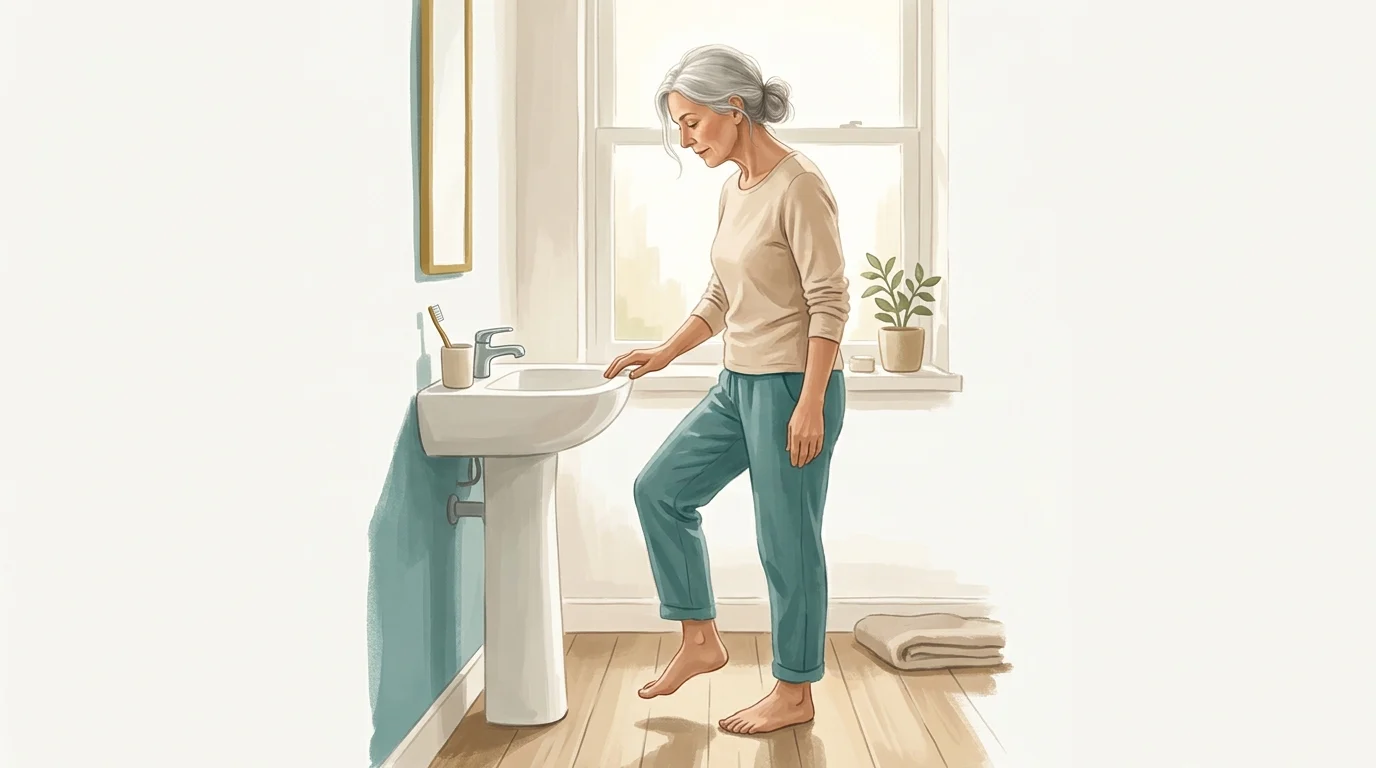
Why balance practice may work better at first when it is the only thing you are doing
In a small study from Türkiye, counting backward while learning a balance board slowed one part of the learning. A case for giving a new balance practice your whole attention first, and adding the rest of life later.
Oct 10, 2026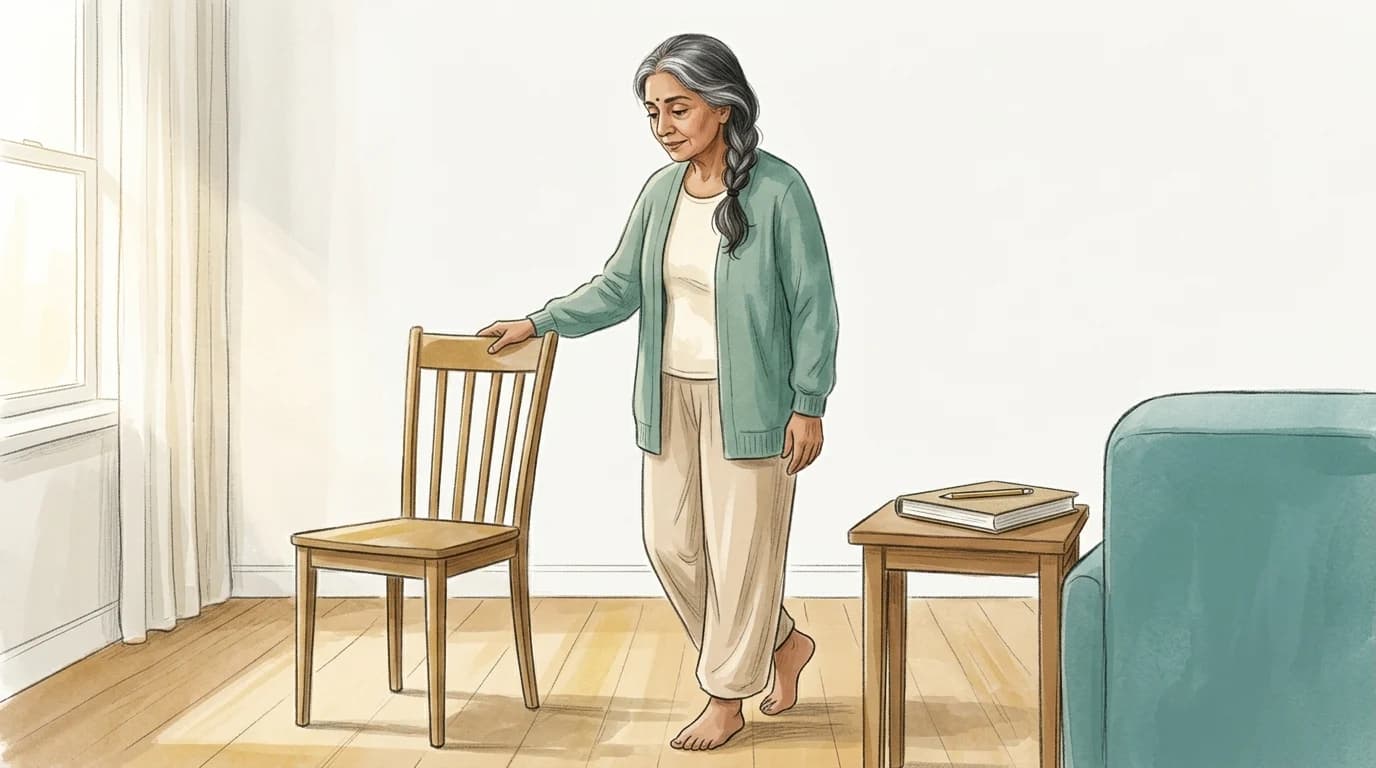
After 60, practising balance gave thinking a small lift, most clearly in mental speed
A review of 54 studies found that training to stay steady also nudged how quickly older adults think. A reason to give your balance practice your full attention.
Oct 16, 2026Ready to start moving better?
Gentle, guided lessons for your body. Try your first one free, no credit card required.