
What hypermobility counts miss in people over 55
Bendy joints when young are worth raising, even after they stiffen. US records showed most diagnoses going to younger women.
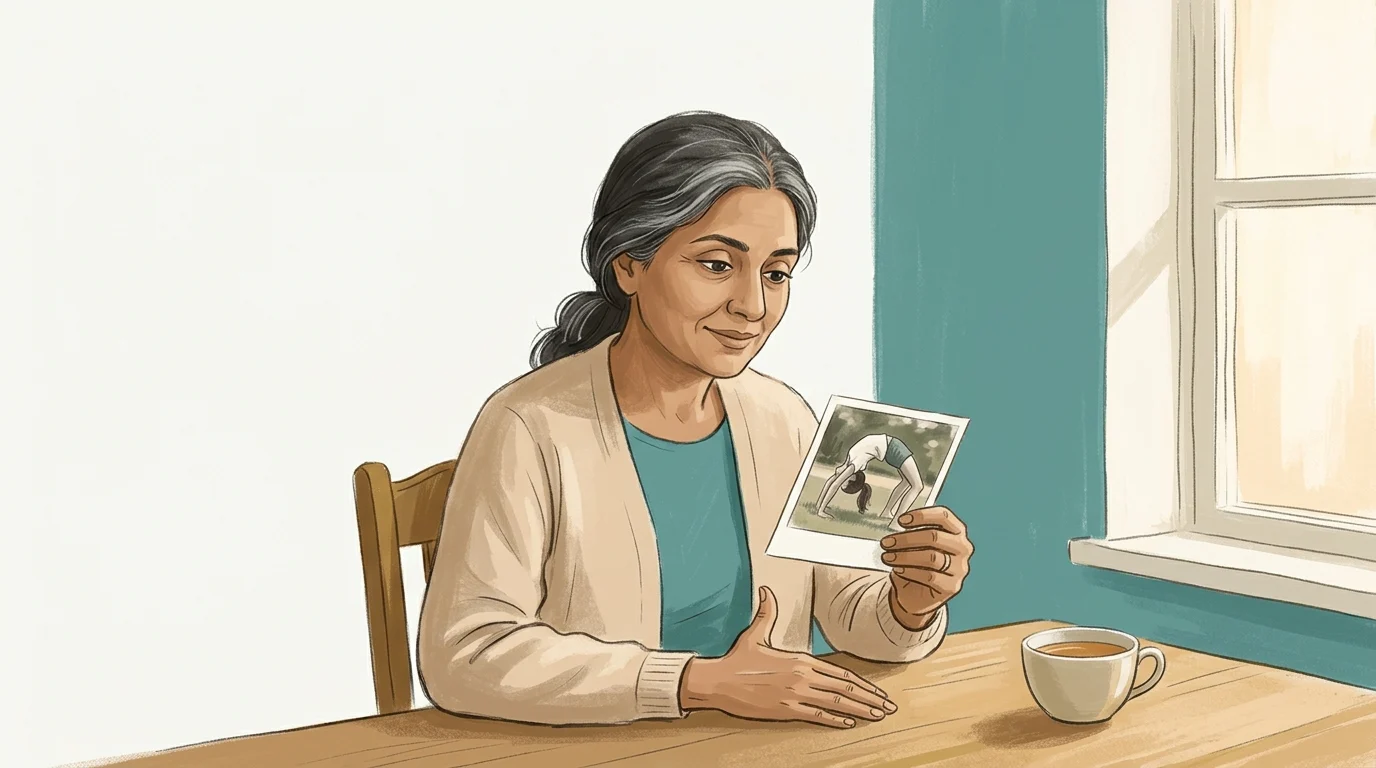
Perhaps you were always the flexible one. You could bend your thumb back to your wrist, sit with your legs folded out behind you, or put your palms flat on the floor without warming up.
Now your joints ache in more places than they used to, you feel tired in a way that sleep and rest don't seem to fix, and nobody has ever said the word hypermobility to you, perhaps because the bendiness that might have pointed to it has faded.
Two studies published this week touch on that. Hypermobile Ehlers-Danlos syndrome turns up in US health records more often than an older estimate suggested, but one large study found that most of the people with the diagnosis were younger women, and a second found too little research on people past 50 to say how common hypermobility is at that age. If your joints were very flexible when you were younger, that history is worth telling your GP, even if they've stiffened since.
More common than the old estimate
The larger study went through the health records of millions of patients at hospitals and clinics across the United States (PLOS Digital Health, 2026). It looked for hypermobile Ehlers-Danlos syndrome, the most common form of a group of inherited conditions. They affect connective tissue, the tissue that helps hold your joints, skin and blood vessels together. There's no genetic test for it; a clinician diagnoses it by examining you and asking about your history.
About 1 in 800 patients had the diagnosis, or a general Ehlers-Danlos code the authors counted with it. That's roughly four times an older published estimate.
Mostly under 55
Most of the people with the diagnosis were younger women. Fewer than one in seven were over 55. That's a share of those diagnosed, not a rate for your age group.
Part of that may be good news: the NHS says joint hypermobility syndrome often gets better as people get older (NHS). The authors also point out that bendy joints tend to stiffen with age or injury, which makes the condition harder to recognise over time. The study didn't look at why so few older people had the diagnosis, so this is one possible reading, not a finding. And if the flexibility fades but the aches or the tiredness don't, there are fewer clues left for you or your doctor to notice.
Past 50, barely studied
A second study, a review of research on how common hypermobility is, shows the same gap (Rheumatology International, 2026). For people aged 51 and older there wasn't enough research to give a reliable estimate. And only one study in the whole review looked at the syndromes themselves, rather than flexibility alone.
A possible link with long COVID
People with hypermobile Ehlers-Danlos had confirmed COVID in their records about as often as similar patients matched to them. But long COVID showed up in their records far more often: 4.0% against 1.4%.
The authors say that extra risk was concentrated in people who also had one or more of three other diagnoses: POTS, where your heart rate climbs and you may feel faint when you stand up; mast cell activation syndrome, where the immune system overreacts; or chronic fatigue syndrome. If you feel faint when you stand, or tiredness hasn't lifted weeks after an illness, tell your GP.
What the headline will miss
"More common than we thought" is true of the records. That's narrower than it sounds.
These are diagnosis codes, not examinations. Nobody went back to check whether each label was right, and the 1 in 800 includes a general Ehlers-Danlos code the authors counted as likely hypermobile; with the specific code alone, the count was about a third as large. The gap from older estimates may partly reflect growing awareness or the kind of patients in this database, and partly mislabelling: the authors say POTS and similar diagnoses can end up coded as Ehlers-Danlos.
The long COVID finding is a link in records, not proof that hypermobility causes it. Even after matching, people with hypermobile Ehlers-Danlos were less likely to have died, which the authors say may reflect differences in testing, in how closely people were followed, or in their health to begin with.
Both studies only counted. Neither tested a treatment or any movement approach, the Feldenkrais Method® included, and the records come from the United States, where most of those diagnosed were women, and most were white.
The better question
Studies like these ask how many people have it. As a Feldenkrais® practitioner, I'm more interested in another one: how do you know when a movement has gone far enough? Again and again, people with very flexible joints tell me "I used to be so flexible" as if they had lost a skill. What I notice instead is how faint the signal at the end of a movement can be, the quiet "that's far enough" that tells a joint to stop; when it's hard to feel, a joint may keep going past the point where it feels supported.
An Awareness Through Movement® lesson invites you to pay attention to that signal, with small, slow movements where you go only where it feels easy, pleasant and comfortable. The NHS puts it more plainly: don't overextend your joints just because you can. The Feldypedia entry on hypermobility and joint instability explains why sensing may matter more than stretching. This sits alongside what your GP or physiotherapist offers, not in place of it. If you are looking for a gentle way to practise, this page on a hypermobility workout app compares the options.
One thing to bring up
Before your next appointment, jot down what your body could do as a teenager, such as a thumb that folded to your wrist or double jointed fingers, and which joints sprained or slipped out of place. The NHS says to see a GP if you think you may have joint hypermobility syndrome.
Tell your clinician what your body could do at fifteen, not only what it does today.
Let Feldy guide you, eyes closed
A calm voice walks you through gentle moves so your attention stays in your body, not on the screen.
Try Feldy Free for 7 daysNo credit card needed.
Sources
- More common than we thought: Hypermobile Ehlers-Danlos Syndrome, comorbidity burden, and long COVID risk in a national cohort— PLOS Digital Health
- Prevalence of generalized joint hypermobility, hypermobility spectrum disorders and Ehlers-Danlos syndrome: systematic review and meta-analysis— Rheumatology International
- Joint hypermobility syndrome— NHS
Movement Pulse is informational, not medical advice. See our editorial policy.
Move better with Feldy
See the programMovement Pulse Weekly
The week's best research, in your inbox Tuesday.
Movement science, gentle-practice ideas, and a practitioner's read on what's new. Free.
More from Movement Pulse

When hypermobility hides behind a Chiari diagnosis
A July 2026 study of 354 patients found that when Chiari runs in families, three times as many people also have unusually flexible joints. Often, no one has named it.
Jul 22, 2026
Getting out of breath may be the hypermobility symptom that quietly shrinks your day
A Toronto clinic gave forty seven hypermobile adults questionnaires, a Fitbit and a long interview. The breathing complaint nobody asks about tracked almost everything else.
Sep 15, 2026
Nobody asked about your joints at the headache appointment, and that may matter
A narrative review published on 25 August says naming joint hypermobility widens the differential for headache. Three questions worth taking with you.
Aug 31, 2026Ready to start moving better?
Gentle, guided lessons for your body. Try your first one free, no credit card required.