
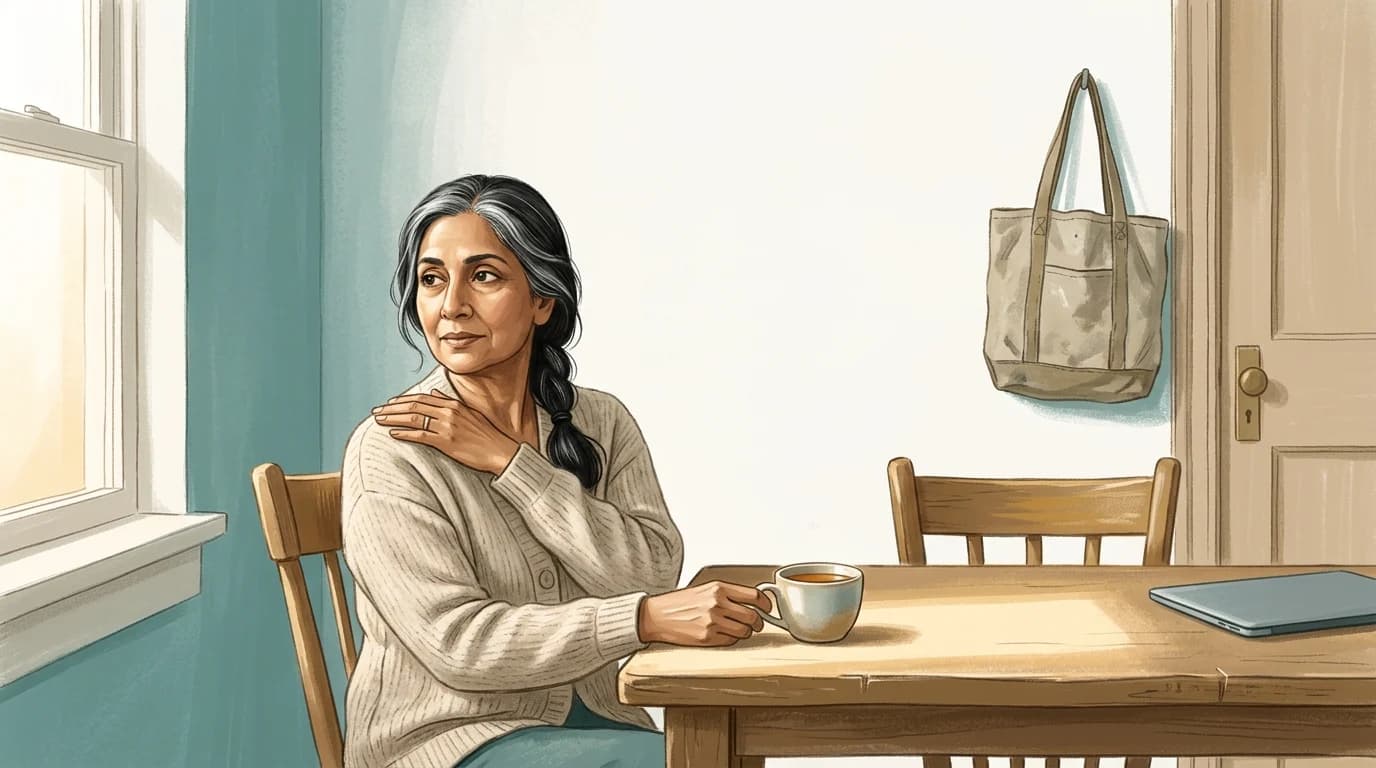
Pain climbed through working years for one in five women, then eased
Aches that build for years don't always keep climbing. In 42 years of Swedish surveys, the group in most pain peaked around retirement age.
If your back, shoulders or joints have hurt a little more with each decade, you've probably been told it's just age, and that the aches will only climb from here. In 42 years of Swedish surveys, that single rising line turned out to hide two. For the people in the most pain, it climbed through the working years and then eased after retirement age, and women were twice as likely as men to be in that group.
So a line that rises for years is not always one that keeps rising. For the group who hurt most, it didn't.
Two lines, not one
People from their teens to the very old answered the same few questions in repeated surveys, and the researchers pieced the lifetime curves together from all those answers. If you'd been one of them, you'd have been asked whether your joints, back or shoulders had hurt over the past year, and how badly.
Most stayed low for most of their lives. Their pain only rose past light pain after retirement age, and the authors think that late rise likely reflects the ordinary effects of getting older, such as illness and frailty.
The other group looked different. Their pain rose steadily through the working years. Then, after retirement age, it came down. That group made up 20% of the women and 9% of the men (Pain, 2026).
The average hid the group in most pain
Averaged across everyone, you get one line, and the picture most of us carry is that pain climbs with age. Only when the authors looked for separate courses did the group that hurt most come into view. If you've ever been told your pain is "just your age", this is worth knowing: for one woman in five, the years of most pain were the working years, not the late ones.
The authors suggest this group may be carrying the effect of working life adding up over the years. They didn't test which parts of work, if any, were behind it, and it's their interpretation, not something the study proved. Still, it raises a useful question, and it isn't about your age: what does your daily routine ask of your body?
What the headline will miss
This is survey data. People rated their own pain over the past year in a few broad steps, and nobody examined them. The study describes when pain rose and fell; it does not show that work caused the rise, or that retiring caused the easing. The group's pain came down on average, which says nothing certain about any one person in it. And these were Swedish working lives across four decades, some of them very different from work today.
New, sharp or changing pain is a reason to see your doctor or physiotherapist. It's better to have it checked than to wait and see whether it follows a pattern.
The habit underneath
The study didn't look at posture or habits; this part comes from my teaching. Decades of work teach the body a way of doing things: a way of sitting at a desk, of reaching across a counter, of bracing the shoulders against a long afternoon. None of that is a fault. Those patterns were useful, and the nervous system keeps what has worked. What I see again and again in my classes is that a habit like this doesn't retire on the same day you do; someone may have retired years ago and still sit as if there were a deadline to meet at three o'clock.
In the Feldenkrais Method®, a habit is where learning starts. You slow down enough to feel it, then look for another option that asks for less effort, and you only go where it feels easy, pleasant, and comfortable. An Awareness Through Movement® lesson works through the parts that already move well, which is a different route from fighting the sore spot, and one this study didn't test.
One thing to notice
The next time a familiar ache shows up, before you decide it is simply your age, notice what you were doing in the hour before. How were you sitting? What were your shoulders holding? Had you stayed in one position for a long time? You don't need to change anything yet; just notice.
Let Feldy guide you, eyes closed
A calm voice walks you through gentle moves so your attention stays in your body, not on the screen.
Try Feldy Free for 7 daysNo credit card needed.
Sources
Movement Pulse is informational, not medical advice. See our editorial policy.
Move better with Feldy
See the programMovement Pulse Weekly
The week's best research, in your inbox Tuesday.
Movement science, gentle-practice ideas, and a practitioner's read on what's new. Free.
More from Movement Pulse
With knee or back pain after 65, exercise may change how you walk more than how much
52 adults over 65 wore ankle sensors for twelve weeks. Their daily steps stayed flat while each ordinary step grew about an inch, a signal the authors call suggestive.
Oct 11, 2026
A live class or a recording? For chronic back pain, the format barely changed the outcome
A Montreal trial gave the same twelve week program over Zoom with an instructor, or as videos done alone. Pain eased about equally. It is the fourth study since June where the detail people argue about most turned out to matter least.
Oct 1, 2026
People chose between mindfulness and Tai Chi, and choosing did not make it work better
A trial of 587 adults let people pick their own gentle practice. Both helped sleep, fatigue and pain. The picking made no measurable difference.
Sep 17, 2026Ready to start moving better?
Gentle, guided lessons for your body. Try your first one free, no credit card required.