
Your balance got better, but did your sense of where your body is get better too
Fifty one randomised trials, 2,319 people. The gains showed up mostly in sway, strength and pain, and much less often in the position sense the training was named after.
Fifty one trials. Two thousand three hundred and nineteen people. And a fairly plain question that most of those trials never quite got round to answering.
The question is whether the exercises we hand people under the name proprioception training actually make them better at sensing where their own limbs are. A systematic review published in Sports Medicine on 5 September gathered every randomised controlled trial it could find that called its intervention proprioceptive or sensorimotor and reported at least one proprioceptive outcome (Sports Medicine, 2026). The author group includes Adam Meakins, a physiotherapist with a long habit of asking awkward questions about rehabilitation claims, and the awkward question here is a good one.
They split the outcomes into two kinds. Direct measures put the question to the body and score the answer: reproduce that elbow angle without looking, tell me the moment the machine begins to move your ankle, say which of these two positions is further along. Indirect measures test something next door and infer the rest: how much you sway on a foam pad, how strong the leg is, how much it hurts.
The improvements in those 51 trials landed mostly in the second group. Sway steadied. Strength rose. Pain eased. The direct measures, the ones that check whether a person's sense of their own joint position genuinely sharpened, shifted less often and by less.
That is not a scandal, and it does not mean anyone wasted their time. Nobody is harmed by standing on a foam pad, and steadier is steadier. What it means is narrower and more interesting: a field has been naming its exercises after a perceptual skill while quietly grading itself on something else.
What did move the direct measures
The review is not a shrug. It found conditions under which position sense did improve, and those conditions are specific. Practice that targeted the sensory question directly. Practice that worked at particular angles rather than through general ranges. Practice that was attentionally demanding, meaning the person could not drift off and let the repetitions happen without them. And practice whose content matched the thing being measured, so that if you wanted someone to get better at reproducing a knee angle, you had them work at reproducing knee angles rather than hoping it would arrive as a side effect of stronger quadriceps.
Where the regimens were mixed together, balance plus strengthening plus taping plus hands on work, the balance and the pain and the function tended to improve while the direct sensing measures did not follow with any consistency. The authors call the field conceptually diffuse and ask for a cleaner distinction between sensorimotor performance and proprioception, which is a technical way of saying that moving well and knowing where you are are not the same accomplishment, and that we have been letting one stand in for the other.
I find that distinction easy to recognise because I watch it fail every week. In a class in late February a retired carpenter, seventy three, could hold a standing balance longer than anyone else in the room and then, asked to say without looking whether his right foot was turned out more than his left, guessed wrong three times running. Strong ankle. Quiet map. Those two things live in different departments, and only one of them was ever tested at his knee replacement follow ups.
A position sense test you can do in a chair
About 6 minutes. Move slowly, do less than you can, and stay well below any pain. Rest whenever you need to.
- 1
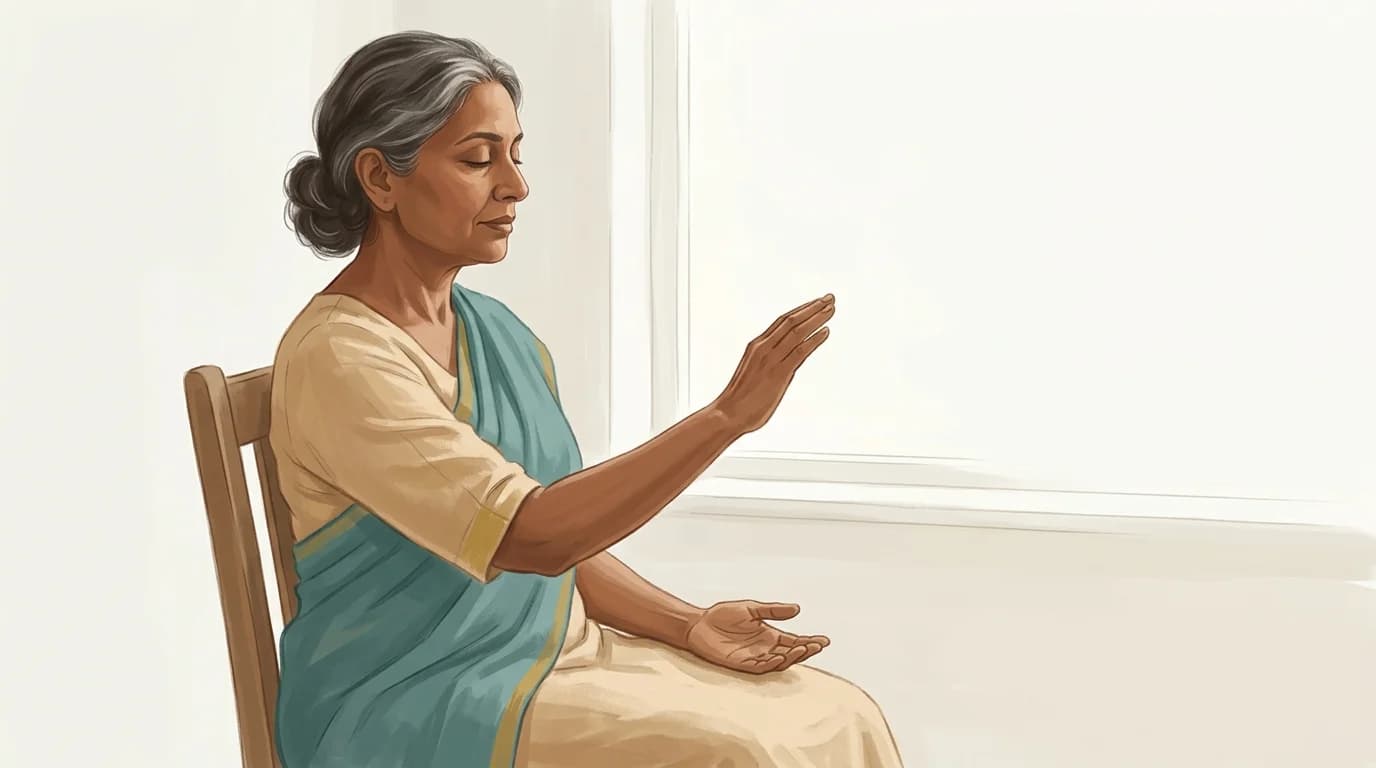
Sit toward the front of a firm chair so your right arm can hang by your side. Close your eyes.
- 2
Let the arm be heavy. Without looking, do you know where your hand is right now?
- 3
Slowly lift your right forearm to somewhere between knee and shoulder. Feel the weight of it there, then lower it.
- 4
Lift it again, eyes still closed, and stop where you think the same place is. Open your eyes and look.
- 5
Rest the arm. Then lift the left forearm the same way, eyes closed, and look. Smaller if a shoulder complains.
- 6
Lift both forearms together with your eyes closed. Does one arrive sooner, or higher? Then lower them and rest.
- 7
Sit quietly with both arms hanging. Compare the two arms now with the start. What is different, if anything?
Let Feldy guide you, eyes closed
A calm voice walks you through gentle moves so your attention stays in your body, not on the screen.
Try Feldy Free for 7 daysNo credit card needed.
If you did that and missed, you are in ordinary company, and the missing is not the problem. The information is in the miss. This is roughly what an Awareness Through Movement® lesson spends an hour doing, asking the same perceptual question from slightly different angles until the answer stops being a guess, which is why the Feldenkrais Method® reads, in the language of this review, as directly targeted and attentionally demanding rather than multimodal. The lessons in the Feldy online movement program are built that way on purpose, and they sit alongside whatever strengthening your physiotherapist has given you rather than replacing it. Yoga, Pilates and Tai Chi work through a different mechanism, and each has its own strengths; this is simply a different way of putting the question to the body.
The practical implication for someone whose sense of position has been fading is not to abandon balance work. It is to notice that steadiness and sensing are trained by different questions, and that if the second one matters to you, something in your week has to ask it directly. Slowly, at small ranges, with your eyes closed often enough to be inconvenient. The body runs a crude version of that question every morning, which our explainer on why does it feel so good to stretch in the morning unpacks.
The carpenter came back the following week and told me he had been standing at his bench with his eyes shut, trying to find the edge of a board by feel before opening them to check. He said he was getting closer. Then he asked me how long it takes, and I told him the one thing I actually know, which is that nobody in those 51 trials was followed long enough for anyone to know.
Sources
Movement Pulse is informational, not medical advice. See our editorial policy.
Move better with Feldy
See the programMovement Pulse Weekly
The week's best research, in your inbox Tuesday.
Movement science, gentle-practice ideas, and a practitioner's read on what's new. Free.
More from Movement Pulse
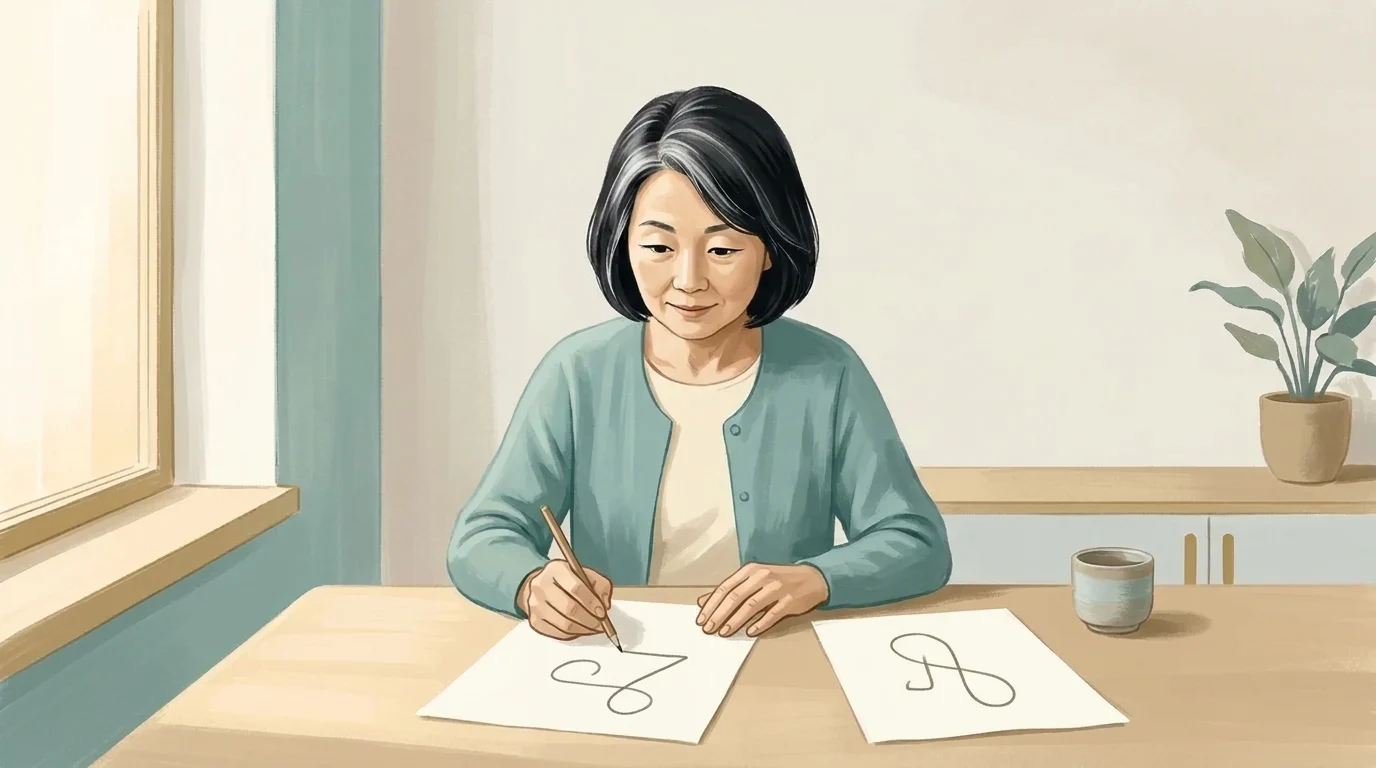
Practising a new movement sideways and upside down helped about as much as repeating it
Across 11 experiments, Yale volunteers practised unfamiliar symbols turned sideways or upside down. Their upright copies improved about as much as with plain repetition.
Oct 22, 2026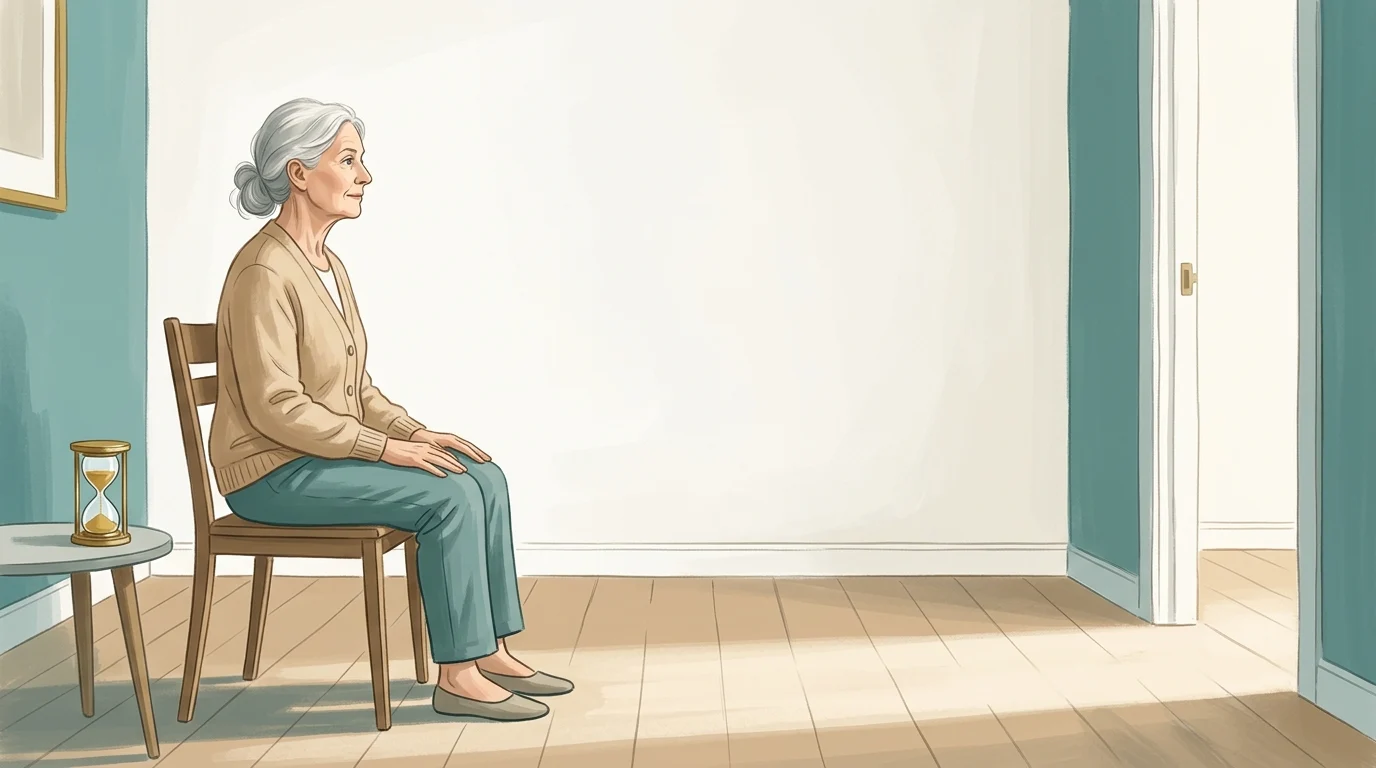
Asked to picture a short walk, older adults imagined four seconds. It took them six
Picture yourself walking across the room and back. A new study timed that picture in 85 adults in their seventies, then timed the real walk.
Oct 3, 2026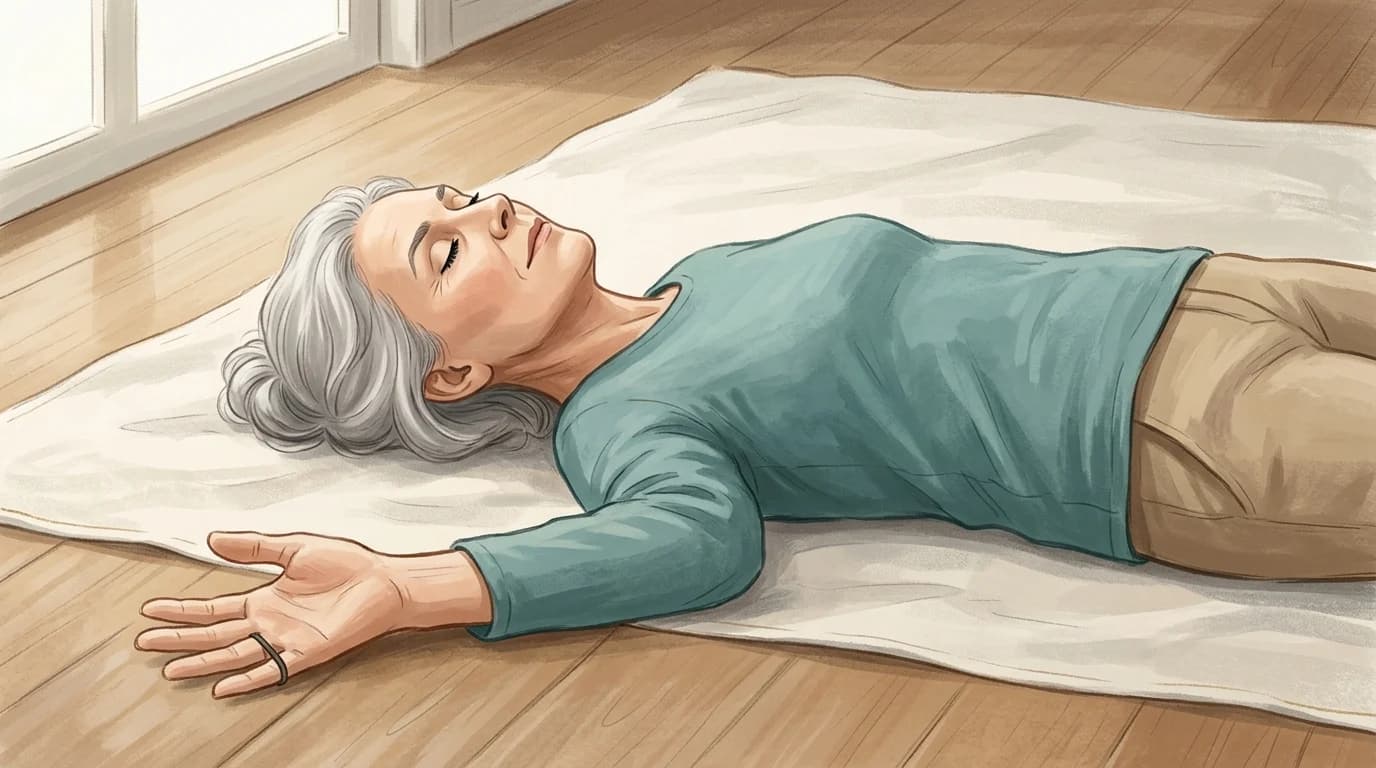
Why paying attention to one small spot can make you feel something somewhere else
A float tank, a rubber ring on a little finger, and 100 volunteers. Most of what people felt was not where the ring was.
Sep 6, 2026Ready to start moving better?
Gentle, guided lessons for your body. Try your first one free, no credit card required.