


Somatic Movement Classes: What They Are and How to Choose
What actually happens in somatic movement classes, the main lineages you will meet, and how to choose between in person and online sessions.
In short
Somatic movement classes are slow, attention based sessions where you learn to feel movement from the inside rather than perform it. Common formats include Feldenkrais Awareness Through Movement, Hanna Somatics, and Body-Mind Centering, taught in studios, community centers, and online. They differ from yoga in emphasizing sensing over shape.

See how Feldy helps you move with more ease and awareness
Gentle guided lessons you can do at home. Start with a free 7-day trial.
If you have heard the phrase somatic movement classes and pictured something between yoga and meditation, you are not far off, but the reality is gentler and more curious than either. These are slow, guided sessions where the point is not to stretch further or hold a shape, but to notice how you move and let your nervous system find easier options. As a Feldenkrais® practitioner I have taught hundreds of these lessons, and I still remember how strange and wonderful my first one felt. Here is what to expect, the main styles you will encounter, and how to choose a class that suits you.
What happens in somatic movement classes
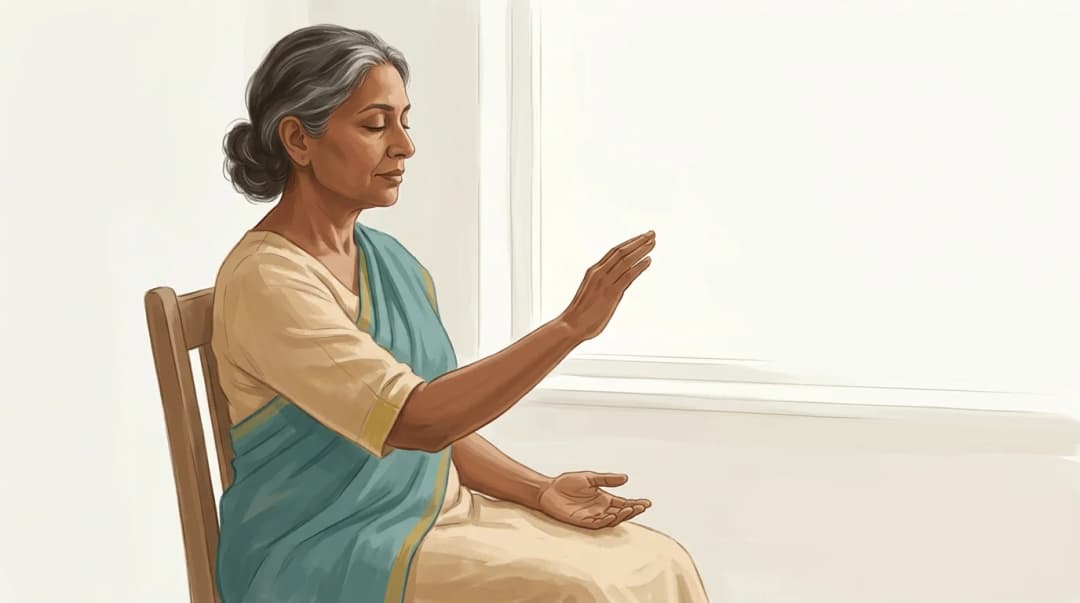
Most somatic movement classes share a family resemblance. You spend much of the session lying on a mat or sitting in a chair. The teacher speaks more than demonstrates, guiding you through small, unhurried movements: rolling the pelvis, turning the head, sliding an arm along the floor. You are asked questions rather than given corrections. Which shoulder feels heavier? Where does the movement travel through your spine?
That questioning is the method. Instead of copying an ideal form, you build a clearer internal map of yourself, and movement tends to reorganize on its own. Sessions typically run 30 to 60 minutes, and effort is deliberately kept low, because a quiet nervous system learns better than a strained one. If the whole idea is new to you, our explainer on what somatic movement is covers the foundations.
The different lineages you will find (Feldenkrais, Hanna, and others)
"Somatic" is an umbrella, and several distinct traditions live under it. Knowing the names helps you read a class schedule.
The Feldenkrais Method®, developed by physicist Moshe Feldenkrais, is taught in group classes called Awareness Through Movement®: verbally guided explorations, usually done lying down, that use novelty and variation to help the brain find easier patterns. It is among the most researched of the somatic approaches. One systematic review pulling together 20 randomised trials reported early but encouraging signals on function and balance, with zero adverse events across the pool, while making clear the evidence base is still growing (Hillier & Worley, Evidence-Based Complementary and Alternative Medicine, 2015).
Hanna Somatics, created by Thomas Hanna, a student of Feldenkrais, centers on a technique called pandiculation: gently contracting a tight muscle, then releasing it slowly to reset its resting tone. Classes tend to be shorter and more repeatable, which many people like for daily routines.
The Alexander Technique refines how you carry yourself through everyday activities such as sitting and standing, often with one to one guidance. If you are weighing it against Feldenkrais® specifically, we compare the two in Feldenkrais vs the Alexander Technique. Body-Mind Centering, developed by Bonnie Bainbridge Cohen, is more experiential and anatomical, popular with dancers and bodyworkers. Each of these shines in its own territory. None is the "correct" one, and teachers across lineages tend to respect each other's work.
In person somatic movement classes vs online sessions
In person classes, found in movement studios, community centers, and some senior centers, give you a teacher who can watch how you move and a protected hour away from home. That accountability matters to some learners.
Online sessions have a quiet advantage in this field: because somatic teaching is mostly verbal, audio guided lessons lose very little in translation. You can practice at your own hour, repeat a lesson that landed well, and stay on your own familiar floor, which many nervous systems find easier to relax on. This is exactly how Feldy delivers Feldenkrais lessons: short, guided sessions you follow at home, at your own pace. A practical path many people take is starting online to build the habit, then visiting an in person class or workshop when curiosity strikes.
How to choose your first class
Start with the style whose description appeals to you, because you will practice more of what you enjoy. If you like open ended exploration, try Feldenkrais. If you want a compact daily reset, Hanna Somatics may fit. If your interest centers on posture in daily life, look at the Alexander Technique.
Two placement notes help set expectations. Yoga and Pilates are wonderful practices that build strength and flexibility through a different mechanism, so a somatic class is a complement rather than a substitute. Clinical care is its own category: if you have pain, an injury, or a diagnosis, physical therapy and medical guidance come first, and somatic classes sit alongside that care rather than replacing it.
If you want a taste of the format before committing to a class, our short lesson of somatic exercises for beginners walks you through one at home in about ten minutes. However you begin, give it three or four sessions before judging. The skill of sensing yourself grows quickly, and it changes how every other movement in your life feels. If gentle, awareness led practice at home sounds like your starting point, the body awareness program is built for exactly that.
Learn to listen to your body
Now for the practice that trains it. The Feldy program sharpens your attention through slow, attentive Feldenkrais® lessons, so everyday movement feels lighter and more your own. Gentle, guided, and self-paced.
Start my free 7-day trialNo credit card needed.
Common Questions (FAQ)
What should I expect in my first somatic movement class?
Expect to spend most of the session lying on a mat or seated, following slow verbal guidance. There are no poses to hold and no choreography to learn. The teacher invites small, easy movements and asks you to notice how they feel. Most people leave feeling calmer and lighter.
How is somatic movement different from yoga?
Yoga generally works toward shapes and sequences, building strength and flexibility through them. Somatic movement works through a different mechanism: slow, small movements and focused attention that change how your nervous system organizes movement. Neither replaces the other, and many people enjoy both.
Are in person or online somatic movement classes better?
Both work well because the guidance is mostly verbal. In person classes offer a teacher who can see you; online classes let you practice whenever you like, repeat lessons, and stay in your own space. Many people start online and add in person sessions later.
Who are somatic movement classes for?
Anyone who wants to move with more ease, including people who feel stiff, stressed, or disconnected from their body. The movements are small and unhurried, so classes suit beginners, older adults, and people returning to movement after a long break.
When should I see a professional instead of taking a class?
See your doctor or a physical therapist first if you have unexplained pain, a recent injury, numbness, or a diagnosed condition that limits movement. Somatic classes are educational, not medical treatment, and they sit comfortably alongside clinical care.
Do I need equipment or special clothing?
No. A firm surface to lie on, comfortable clothes, and perhaps a folded towel under your head. That is the entire kit.
Learn to listen to your body
See the programRelated resources
Somatic Movement Therapy: What It Is and How It Helps
Somatic movement therapy is a gentle, attention based practice that works with tension, stress, and long held pain through slow movement. What it is, and who it helps.
What Is Somatic Yoga? A Gentle, Sensing Practice
Somatic yoga slows familiar shapes right down so attention moves from how a pose looks to how it feels from the inside. Here is what that means.
Your balance got better, but did your sense of where your body is get better too
Ready to start moving better?
Gentle, guided lessons for your body. Try your first one free, no credit card required.